
Why Seniors Often Underestimate RV Trip Logistics (And What to Do About It)
From fuel stops to dump station timing, discover the planning gaps that frequently catch first-time senior RVers off guard and how to close them.
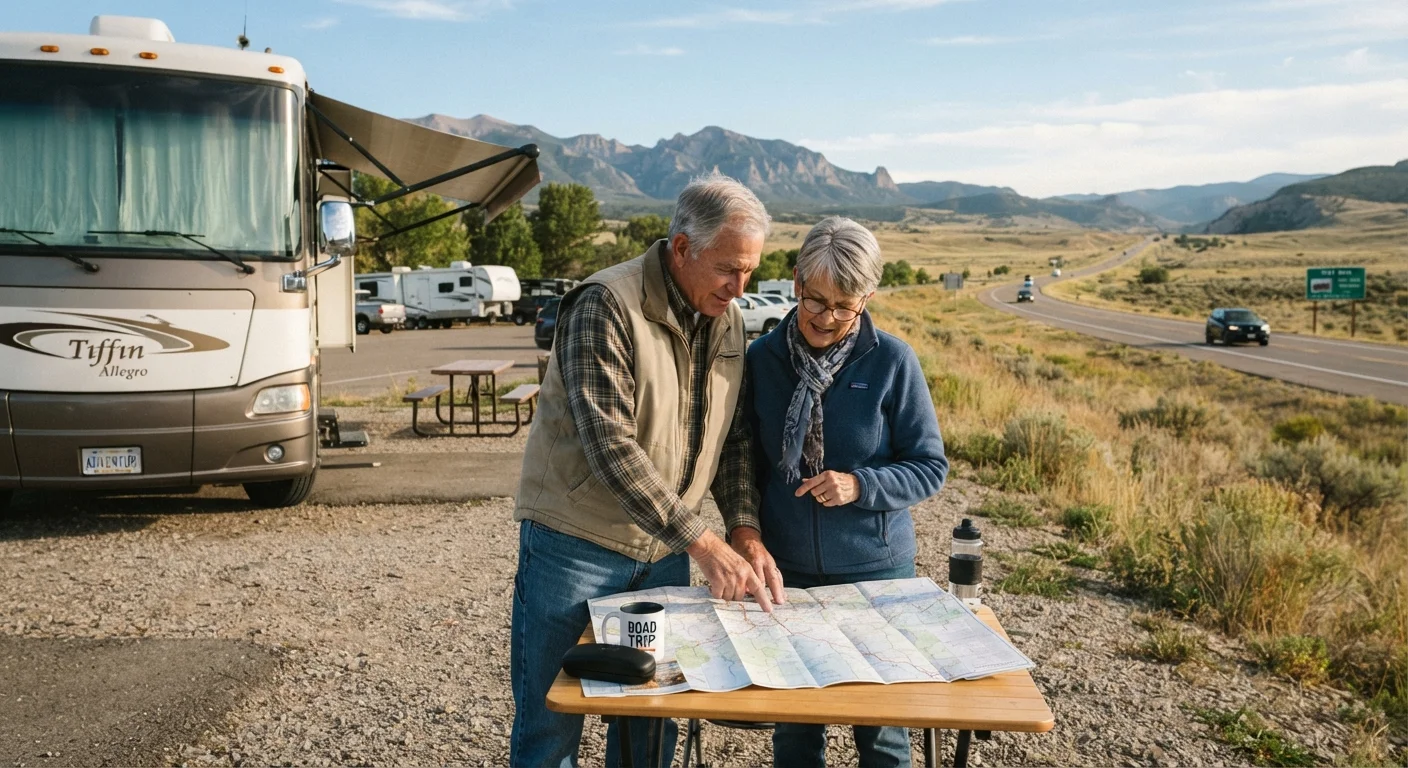
Photo: MyUrbanEscapes.net | Small Escapes. Big Experiences. editorial
—— In This Article
Key Takeaways
- Many senior RVers underestimate how long daily driving, fuel stops, and campground check-ins actually take.
- Dump station availability and fresh water access require advance planning, especially in remote areas.
- Building buffer days into your itinerary dramatically reduces stress and physical fatigue on the road.
- Reservation windows for popular campgrounds can close weeks or months ahead — early booking matters.
- Understanding your RV's fuel range and weight limits prevents costly and dangerous surprises mid-trip.
Why Logistics Gaps Catch Senior RVers Off Guard
RV travel offers tremendous freedom — but that freedom comes with a layer of operational complexity that car trips and hotel vacations simply don't have. For senior travelers stepping into RVing for the first time, or returning after a long break, the gap between expectation and reality often shows up not in the driving itself, but in the dozens of small logistics decisions that accumulate each day.
The planning instincts most of us carry from decades of car travel don't transfer cleanly. Fuel calculations, water and waste management, campground availability, route restrictions — each of these requires a different mental model. The good news is that once you understand where the gaps typically appear, closing them is straightforward. This article walks through the most common logistics mistakes senior RVers make, why they happen, and exactly what to do instead.
For a broader foundation before your first trip, the RV trip planning roadmap for seniors covers every major planning stage from start to finish. And if you want to understand how these logistics patterns connect to everyday senior trip logistics, that hub is a useful companion resource.
The Most Common Logistics Mistakes — and How to Fix Them
Each mistake below follows a consistent pattern: a reasonable assumption borrowed from non-RV travel experience, an underestimated variable, and a concrete fix that experienced RVers use routinely.
Treating daily mileage targets like car-trip numbers.
Why it happens: Most seniors have decades of car travel experience and instinctively apply those distance expectations to RV trips, not accounting for slower speeds, heavier vehicle handling, and greater fatigue.
Skipping a realistic fuel-range and weight calculation before setting out.
Why it happens: Fuel economy figures for RVs vary widely based on load, terrain, and driving speed — and many first-timers assume the manufacturer's estimate applies to their fully packed rig.
Underestimating how much time dump station and water hookup logistics add to each day.
Why it happens: These tasks are invisible in car travel and easy to overlook during route planning. First-timers often discover mid-trip that not every campground has a dump station or that the nearest one has limited hours.
Booking campgrounds too late — or not at all.
Why it happens: Seniors returning to RV travel after years away may not realize how competitive campground reservations have become, particularly at national parks and popular state park sites.
Overpacking the itinerary with back-to-back destinations.
Why it happens: Excitement about a long-awaited trip — combined with a desire to maximize value — leads many travelers to schedule more stops than are realistic. This mirrors patterns seen in other travel formats, explored in why overloaded itineraries backfire.
Ignoring RV-specific road restrictions when planning the route.
Why it happens: Many seniors plan routes using the same tools they use for car travel, which do not flag low bridges, weight limits, or roads unsuitable for large vehicles.
Don't Rely Solely on Consumer GPS Apps
Standard navigation apps designed for cars do not account for RV height, weight, or bridge clearance restrictions. Using a car GPS in a large motorhome or fifth wheel can route you onto roads where your rig physically cannot pass. Use an RV-specific routing tool and cross-check with state DOT resources for low-clearance or weight-restricted roads.
Beyond route and timing issues, physical preparation matters too. RV setup and breakdown tasks — leveling the rig, connecting hookups, managing slides — add up physically over a multi-week trip. Seniors managing joint pain or reduced stamina should factor this into daily schedules. For related health preparation considerations, why seniors skip pre-trip health prep is worth reviewing before departure.
Verify Campground Reservations Before Departing
Arriving at a campground without a confirmed reservation — especially during peak season — can leave you searching for a site after dark in an unfamiliar area. Always confirm bookings 24–48 hours before arrival and have a backup location identified. This is particularly important for RVers with specific hookup or accessibility requirements.
Getting logistics right also shapes your packing decisions. Load weight directly affects fuel efficiency and vehicle handling — see packing smart for senior RV travel for a practical weight-conscious framework. Once you're on the road, you'll also encounter situations no checklist fully prepares you for — things senior RVers discover once they're on the road captures the practical surprises worth knowing in advance.
70%+
Of RV travelers who report trip stress cite logistics surprises
Industry surveys from the RV Industry Association have consistently noted that first-time RVers cite unexpected logistical challenges — not driving — as their primary source of trip stress.
3–6 months
Advance booking window for peak-season national park campgrounds
Reservation windows at high-demand sites like those within national parks frequently fill within days of opening, according to the National Park Service's reservation system guidance.

Rv Travel Editorial Team
RV Travel Editorial Team is the collective byline for our editorial team and contributor network. Articles published under this byline or an editorial pen name are researched, written, and reviewed according to our editorial standards for clarity, consistency, and independence before publication.
View author profile