
Digital Safety While Traveling: Public Wi-Fi, ATMs, and Scam Awareness
Public networks and tourist-area ATMs carry real risks. Here's what seniors should know about protecting their financial and personal data on the road.
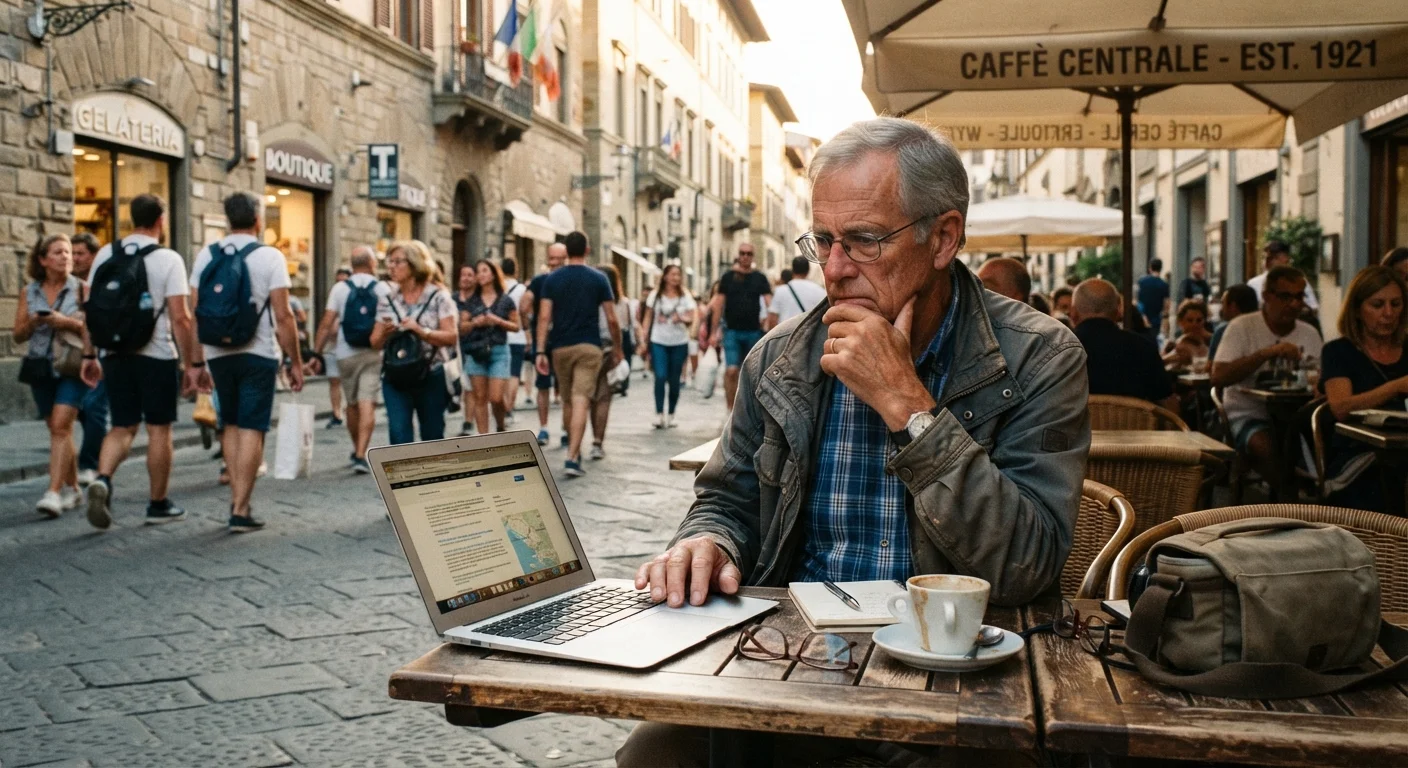
Photo: MyUrbanEscapes.net | Small Escapes. Big Experiences. editorial
—— In This Article
Key Takeaways
- Public Wi-Fi networks can expose your personal and financial data to third parties if used without precautions.
- ATMs in high-traffic tourist areas carry a higher risk of card skimming devices and shoulder surfing.
- Travel scams frequently target seniors through phone calls, email, and in-person approaches.
- Simple habits — like using mobile data instead of public Wi-Fi for banking — significantly reduce your exposure.
- Notifying your bank before travel and setting transaction alerts provides an important safety net.
Why Digital Risks Are Especially Relevant for Travelers
When you leave home, your digital routines change — and so does your vulnerability. You're accessing unfamiliar networks, using ATMs in new locations, and navigating interactions with strangers in an environment where your guard may naturally be lower. This combination creates openings that opportunists look for.
This isn't about being alarmed. It's about building a short list of habits that close those openings before they become problems. As part of a broader approach to travel safety — covered in our senior traveler's complete safety primer — digital awareness is one of the easiest layers to add. Most of what works is simply knowing what to watch for.
Over $10 billion
Lost to fraud by Americans annually
According to the Federal Trade Commission's Consumer Sentinel Network, reported fraud losses in the U.S. have consistently exceeded $10 billion in recent years, with older adults among the most frequently targeted groups.
1 in 3
Adults affected by card fraud in tourist destinations
Security researchers and financial industry reports have consistently found that card skimming incidents are concentrated in high-traffic tourist areas and transit hubs worldwide.
Using Public Wi-Fi Without Putting Your Data at Risk
Public Wi-Fi — in hotel lobbies, airports, cafés, and cruise ship lounges — is genuinely useful. It's also genuinely risky when used carelessly. On an unsecured network, other users on the same connection can potentially intercept unencrypted data you transmit.
Avoid logging into financial accounts or entering passwords on public Wi-Fi networks.
Unsecured networks can allow other users to intercept transmitted data. Banking sessions and password entries on these networks carry meaningful risk even when a site uses HTTPS.
Use a Virtual Private Network (VPN) if you must use public Wi-Fi for sensitive tasks.
A VPN encrypts your internet traffic, making it significantly harder for others on the same network to read your data. Setting one up before your trip is straightforward and requires no technical expertise.
Log out of accounts and forget saved public networks after each session.
Devices that automatically reconnect to previously used networks can join malicious networks with identical names — a common technique called an "evil twin" attack.
Inspect ATMs for physical tampering before inserting your card.
Skimming devices are designed to blend in, but a card slot that feels loose, unusually thick, or that has visible adhesive or mismatched coloring may indicate tampering. Trust your instincts — if something looks wrong, use a different machine.
Shield your PIN entry with your hand or body every time you use an ATM or card reader.
Shoulder surfing — watching someone enter their PIN — is low-tech but effective, particularly in crowded tourist areas. Covering your entry takes one second and eliminates this risk entirely.
Set up transaction alerts with your bank before departing.
Real-time SMS or email alerts for every card transaction let you catch unauthorized use immediately rather than discovering it on a statement weeks later.
For travelers who want to stay reliably connected while minimizing these risks, managing your phone and data setup before you leave is a practical first step. Using your carrier's cellular data plan instead of public Wi-Fi for any financial transaction is one of the simplest and most effective protections available.
ATM Safety in Tourist Areas
ATMs in popular tourist destinations — airports, cruise terminals, busy city centers — are higher-risk environments than machines you'd use at home. Card skimming devices (thin overlays that capture card data) are harder to detect than many people expect, and shoulder surfing (watching someone enter their PIN) is common in crowded spaces.
Prefer Bank-Branch ATMs When Possible
ATMs located inside bank branches — rather than standalone machines on sidewalks or inside convenience stores — are generally better monitored and less frequently targeted by skimming devices. When withdrawing cash abroad, look for machines attached to a known bank building. If possible, withdraw larger amounts less frequently to limit your total number of transactions at unfamiliar machines.
If your card is unexpectedly retained by an ATM or a transaction fails in an unusual way, contact your bank immediately. This is also a good reason to carry your bank's international contact number separately from your wallet — a habit reinforced in our guide to solo travel safety after 65.
Recognizing Travel Scams Targeting Seniors
Scams targeting travelers range from digital (phishing emails impersonating hotels or airlines) to in-person (strangers offering unsolicited help, then requesting payment). Seniors are disproportionately targeted because they are perceived as more trusting, more likely to carry cash, and less likely to report losses out of embarrassment.
Physical theft and digital scams often work together — a distracted tourist is more vulnerable on both fronts. The tactics described in our article on recognizing pickpocket tactics at tourist hotspots apply equally to digital distractions engineered to catch you off guard.
Reporting Fraud While Abroad
If you believe your card or personal data has been compromised while traveling, contact your bank or card issuer immediately using the number on the back of your card or their international helpline. You should also file a report with local police if card theft or in-person fraud is involved — your bank may require a police report number to process a claim. Keep records of every communication, including dates and representative names.
This article provides general informational guidance on digital safety for travelers. It is not a substitute for personalized advice from your bank, a cybersecurity professional, or law enforcement. Always report suspected fraud to your financial institution and, where appropriate, local authorities.

Travel Health & Safety Editorial Team
Travel Health & Safety Editorial Team is the collective byline for our editorial team and contributor network. Articles published under this byline or an editorial pen name are researched, written, and reviewed according to our editorial standards for clarity, consistency, and independence before publication.
View author profile