
Traveling with Prescription Medications: Rules, Risks, and Routines
What seniors need to know about carrying medications across borders, keeping them safe, and ensuring supply doesn't run out mid-trip.
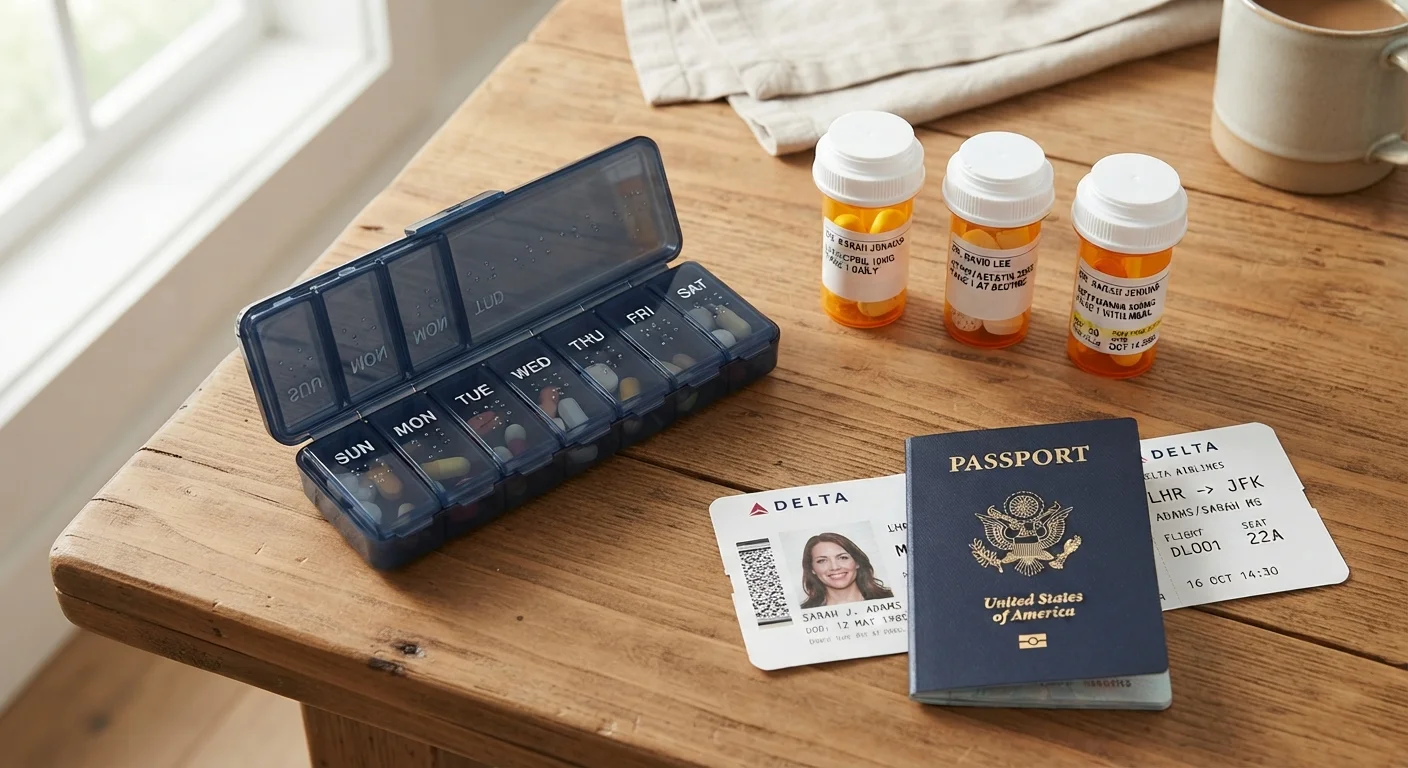
Photo: MyUrbanEscapes.net | Small Escapes. Big Experiences. editorial
—— In This Article
Key Takeaways
- Always carry medications in original labeled containers to avoid customs delays or confiscation.
- Check destination-country rules before travel — some common US prescriptions are controlled or banned abroad.
- Request a 90-day supply and a written physician's letter before any extended trip.
- Store temperature-sensitive medications with a documented cold-chain plan throughout your journey.
- Know in advance how to access emergency refills or medical care at your destination.
Why Medication Preparation Matters More for Senior Travelers
Managing prescription medications while traveling is one of the most practical health challenges senior travelers face. Unlike younger travelers who may take no daily medications at all, many seniors depend on a precise regimen of drugs to manage chronic conditions — and any disruption in that routine can have real health consequences. The combination of unfamiliar environments, time zone shifts, customs regulations, and variable storage conditions makes advance preparation essential, not optional.
The good news is that these challenges are manageable with the right approach. Whether you're planning a Caribbean cruise, an international flight to Europe, or an extended RV road trip, the same core principles apply: verify the rules, carry the right documentation, protect your supply, and know your backup options. See our medication management checklist for a broader pre-departure overview.
What you will need
Understanding the Rules: Borders, Customs, and Controlled Substances
The most commonly overlooked risk in international travel is carrying a medication that is legal in the US but restricted, controlled, or prohibited at your destination. This is not limited to obvious opioids or sedatives — some antihistamines, stimulants, and even certain antibiotics face restrictions in specific countries. Ignorance of local law is not a valid defense at a border crossing.
Verify Rules Before You Fly
Some medications that are legal and routine in the US — including certain pain relievers, sleep aids, and ADHD medications — are classified as controlled substances or are outright prohibited in other countries. Traveling with them without prior authorization can result in confiscation, fines, or detention. Always verify the specific rules of your destination country through its official embassy or consulate website well before departure.
The US Department of State and individual country embassy websites are your most reliable resources for current rules. For travel documentation and storage guidance that complements this research, our article on traveling with medications: rules, storage, and emergency planning provides useful detail. If you're planning a cruise specifically, packing medications for a cruise covers port-specific considerations worth reviewing.
Physician's Travel Letter
An official letter on clinic letterhead listing each medication, its medical necessity, dosage, and prescribing doctor — required or strongly recommended for international travel.
Original Labeled Prescription Bottles
Containers with the original pharmacy label confirm ownership and legal prescription status at customs and security checkpoints.
Insulated Medication Pouch or Travel Cooler
Maintains safe temperatures for insulin, biologics, or other heat-sensitive medications during transit and warm-weather destinations.
Digital Medication Record (Phone or Cloud Storage)
A backup copy of all prescription details accessible even if physical documents are lost or damaged.
Travel Insurance Policy with Medical Coverage
Provides a financial safety net for emergency medical care, hospitalization, or prescription replacement abroad.
Step-by-Step: How to Travel Safely with Your Prescriptions
The steps below walk you through the preparation process from your pre-departure doctor visit through to maintaining your routine once you've arrived. Follow them in order — each step builds on the last.
Consult Your Doctor 4–6 Weeks Before Departure
Schedule a dedicated pre-travel appointment to review all your medications with your physician. Discuss whether any drugs require dose adjustments for time zone changes (such as insulin or thyroid medications), request a 90-day supply where your insurer and state law allow, and ask for a signed physician's letter on clinic letterhead for each prescription you'll carry.
Research Destination-Specific Medication Rules
Visit the official embassy or consulate website for each country on your itinerary and search their customs or health authority pages for controlled substance rules. Some countries require advance import permits for medications that are standard prescriptions in the US. For cruises, also check rules for each port of call, as different countries may apply different standards.
Organize Medications for Travel Security and Customs
Keep all medications in their original, pharmacy-labeled containers. Place your prescription bottles and physician's letter together in a clear zip-lock bag in your carry-on luggage — never check medications you depend on daily. If TSA screening requires you to remove liquids or devices (such as insulin pens or nebulizers), declare them separately at the checkpoint.
Plan Cold Storage for Temperature-Sensitive Medications
Insulin, certain biologics, and some eye drops require refrigeration or protection from heat. Before you travel, map out cold-storage availability at your accommodations and during transit. Insulated pouches with reusable gel packs can bridge gaps of up to 24–48 hours; verify the specific temperature tolerance for each medication with your pharmacist rather than relying on general estimates.
Build a Supply Buffer and Emergency Refill Plan
Request a supply that exceeds your trip length by at least one week to account for delays, lost luggage, or extended stays. Before leaving, identify a pharmacy network, local hospital, or the nearest US embassy or consulate at your destination that can assist with emergency medical needs. Write this information down alongside your insurance policy number and emergency contact details.
Establish a Daily Medication Routine That Accounts for Time Zones
Crossing multiple time zones can disrupt medication schedules, particularly for time-critical drugs. Before travel, ask your doctor for a specific written schedule that transitions gradually as you cross time zones. Use a phone alarm set to the appropriate local time (not your home time) once you've arrived, and resist skipping or doubling doses to compensate for schedule confusion.
Use a Medication Summary Card
Ask your pharmacist to print a medication summary listing each drug's generic name, dosage, and prescribing condition. Keep one copy in your carry-on, one in your checked luggage, and one stored digitally. This small step can save significant time if you need emergency medical care or must explain your medications to customs officials.
Don't Rely on Finding Equivalents Abroad
Brand names differ internationally, and pharmacists may not recognize your US prescription or be permitted to fill it. Generic formulations can vary in concentration or inactive ingredients. Never assume you can simply purchase an equivalent medication at a foreign pharmacy without advance research and your doctor's guidance.
For seniors traveling by RV across multiple states, some of these considerations differ slightly. Our guides on managing medications on a long RV trip and managing medications during extended RV trips address those specifics in more detail.
This article provides general travel health information for educational purposes and is not a substitute for personalized medical advice. Always consult your physician or a qualified healthcare professional about decisions relating to your medications and health before traveling.

Senior Trip Planning Editorial Team
Senior Trip Planning Editorial Team is the collective byline for our editorial team and contributor network. Articles published under this byline or an editorial pen name are researched, written, and reviewed according to our editorial standards for clarity, consistency, and independence before publication.
View author profile