
Planning an RV Trip to the Great Lakes Region: A First-Timer's Orientation
New to RVing the Great Lakes? This guide covers campground types, seasonal considerations, and accessibility-friendly stops across all five lakes.
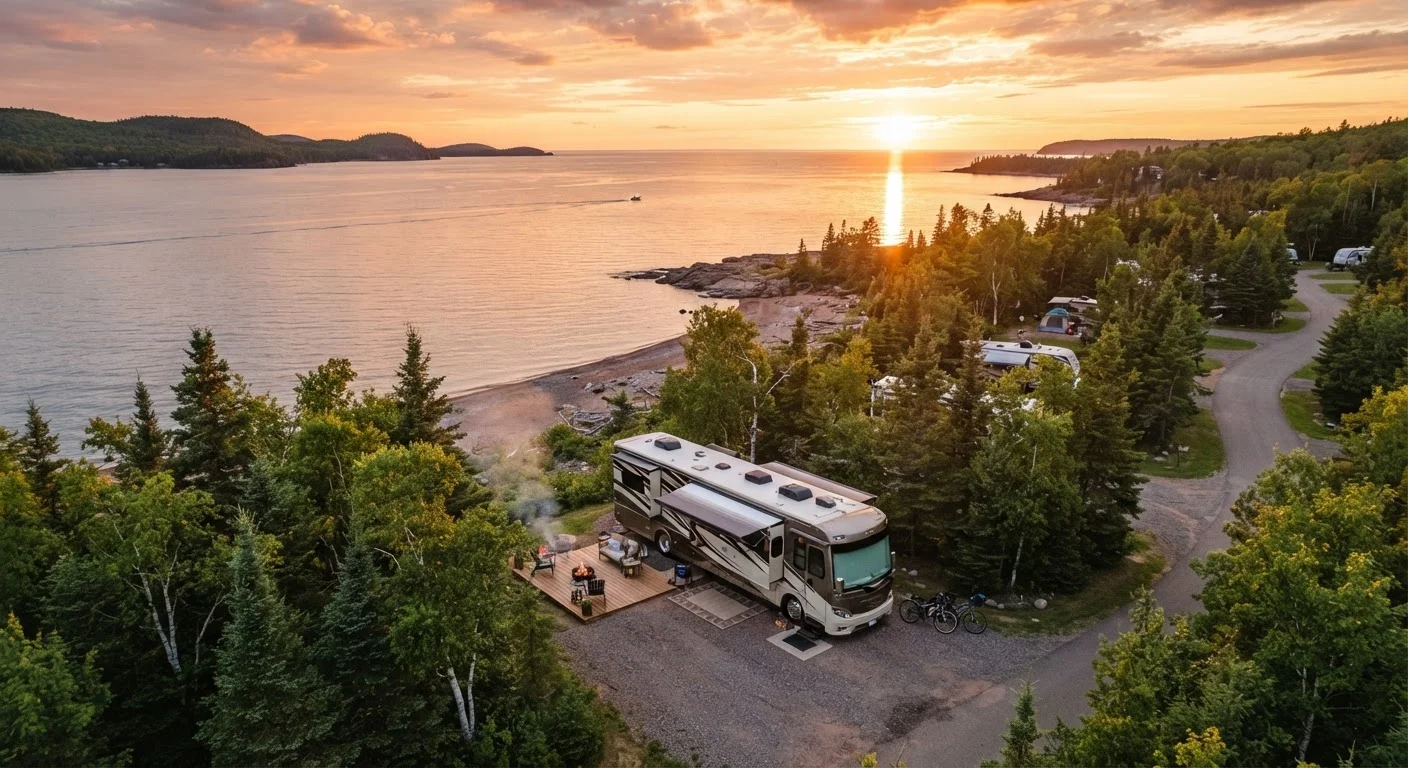
Photo: MyUrbanEscapes.net | Small Escapes. Big Experiences. editorial
—— In This Article
Key Takeaways
- The Great Lakes region offers an extensive network of RV campgrounds with full hookups suitable for seniors.
- Late spring through early fall is generally the most comfortable window for first-time Great Lakes RV travel.
- Several national lakeshores and state parks around all five lakes provide accessible trails and facilities.
- Planning shorter daily drives — ideally under 250 miles — reduces fatigue and improves the experience.
- Campground types vary widely; knowing the differences helps you book sites that match your comfort needs.
Why the Great Lakes Region Works Well for Senior RVers
The five Great Lakes — Superior, Michigan, Huron, Erie, and Ontario — together form one of North America's most varied and scenic RV corridors. For senior travelers, the region offers a practical combination of well-developed infrastructure, manageable terrain, and genuine natural beauty without requiring remote backcountry driving.
Highways encircling the lakes are generally flat to gently rolling, which reduces the mechanical demands on an RV and the physical demands on the driver. Distances between amenities — fuel, grocery stores, medical facilities, and campgrounds — are reasonable across most of the route. For a first-timer still building confidence, this predictability matters.
If you're still in the early stages of overall RV trip planning, the complete first-timer's roadmap for senior RVers covers foundational logistics before you get region-specific.
Full hookup site
A campsite that provides connections for water, electricity, and sewer simultaneously, so you don't need to use onboard tanks or visit a dump station during your stay.
Pull-through site
A campsite designed so you can drive in from one end and exit from the other without backing up — particularly helpful for longer rigs or drivers less comfortable with reversing.
Dump station
A facility where you empty your RV's holding tanks (gray water and black water). Some campgrounds include sewer hookups at the site; others require a trip to a central dump station.
ADA-accessible site
A campsite designated to meet Americans with Disabilities Act standards, typically featuring level ground, wider pads, and proximity to accessible restroom facilities.
National Lakeshore
A federally protected area along a major shoreline managed by the National Park Service, offering trails, visitor centers, and campgrounds with regulated preservation standards.
Amp service (30-amp / 50-amp)
The electrical capacity available at a campsite hookup. Larger or appliance-heavy RVs often require 50-amp service; many medical devices like CPAP machines run on standard 30-amp connections.
Understanding Campground Types Across the Region
The Great Lakes region hosts a wide spectrum of campground styles, and understanding the differences helps you match a site to your actual needs rather than discovering a mismatch after arrival.
- National Lakeshore Campgrounds — Operated by the National Park Service at locations like Pictured Rocks (Michigan) and Indiana Dunes, these sites typically offer basic amenities, reserved accessible sites, and excellent interpretive programming.
- State Park Campgrounds — Michigan, Wisconsin, Minnesota, Ohio, and New York all operate extensive state park systems with online reservation tools, electric hookups at many sites, and often dedicated senior or accessibility pricing tiers. Always verify specifics directly with the managing agency.
- County and Municipal Parks — Often overlooked, these can offer full hookups, lower nightly rates, and central locations near towns with medical services and stores.
- Private Campgrounds and RV Parks — These typically provide the most amenities: laundry, Wi-Fi, swimming pools, and pull-through sites ideal for longer rigs. Amenity quality varies widely, so read recent visitor reviews before booking.
Book Accessible Sites Early — They Go Fast
Designated accessible campsites are limited in number at most state and national parks. Call or book online as soon as reservation windows open — often four to six months before your travel date. When calling ahead, ask specifically whether the accessible site is near restrooms and whether it has a level pad, since listings can vary in detail.
For a clear-eyed look at the logistics that catch first-time senior RVers off guard — including dump station timing and campground check-in windows — see why seniors often underestimate RV trip logistics.
Seasonal Considerations for Great Lakes RV Travel
The Great Lakes region has a genuine four-season climate, and timing your trip affects everything from campground availability to road conditions and bug levels.
Late May through June offers mild temperatures, fewer crowds, and fully open facilities in most parks. Black flies and mosquitoes can be active near wooded lake areas in late May, so pack appropriate protection.
July and August are peak season. Popular campgrounds fill weeks or months in advance, and temperatures in the 70s–80s°F make lake access especially enjoyable. Reserving early is essential.
September through mid-October is widely regarded as an underrated window. Fall foliage around Lake Superior and in northern Michigan can be spectacular, crowds thin out, and temperatures remain comfortable during the day.
Below late October, many campgrounds — especially state parks — begin closing for the season, and overnight temperatures can drop sharply in the Upper Midwest. First-time senior RVers are generally best served by avoiding this window until they're more experienced with cold-weather RV systems.
Weather Variability Near Lake Superior
Lake Superior's northern shoreline — particularly in Michigan's Upper Peninsula — can experience notably cooler temperatures and sudden weather changes compared to the southern lakes, even in midsummer. Evening temperatures in June and September can drop into the 40s°F. Pack layers regardless of season, and check forecasts for the specific sub-region you're entering, not just the broader Great Lakes area.
Accessibility-Friendly Stops Around All Five Lakes
Each of the five lakes has genuinely accessible highlights worth knowing before you map your route.
- Lake Superior
- Pictured Rocks National Lakeshore (Michigan) maintains accessible overlooks at Miners Beach and Chapel Rock. The visitor center in Munising is fully accessible.
- Lake Michigan
- Sleeping Bear Dunes National Lakeshore offers the Pierce Stocking Scenic Drive, a paved, vehicle-accessible loop with pull-offs at dramatic overlooks — ideal for those with limited walking ability.
- Lake Huron
- Mackinac Island's carriage roads are accessible by rented electric mobility device; the ferry docks provide accessible boarding. The Straits of Mackinac area campgrounds have accessible sites with lake views.
- Lake Erie
- Presque Isle State Park in Pennsylvania features paved multi-use paths along much of its perimeter and accessible fishing piers, with campgrounds nearby offering full hookups.
- Lake Ontario
- Sackets Harbor Battlefield State Historic Site and surrounding state campgrounds on the New York shore provide level terrain and accessible facilities close to the lake.
For general accessibility concepts when evaluating any lodging or stop, rental accessibility guidance for new senior travelers offers a useful plain-language framework.
Recreation.gov
The official federal reservation platform for national lakeshore and national park campgrounds. Use it to search site length limits, filter for accessible sites, and book in advance.
State Park Reservation Portals
Michigan, Wisconsin, Minnesota, Ohio, and New York each operate their own online reservation systems for state park campgrounds. Search by hookup type, site length, and accessibility features.
National Park Service Accessibility Guide
The NPS publishes accessibility information for each national lakeshore, including trail surface types, restroom accessibility, and visitor center accommodations for mobility devices.
Route Planning and Pacing Tips for First-Timers
The full Great Lakes circumference spans roughly 1,600 miles — far too much to rush through. Most senior RVers find that covering one or two lakes per trip, with three to five nights at each major stop, makes for a satisfying and unhurried experience.
A commonly useful guideline is to keep daily drives to 200–250 miles or fewer. Beyond that distance, driver fatigue tends to compound, and the afternoon window for setting up camp — leveling, connecting hookups, and preparing a meal — becomes stressful rather than relaxing. See how to plan a realistic RV route by balancing daily mileage and rest stops for detailed pacing guidance.
Build at least one unscheduled day into each week of travel. Weather can change, a campground can exceed expectations and deserve an extra night, or fatigue may simply call for a rest day. Flexibility is a feature, not a flaw, and first-time RVers who build it in consistently report more satisfying trips. For insights from experienced RVers on what only becomes clear once you're on the road, things senior RVers discover once they're already on the road is worth reading before you depart.
Frequently Asked Questions

Rv Travel Editorial Team
RV Travel Editorial Team is the collective byline for our editorial team and contributor network. Articles published under this byline or an editorial pen name are researched, written, and reviewed according to our editorial standards for clarity, consistency, and independence before publication.
View author profile