
Planning Your First RV Route: Distance, Pace, and Daily Drive Time
Learn how to map out a realistic RV route by balancing daily mileage, rest stops, and sightseeing without overextending yourself.
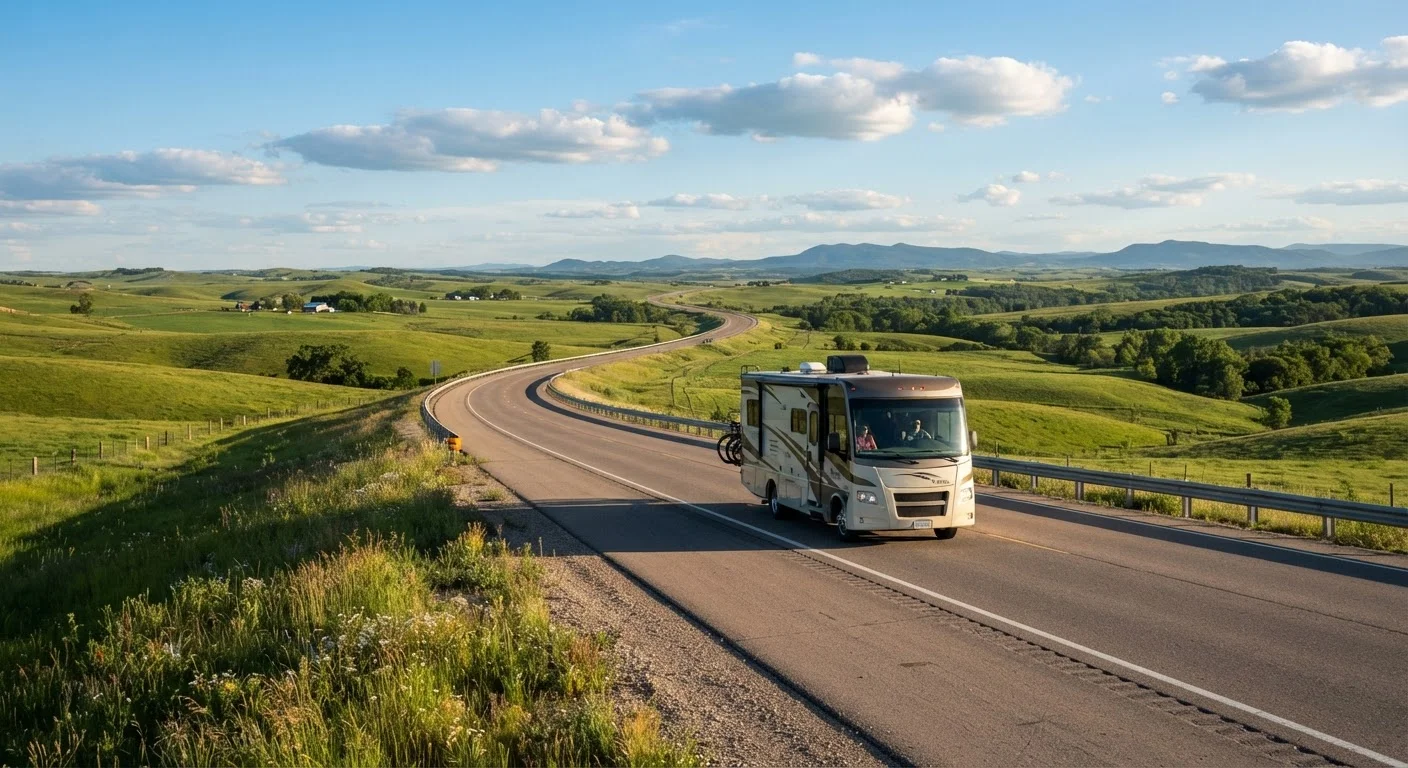
Photo: MyUrbanEscapes.net | Small Escapes. Big Experiences. editorial
—— In This Article
Key Takeaways
- Limiting daily driving to 200–250 miles helps senior RVers avoid fatigue and stay refreshed.
- Building buffer days into your itinerary prevents pressure when weather or health delays occur.
- Scouting fuel stops, rest areas, and dump stations in advance removes stress during the drive.
- Arriving at campgrounds before 4 p.m. gives ample time to set up comfortably in daylight.
- Flexible pacing transforms an RV trip from a marathon commute into a rewarding journey.
Why Pace Matters More Than Miles
Many first-time RVers approach route planning the same way they'd plan a road trip in a car — focused on total distance and how quickly they can reach each destination. In an RV, that mindset tends to create fatigue, missed experiences, and unnecessary frustration. The goal of route planning isn't efficiency; it's sustainability.
Senior travelers in particular benefit from thinking in terms of daily energy budget rather than daily miles. Driving an RV — even on straight, open highways — requires sustained concentration, especially when managing wind buffeting, passing trucks, or navigating campground entrances. For a complete framework covering every stage of preparation, see our RV trip planning guide for seniors.
What you will need
RV-specific GPS or navigation app
Routes you around low bridges, weight-restricted roads, and narrow lanes unsuitable for RVs.
Printed road atlas or paper maps
Provides a reliable backup when cell service or GPS signal is unavailable in rural areas.
Campground directory or reservation app
Helps you identify and book overnight stops in advance along your planned route.
Mileage and route planning spreadsheet
Lets you log daily mileage targets, drive times, fuel stops, and campsite details in one place.
Step-by-Step: Building Your Route
Follow these steps to build a route that feels manageable before you leave home — and genuinely enjoyable once you're on the road.
Set a Realistic Daily Mileage Limit
For most senior RVers, a daily drive of 150 to 250 miles strikes the right balance between making progress and arriving without exhaustion. This typically translates to three to five hours behind the wheel, leaving plenty of time to set up camp, rest, and explore. Resist the temptation to mirror interstate car-trip mileage — an RV demands more focus, especially in traffic, wind, or unfamiliar terrain.
Map Your Route in Segments, Not One Long Line
Rather than plotting start-to-finish in one pass, divide your total route into individual driving days. Identify each overnight campground first, then fill in the driving segments between them. This segment-by-segment approach surfaces problems early — such as a day with too few campground options or a stretch of difficult mountain driving — while your itinerary is still easy to adjust.
Build Buffer Days Into Your Schedule
Plan at least one full rest day for every four to five driving days. Buffer days serve double duty: they absorb delays caused by weather, fatigue, or a mechanical hiccup, and they give you unscheduled time to linger at a place you love. A tight schedule that requires driving every day creates unnecessary stress — the antithesis of why most people choose RV travel.
Identify Fuel Stops, Rest Areas, and Services in Advance
Before you leave home, note the location of fuel stations that can accommodate your RV's length, rest areas spaced roughly every 60 to 90 miles, and dump stations near your campgrounds. Some rural stretches have very limited services; spotting these gaps on a map beforehand is far less stressful than discovering them at a low fuel gauge. This kind of logistics prep is covered in depth in our companion piece on common RV logistics gaps.
Set a Target Arrival Time at Each Campground
Aim to arrive at your campsite by 3:00–4:00 p.m. This gives you daylight for unhooking, leveling, connecting utilities, and getting oriented before dark. It also means you're not rushing through your drive to beat a deadline. Work backward from your target arrival to determine your departure time each morning, accounting for your planned mileage and any stops.
Review and Adjust the Full Route Before Departure
Once your segments are mapped, read through the entire route as if you were driving it. Look for consecutive hard days, long stretches without services, or destinations that require difficult urban navigation. Make adjustments now rather than on the road. For broader destination ideas suited to senior RVers, the Top RV Destinations hub offers region-by-region guidance to help you spot opportunities along your path.
Use RV-Specific Navigation Tools
Standard car GPS apps don't account for RV height, weight, or length restrictions. Use a navigation tool designed for RVs to avoid bridge strikes or restricted roads. Always verify tunnel and bridge clearances independently when traveling through mountain or urban routes.
Don't Underestimate Driving Fatigue
RV driving demands significantly more concentration than driving a passenger car — especially on winding roads or in crosswinds. Signs of fatigue can appear earlier than expected. If you feel tired, pull over at a rest area rather than pushing to reach your destination. Your safety is always the priority.
Health Conditions May Affect Drive Time
Some medications, vision changes, and health conditions common in older adults can affect driving stamina and reaction time. Consult your physician before committing to long daily drive legs, especially if you manage a chronic condition or have recently changed medications. This article provides general planning guidance only — not medical advice.
Once you're underway, you'll encounter a whole new set of small discoveries and adjustments that no guide can fully anticipate. Our article on what senior RVers discover on the road covers exactly those real-world moments. And if you're considering a specific region, the Great Lakes RV trip orientation is a useful model for how to think through any region's logistics in detail.

Rv Travel Editorial Team
RV Travel Editorial Team is the collective byline for our editorial team and contributor network. Articles published under this byline or an editorial pen name are researched, written, and reviewed according to our editorial standards for clarity, consistency, and independence before publication.
View author profile