
Renting vs. Staying in a Hotel: Which Works Better for Seniors with Mobility Needs?
Hotels and vacation rentals each have real advantages for older travellers. Here's a balanced look at both so you can decide what suits your situation.
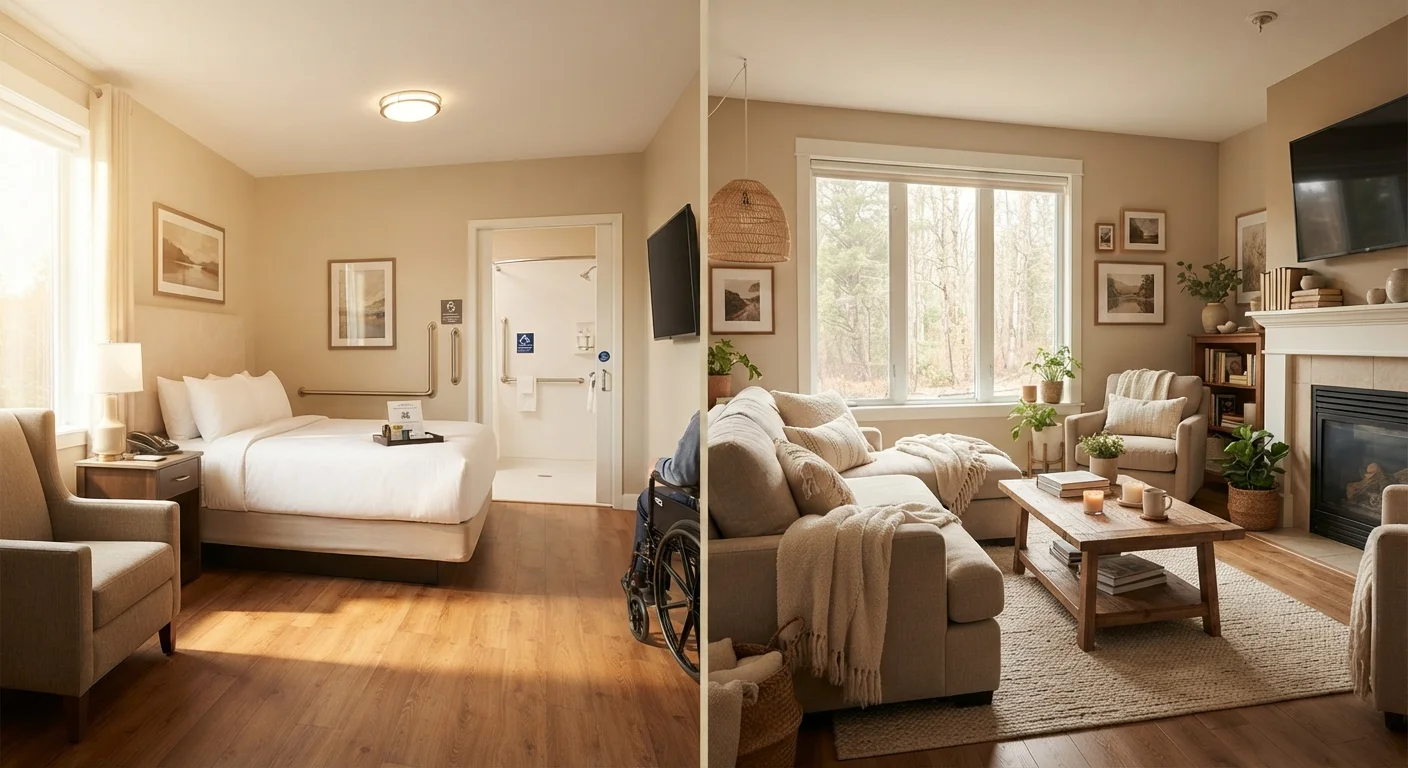
Photo: MyUrbanEscapes.net | Small Escapes. Big Experiences. editorial
—— In This Article
Key Takeaways
- Hotels typically offer built-in accessibility features such as roll-in showers, grab bars, and on-site staff assistance.
- Vacation rentals can provide more space, kitchen access, and a home-like routine that suits longer stays.
- Neither option is universally better — your specific mobility needs, trip length, and travel style determine the fit.
- Always verify accessibility details directly with the property before booking, regardless of which type you choose.
- Rental listings vary widely in how accurately they describe accessibility features, so direct communication is essential.
Standardized ADA-compliant accessible room features
US hotels of qualifying size must provide accessible rooms meeting ADA specifications, giving travelers a reliable baseline of grab bars, roll-in showers, and accessible routes — reducing guesswork at check-in.
On-site staff available around the clock
Front desk, concierge, and housekeeping staff can assist with luggage, room changes, or urgent needs at any hour — a meaningful safety net for travelers with unpredictable health days.
No domestic tasks or self-catering required
Daily housekeeping, fresh towels, and on-site dining options mean seniors can conserve energy for sightseeing rather than managing a household while traveling.
Elevator and accessible-route infrastructure is standard
Modern hotels typically provide elevators, accessible parking spaces, and ramped or level building entrances as a matter of course, reducing the need to investigate these details property by property.
Accessibility descriptions are self-reported and inconsistent
Rental platforms rely on hosts to describe accessibility features, and standards vary widely. What one host calls 'accessible' may not meet the practical needs of a traveler using a walker or wheelchair.
No on-site staff for assistance or emergencies
Most vacation rentals are managed remotely, meaning help during a mobility-related difficulty — a fall, a stuck door, or a malfunctioning shower seat — depends on reaching the host by phone rather than walking to a front desk.
Entry steps and interior stairs are common
Many single-family rental homes have front-door steps, split-level layouts, or bedrooms on upper floors that are incompatible with limited mobility — and these details are not always clearly flagged in listings.
Verification requires active effort before every booking
Unlike hotels with consistent accessible-room categories, each rental property must be individually vetted through direct host communication, adding a meaningful research burden to trip planning.
Why This Decision Matters More with Mobility Needs
For senior travelers managing reduced mobility, chronic pain, or conditions affecting balance, the choice between a hotel and a vacation rental is far more consequential than simple preference. The wrong accommodation can turn a relaxing trip into an exhausting series of workarounds — navigating stairs, hunting for a chair at the right height, or waiting for help that isn't available at 11 p.m.
Both accommodation types have genuine strengths and real weaknesses. The goal here is to lay those out honestly so you can match the option to your actual situation — not a generalized version of it. For a deeper look at how these choices affect your travel budget as well, see our financial and practical tradeoffs breakdown.
Where Hotels Have the Edge
Standardized ADA-compliant accessible room features
US hotels of qualifying size must provide accessible rooms meeting ADA specifications, giving travelers a reliable baseline of grab bars, roll-in showers, and accessible routes — reducing guesswork at check-in.
On-site staff available around the clock
Front desk, concierge, and housekeeping staff can assist with luggage, room changes, or urgent needs at any hour — a meaningful safety net for travelers with unpredictable health days.
No domestic tasks or self-catering required
Daily housekeeping, fresh towels, and on-site dining options mean seniors can conserve energy for sightseeing rather than managing a household while traveling.
Elevator and accessible-route infrastructure is standard
Modern hotels typically provide elevators, accessible parking spaces, and ramped or level building entrances as a matter of course, reducing the need to investigate these details property by property.
The strongest argument for hotels is consistency. Properties in the United States that meet a certain size threshold are required to comply with the Americans with Disabilities Act (ADA), which mandates specific features in designated accessible rooms: roll-in showers or tub transfer seats, lowered beds, grab bars, wider doorways, and accessible routes from parking to the room. You can request an accessible room at the time of booking and have a reasonable expectation of what you'll find on arrival.
Hotels also provide on-site staff around the clock. If a mobility aid breaks, you need extra towels without carrying them yourself, or you have a medical question, someone is reachable. That safety net matters for travelers who manage unpredictable health days.
For short stays of one to three nights — where unpacking fully isn't practical — hotels eliminate the domestic tasks that a rental requires. There's no grocery run, no figuring out the stove, and no concern about whether the cleaning supplies are under a cabinet you can't bend to reach.
Where Vacation Rentals Have the Edge
Accessibility descriptions are self-reported and inconsistent
Rental platforms rely on hosts to describe accessibility features, and standards vary widely. What one host calls 'accessible' may not meet the practical needs of a traveler using a walker or wheelchair.
No on-site staff for assistance or emergencies
Most vacation rentals are managed remotely, meaning help during a mobility-related difficulty — a fall, a stuck door, or a malfunctioning shower seat — depends on reaching the host by phone rather than walking to a front desk.
Entry steps and interior stairs are common
Many single-family rental homes have front-door steps, split-level layouts, or bedrooms on upper floors that are incompatible with limited mobility — and these details are not always clearly flagged in listings.
Verification requires active effort before every booking
Unlike hotels with consistent accessible-room categories, each rental property must be individually vetted through direct host communication, adding a meaningful research burden to trip planning.
Vacation rentals offer something hotels structurally cannot: a living space designed around daily life rather than nightly turnover. For seniors who find hotel rooms cramped, overstimulating, or simply too reminiscent of a clinical setting, a rental's kitchen, living room, and separate bedroom can make a meaningful difference to comfort and stress levels.
A full kitchen allows you to manage dietary needs, medication schedules, and meal timing on your own terms — an advantage that scales significantly on longer trips. Extended rental stays also reduce the fatigue of repeated check-ins and allow you to establish routines that support mobility management.
For travelers with group or family companions, a rental's additional bedrooms and shared spaces reduce costs per person while giving everyone more room to move — including space for mobility aids like walkers, transport wheelchairs, or shower chairs brought from home. Our guide to whole-home vs. private-room rentals walks through this further.
The Verification Problem with Rentals
What 'Accessible' Means in a Rental Listing
There is no regulated standard for the word 'accessible' on vacation rental platforms. Hosts apply it based on their own judgment, which may mean anything from 'no steps at entry' to a fully equipped roll-in shower. When you see accessibility tags in a listing, treat them as a starting point for your own verification, not a guaranteed description. Always ask the host specific questions in writing and request photos of the bathroom and entryway before committing to a booking.
The most significant practical challenge with vacation rentals is that accessibility descriptions in listings are self-reported by owners and vary enormously in accuracy. A listing may state "step-free entry" without noting a two-inch threshold at the front door. "Walk-in shower" sometimes means a low-lipped tub conversion. Grab bars may be present in photos but installed in positions that don't match your specific needs.
Before booking any rental, contact the host directly with a specific written checklist: the number and height of any steps at entry, doorway widths, shower configuration, toilet height, and whether handrails are present on interior stairs. Ask for additional photos of the bathroom and entryway if the listing doesn't include them. This step is not optional — it's the central task of evaluating a rental for mobility needs. Also consider ground-floor vs. upper-floor unit trade-offs, which can be just as important as the features inside the unit.
Making the Right Call for Your Trip
~26%
US adults living with some form of disability
According to the US Centers for Disease Control and Prevention, approximately 1 in 4 US adults has a disability, with mobility being one of the most common types — underscoring why accessible accommodation planning is a mainstream concern.
1 in 4
Accessible hotel rooms required per ADA guidelines
The ADA Standards for Accessible Design set minimum ratios of accessible guest rooms that covered hotels must provide, though the exact number scales with total room count.
There is no universally correct answer. A useful way to frame the decision is to ask two questions: How predictable do my accessibility needs require the accommodation to be? And how long am I staying?
If your mobility needs are highly specific or variable — and you want the assurance of legally mandated features with staff available — a hotel's accessible room is the lower-risk choice. If your needs are stable, well-defined, and you're comfortable doing advance verification, a carefully screened rental can provide a more spacious, cost-effective, and comfortable stay, especially beyond four or five nights.
Location also plays into this calculation. Proximity to pharmacies, flat walking routes, and transport access can matter as much as what's inside the property. And for travelers watching their travel budget, our overview of lodging choices that stretch a senior travel budget offers additional framing for the cost side of this decision.

Vacation Rentals Editorial Team
Vacation Rentals Editorial Team is the collective byline for our editorial team and contributor network. Articles published under this byline or an editorial pen name are researched, written, and reviewed according to our editorial standards for clarity, consistency, and independence before publication.
View author profile