
Vacation Rental vs. Hotel for Senior Travelers: The Financial and Practical Tradeoffs
Vacation rentals often promise better value for longer stays, but the comparison isn't straightforward. A balanced look at costs, accessibility, and convenience for seniors.
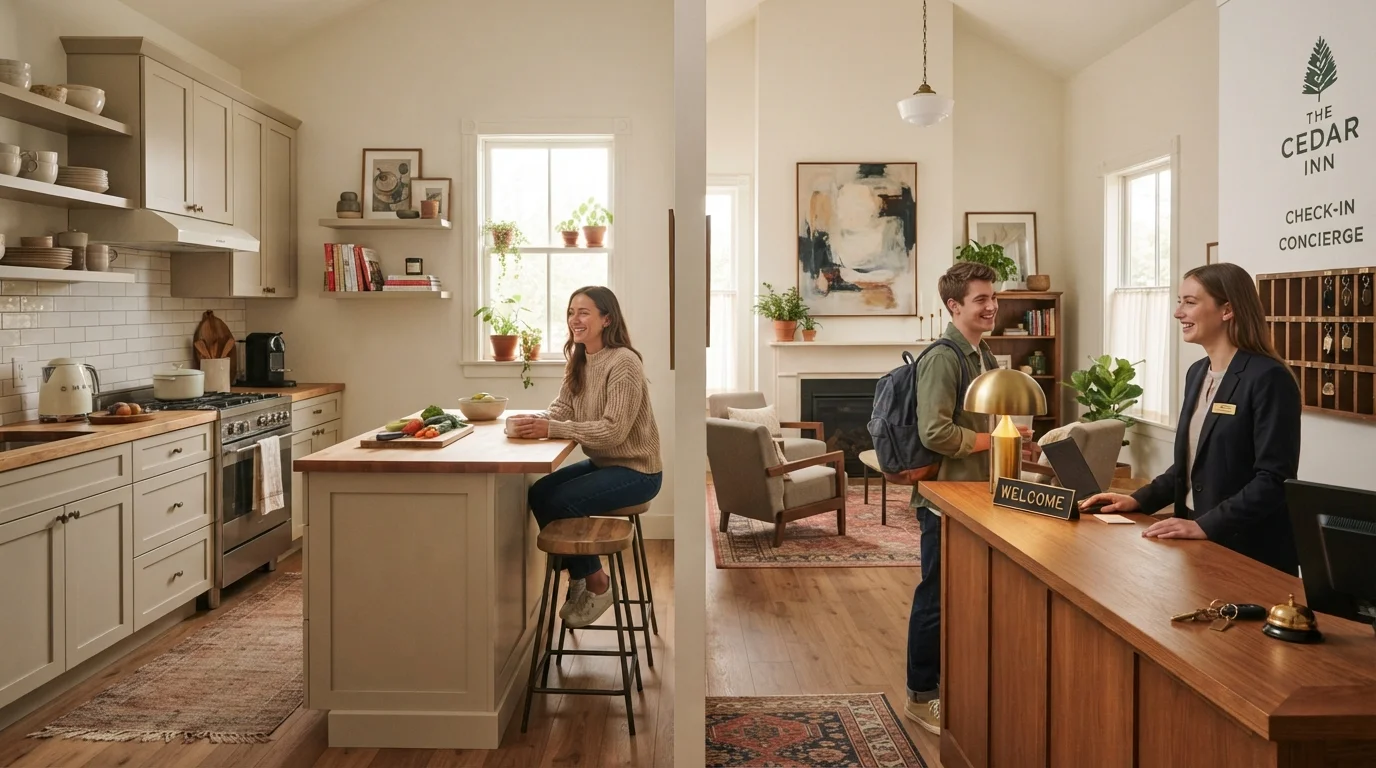
Photo: MyUrbanEscapes.net | Small Escapes. Big Experiences. editorial
—— In This Article
Key Takeaways
- Vacation rentals often cost less per night for longer stays but carry upfront fees that can erode savings on short trips.
- Hotels provide predictable accessibility standards, on-site support, and daily housekeeping that many seniors value highly.
- Vacation rentals give seniors kitchen access and more living space, which can meaningfully reduce food and comfort costs.
- Accessibility in vacation rentals varies widely and must be verified directly before booking.
- Senior discounts at hotels can close the price gap — always ask before paying the listed rate.
How the Costs Actually Stack Up
The nightly rate on a vacation rental listing rarely tells the whole story. Cleaning fees, service charges, and security deposits can add $80–$200 or more to a stay before you've factored in a single night. On a two-night trip, those fees can make a vacation rental significantly more expensive than a comparable hotel room.
The math shifts on longer stays. Spread those fixed fees across seven or ten nights and the per-night cost drops considerably — often well below hotel rates for comparable space and amenities. If you plan to cook most meals rather than eat out, the savings from kitchen access can be substantial. Explore accommodation strategies that balance cost and comfort for a broader look at how different lodging types affect your overall travel budget.
Hotels, meanwhile, have a pricing advantage of their own: senior discounts. Many major chains offer 10–15% reductions for travelers 60 and older, and organizations like AARP negotiate additional member rates. These discounts apply even on short stays, and they're stackable with AAA rates at some properties. Always ask directly — the discount may not appear on the booking screen.
10–15%
Typical senior hotel discount range
Many US hotel chains advertise senior rates for travelers aged 60 and older, though rates and eligibility vary by property.
$80–$200+
Typical vacation rental add-on fees per stay
Cleaning fees and service charges are common on short-term rental platforms and can significantly affect cost on short trips.
Accessibility: Where Hotels Hold a Clear Edge
Under the Americans with Disabilities Act (ADA), hotels in the United States are required to provide accessible rooms with specific features: roll-in showers or tub seats, grab bars, lowered beds, and widened doorways, among others. You can request these rooms in advance, and the hotel is obligated to provide what it has advertised. That predictability matters when mobility or balance is a concern.
Vacation rentals operate under different rules. Private homes listed on short-term rental platforms are generally not subject to ADA requirements, meaning accessibility features vary from one property to the next. A listing may describe itself as "accessible" while lacking grab bars in the bathroom or featuring a step at the entrance. Verifying these details requires direct contact with the host and, ideally, photo confirmation of specific features.
"Accessible" Labels in Rentals Are Not Standardized
On most short-term rental platforms, hosts self-report accessibility features without independent verification. A property tagged as accessible may not meet your specific needs. Never assume — always confirm details directly with the host before completing a booking, and consider having a backup option in mind.
For travelers weighing this carefully, a detailed look at rentals versus hotels for seniors with mobility needs walks through the practical considerations in depth. And if you're open to rentals but want guidance on finding suitable properties, the Finding Rentals hub covers how to search with accessibility in mind.
Practical Comfort and Day-to-Day Experience
Beyond cost and accessibility, the day-to-day experience of each option differs in ways that matter to many senior travelers. Hotels offer daily housekeeping, front-desk assistance, on-site restaurants, and — in many cases — concierge services. If something goes wrong in the room, staff are steps away. That safety net has real value, particularly when traveling solo or managing a health condition.
Vacation rentals offer a different kind of comfort: space, privacy, and the rhythms of home. A full kitchen means you control your diet, which matters if you're managing specific nutritional needs. A separate living room means you and a travel companion aren't confined to a single room. Laundry in the unit reduces how much you need to pack. Longer rental stays amplify these advantages, allowing seniors to settle into a place rather than constantly adapting to new environments.
Ask the Host Specific Accessibility Questions
Before booking a vacation rental, send the host a direct message listing the features you need — grab bars, step-free entry, stair count, shower type. Request photos if the listing doesn't include them. A host's willingness to answer clearly is itself a useful signal about how responsive they'll be during your stay.
Trip length is also a practical factor worth considering separately. Short trips versus extended vacations carry different cost and comfort profiles — and your lodging choice should align with whichever format fits your goals.
| Vacation Rental | Hotel | |
|---|---|---|
| Nightly cost (longer stays) | Often lower per night | Moderate; discounts available |
| Short-stay value | Fees reduce savings | Generally better value |
| ADA accessibility guarantee | Not required; varies widely | Required by law in the US |
| Kitchen access | Typically included | Limited or unavailable |
| Living space | Separate rooms, more space | Usually one room |
| On-site support | Host contact only | Front desk and staff available |
| Housekeeping | Rarely daily | Typically daily |
| Senior discounts | Uncommon | Widely available |
Making the Decision That Fits Your Trip
The most useful approach is to start with your specific trip before comparing prices. How long are you staying? Do you have mobility requirements that need verified accommodations? Are you traveling alone, with a partner, or with family? Will you cook regularly or eat out most meals?
If you're staying four or more nights, cooking matters to you, and you can spend time verifying the property's accessibility features, a vacation rental is worth serious consideration. If the stay is short, accessibility is a priority, or you value the reassurance of on-site staff, a hotel is likely the more practical choice — especially when senior discounts are in play.
For travelers who want to explore more ways to keep accommodation costs in check without sacrificing safety or comfort, practical approaches to affordable lodging offers additional strategies. And if you're curious how your lodging choice fits into a broader trip budget, comparing package tours and independent travel provides useful context for planning the full picture.

Senior Trip Planning Editorial Team
Senior Trip Planning Editorial Team is the collective byline for our editorial team and contributor network. Articles published under this byline or an editorial pen name are researched, written, and reviewed according to our editorial standards for clarity, consistency, and independence before publication.
View author profile