
Staying Safe in an Unfamiliar Rental: Practical Steps Every Senior Should Take
Checking smoke alarms, locating exits, and securing valuables are small habits that make a big difference in any rental stay.
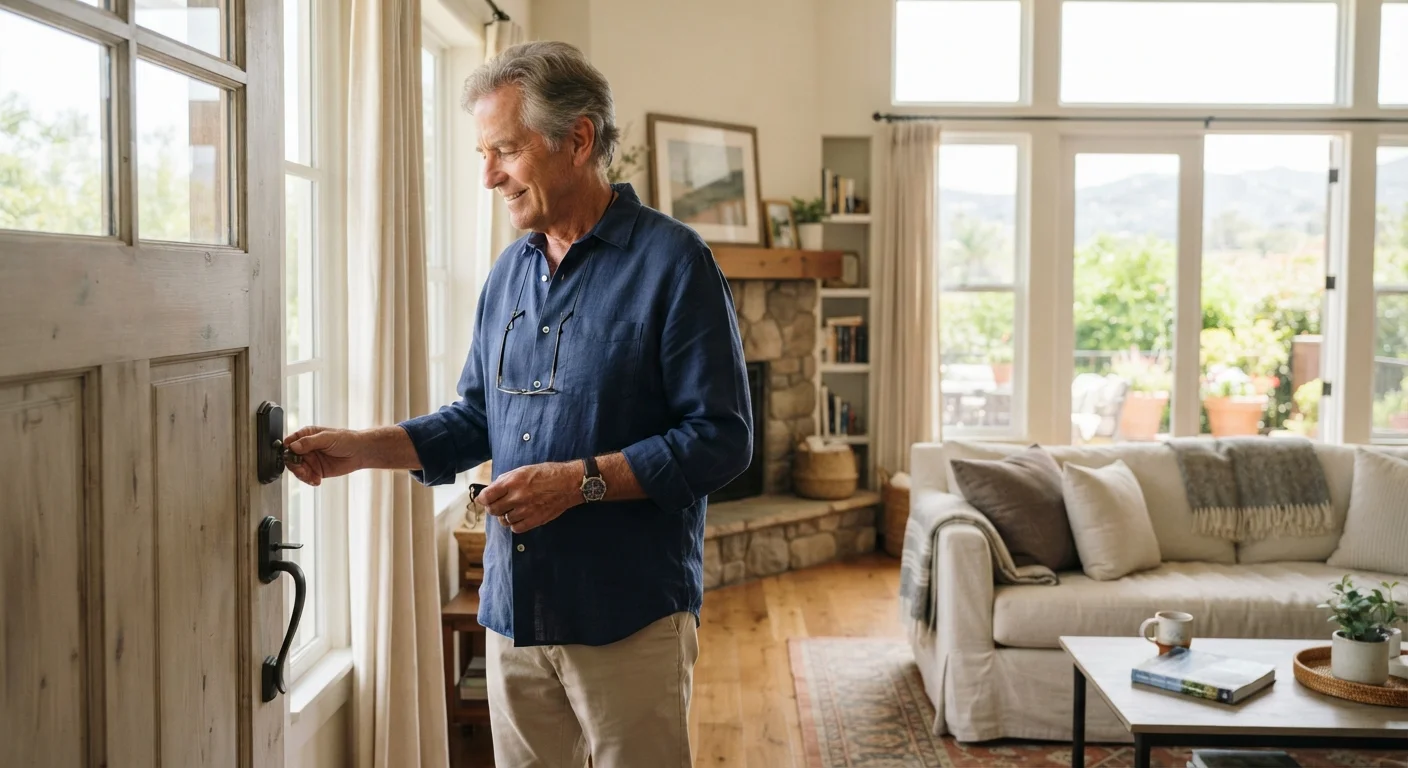
Photo: MyUrbanEscapes.net | Small Escapes. Big Experiences. editorial
—— In This Article
Key Takeaways
- Test locks, smoke alarms, and carbon monoxide detectors within the first hour of arriving at any rental.
- Identify at least two exit routes from the property before unpacking or settling in.
- Store valuables and travel documents in a consistent, discreet location throughout your stay.
- Save the local emergency number and the host's contact details in your phone before you need them.
- Bathroom and stairway hazards cause the most preventable injuries — address them on arrival.
- A brief orientation walk inside and outside the property dramatically reduces disorientation after dark.
Why a Quick Safety Walk-Through Pays Off
Settling into an unfamiliar rental is exciting, but the first thirty minutes are also when most avoidable problems go unnoticed. Furniture is arranged differently, light switches are in unexpected places, and safety equipment may not be where you assume. Taking a calm, methodical walk through the property before you unpack means any concerns surface while you still have daylight, energy, and easy access to the host.
This kind of arrival routine is not about distrust — it is simply good travel practice. Our first-hour arrival guide outlines a calm sequence for getting your bearings. The steps below build on that foundation with a specific focus on safety.
Bring a small safety kit from home
Consider packing a compact kit with a small flashlight, a door wedge alarm, and a non-slip bath mat. These lightweight items address the most common gaps in rental safety without relying on what the host has provided. Many senior travelers find that carrying familiar safety tools reduces anxiety in new environments.
7 Practical Safety Steps for Any Rental Stay
Test every lock on doors and windows
Work through each exterior door and ground-floor window to confirm the locking mechanism functions correctly. A stiff lock that requires unusual force is a problem worth reporting to the host immediately — it could slow your exit in an emergency or simply fail during your stay. Note which key or code controls which entry point so you are never confused at night.
A lock you have tested once is far more reassuring than one you simply assume works.
Locate and test smoke and carbon monoxide detectors
Walk through each room and identify where smoke and carbon monoxide (CO) detectors are installed. Press the test button on each one — a functioning unit will emit a loud beep. If a detector is missing, has a dead battery indicator light, or does not respond to the test, contact your host before your first night. Carbon monoxide is odorless and colorless, making a working detector genuinely life-saving. For more detail on what to verify, see our guide on fire safety and emergency exits in rentals.
Carbon monoxide detectors are just as critical as smoke alarms — verify both on day one.
Identify at least two exit routes
Walk from the main bedroom to each potential exit — front door, back door, accessible window — so you can navigate the path in low or no light if needed. Count the doorways and turns between your sleeping area and the nearest exit. In a multi-story rental, note whether there is a ground-floor option. This is not a drill; it is a thirty-second mental map that could matter significantly in a smoke-filled hallway.
Mentally rehearsing your exit route takes thirty seconds and could matter enormously in a real emergency.
Check the bathroom for fall hazards
Bathrooms account for a disproportionate share of falls in unfamiliar spaces. On arrival, check whether the shower or tub has a non-slip mat or textured surface. Test that grab bars, if present, are firmly anchored. If the rental lacks these features and you need them, a portable suction grab bar or a non-slip mat purchased locally can reduce risk substantially. Our dedicated article on bathroom safety in rental properties covers what to assess and what to ask hosts before booking.
A portable non-slip mat costs very little and addresses the most common indoor fall site in rentals.
Save emergency and host contact numbers immediately
Before you do anything else with your phone, save the local emergency services number (9-1-1 in the US), the nearest hospital or urgent care address, and the host's direct phone number. Write these on a small card and keep it on the kitchen counter or bedside table — useful if your phone is unavailable or the battery dies. Knowing exactly who to call and what to say saves critical time under stress.
Write emergency numbers on paper too — your phone may not be within reach when you need them most.
Store valuables and travel documents in one consistent location
Choose a fixed, discreet spot — a zippered inner pocket of luggage, a drawer with a lock, or a safe if the property has one — and keep passports, extra cash, medication, and insurance cards there every day. Consistency means you always know exactly where these items are, and you will immediately notice if something is missing. Avoid leaving documents on visible countertops or near windows. For context on protecting valuables when you are out exploring, our article on recognizing pickpocket tactics at tourist hotspots is worth a read.
A single consistent storage spot means you always know if something important is missing.
Take a short orientation walk inside and outside
Walk the full interior at a relaxed pace, noting where stairs, thresholds, and low furniture are placed. Then step outside briefly to identify the building entrance from the street, any parking or pathway lighting, and the nearest neighboring property or front desk. Doing this in daylight means you are not navigating unfamiliar terrain for the first time after dark. This simple habit significantly reduces disorientation and minor injuries throughout your stay. For broader orientation strategies in a new city, see orientation habits for new arrivals.
A daytime orientation walk means you never have to navigate an unfamiliar space for the first time in the dark.
When to contact the host vs. the platform
For minor issues — a stiff lock, a missing mat — message the host directly and document the conversation in writing. For serious safety concerns, such as a non-functional smoke detector or a broken exterior lock, contact both the host and the booking platform's support line without delay. Keeping records of all communications protects you if a dispute arises later.
Building Safety Into the Rest of Your Stay
The checks above take under twenty minutes on arrival day, and most of them only need to be done once. After that, a few small habits keep you protected throughout the trip: always lock the door behind you, keep a phone charged at your bedside at night, and leave a light on in a common area if you return after dark.
If you are managing a health condition during your stay, additional planning applies — our article on rental safety for seniors with chronic conditions covers medication storage, emergency contact cards, and what to communicate to hosts in advance. For a broader look at staying safe throughout your journey, the senior traveler's complete safety primer is a useful companion resource.
This article is for general informational purposes only. For health-related decisions or concerns specific to your circumstances, consult a qualified healthcare professional before traveling.

Vacation Rentals Editorial Team
Vacation Rentals Editorial Team is the collective byline for our editorial team and contributor network. Articles published under this byline or an editorial pen name are researched, written, and reviewed according to our editorial standards for clarity, consistency, and independence before publication.
View author profile