
Rental Safety for Seniors Traveling with Chronic Conditions
Managing diabetes, heart conditions, or limited mobility while staying in a rental requires extra planning. Learn what to prioritize and how to prepare.
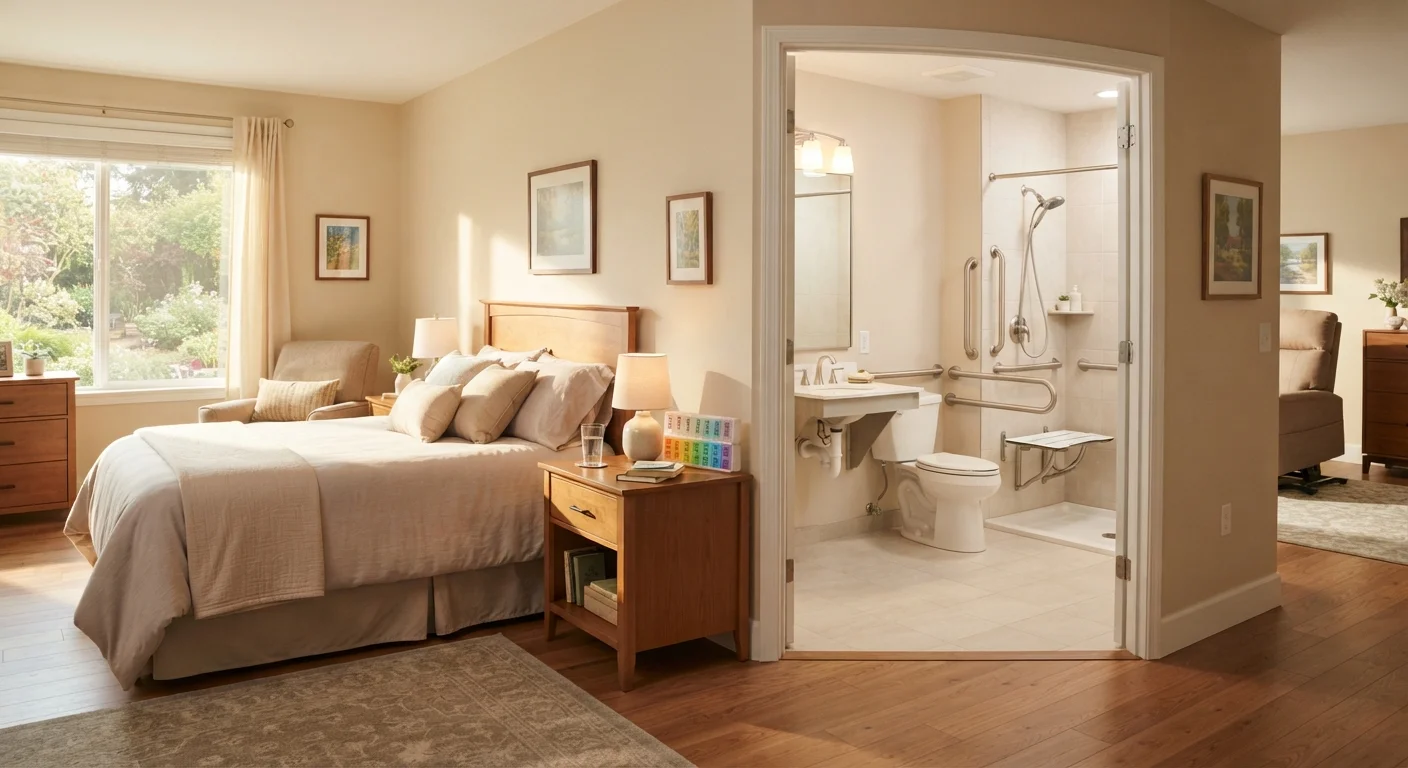
Photo: MyUrbanEscapes.net | Small Escapes. Big Experiences. editorial
—— In This Article
Key Takeaways
- Contact hosts directly to verify accessibility features before confirming any booking.
- Identify the nearest pharmacy and urgent care facility relative to the rental's address.
- Create a written health summary and share it with a travel companion or trusted contact.
- Pack medications in carry-on luggage and bring written prescriptions as backup documentation.
- Assess the rental layout for fall hazards, step thresholds, and lighting before unpacking.
Why Vacation Rentals Require Extra Assessment for Seniors with Chronic Conditions
Hotels have standardized accessibility compliance requirements; vacation rentals do not. That gap matters when you depend on predictable physical environments to manage diabetes, heart disease, arthritis, limited mobility, or respiratory conditions. A listing may advertise itself as "accessible" while still having a step at the front door, a bathtub with no grab bar, or stairs between the bedroom and kitchen.
The good news: with a structured pre-booking review, most risks can be identified and addressed well before your arrival. This article focuses on the specific checks, questions, and preparation steps that seniors managing chronic conditions should prioritize when evaluating and booking a vacation rental.
For broader location-specific considerations, see what to look for when evaluating a rental's location. General safety habits for any unfamiliar rental are covered in practical safety steps every senior should take.
This article provides general educational information and is not a substitute for personalized medical advice. Always consult your healthcare provider before traveling with a chronic health condition.
Best Practices for Assessing and Booking a Safe Rental
Use the following practices as a checklist during your search and booking process. Each addresses a specific vulnerability that chronic conditions can introduce in an unfamiliar living space.
Contact the host with a specific written list of your physical requirements before booking.
Listing descriptions are often incomplete or use vague accessibility language. A direct, written exchange creates a record and forces the host to confirm specific features — or admit they don't exist. This protects you from arriving at a property that doesn't meet your needs.
Map the nearest pharmacy, urgent care center, and hospital relative to the rental address before confirming.
Seniors managing chronic conditions may need prescription refills, blood glucose supplies, or unexpected medical attention. Knowing travel time to these resources — especially in rural or unfamiliar areas — is a safety baseline, not a luxury.
Request photos of the bathroom, bedroom, and entryway from the host if listing images are limited.
Falls are a leading cause of injury among older adults, and bathrooms are high-risk environments. Seeing the actual layout — including shower type, toilet height, and floor surfaces — lets you assess whether the space is manageable or whether you need to bring adaptive equipment.
Prepare a one-page written health summary and share it with a travel companion or emergency contact.
In a medical emergency in an unfamiliar location, verbal communication can be difficult. A written summary listing your conditions, current medications, allergies, and emergency contacts can be critical information for first responders or local medical staff.
Pack all medications and critical health supplies in your carry-on or personal bag — never in checked luggage or a car trunk.
Checked baggage can be delayed, lost, or exposed to extreme temperatures. For travelers managing conditions that require daily medication, an interruption of even one day can create serious health consequences.
Test all critical appliances and utilities upon arrival, especially refrigeration for temperature-sensitive medications.
Insulin, certain biologics, and some other medications require consistent refrigeration. A malfunctioning refrigerator in a rental — a common issue that isn't always caught between guests — can render medications ineffective without any visible warning.
Quick Actions You Can Take Right Now
These steps can be completed before you've even chosen a destination — and each one reduces meaningful risk.
RV Travel Requires a Different Assessment
If you're considering an RV rental rather than a fixed property, the safety considerations shift significantly. Space constraints, generator-dependent climate control, and the physical demands of setup and breakdown all affect how chronic conditions are managed on the road. See RV travel with a chronic condition for guidance specific to that context. As with any travel involving a health condition, consult your healthcare provider before making plans.
Staying Prepared Once You Arrive
Preparation doesn't end at booking confirmation. When you arrive at the rental, walk through the space before you unpack. Identify every trip hazard: loose rugs, dim lighting in hallways, slippery surfaces in the bathroom, and high bed or furniture heights that could cause strain. Remove or reposition rugs if the host permits.
Keep medications at consistent, room-temperature storage — check whether the rental's refrigerator works properly if insulin or other temperature-sensitive medications need refrigeration. Set phone alarms to match your medication schedule, which may shift across time zones.
For broader health management while away from home, managing chronic conditions on the road offers condition-specific planning guidance. And for safety considerations that go beyond medication, see traveling with a chronic condition: safety considerations beyond medication.
36 million
Falls reported among U.S. adults 65+ annually
According to the U.S. Centers for Disease Control and Prevention, falls are the leading cause of injury among older adults — making rental layout assessment a genuine safety priority.
6 in 10
U.S. adults living with at least one chronic condition
The CDC reports that approximately 6 in 10 American adults have a chronic disease, with prevalence increasing significantly among adults over 65.
The Health & Safety hub and Finding Rentals hub offer additional resources for every stage of planning.

Vacation Rentals Editorial Team
Vacation Rentals Editorial Team is the collective byline for our editorial team and contributor network. Articles published under this byline or an editorial pen name are researched, written, and reviewed according to our editorial standards for clarity, consistency, and independence before publication.
View author profile