
The Senior Traveller's Complete Guide to Eastern Europe on a Budget
Eastern Europe offers exceptional value, rich history, and growing accessibility. This end-to-end guide covers destinations, transport, costs, and safety for seniors.
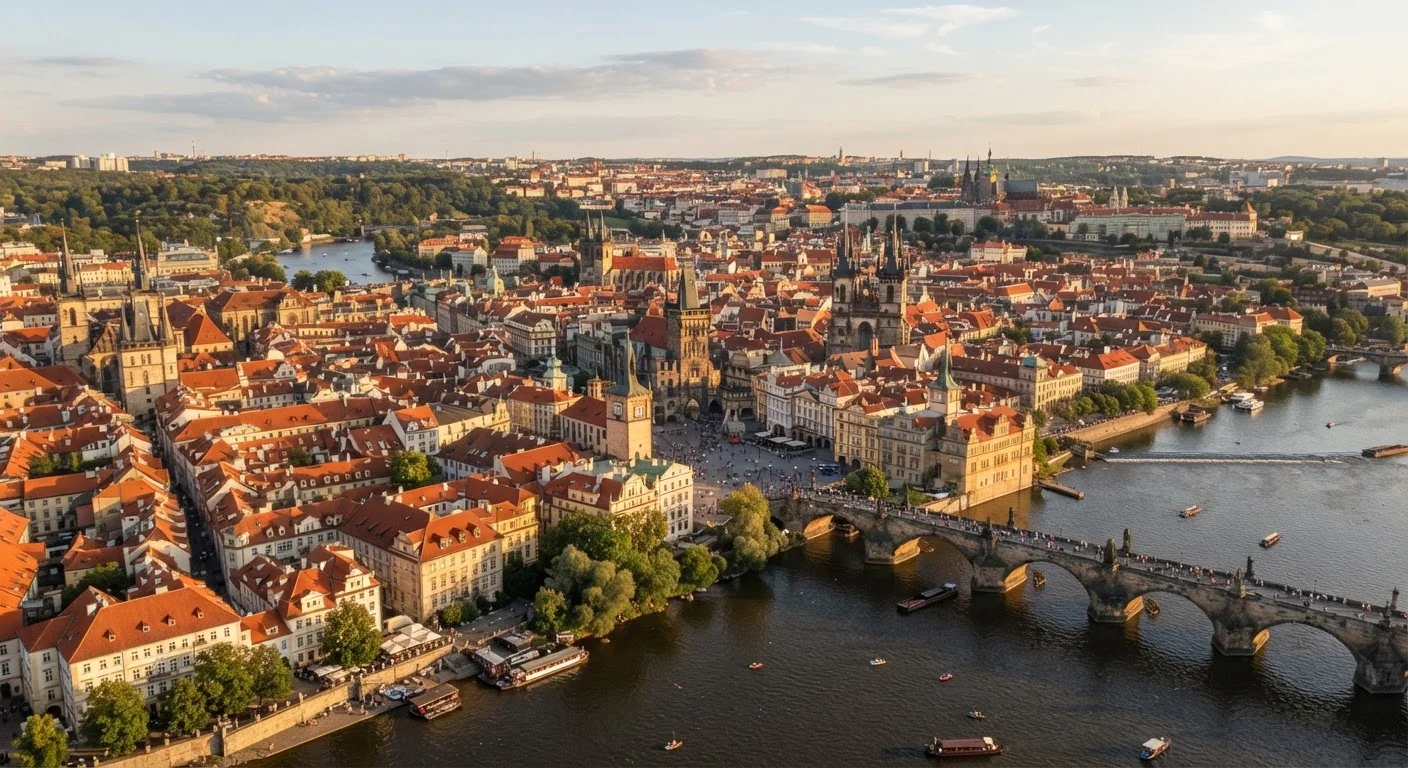
Photo: MyUrbanEscapes.net | Small Escapes. Big Experiences. editorial
—— In This Article
Key Takeaways
- Eastern Europe generally costs 30–50% less than Western Europe for accommodation, meals, and local transport.
- Cities like Kraków, Tallinn, and Ljubljana offer walkable old towns with good accessibility infrastructure.
- Rail passes and regional buses connect most major destinations affordably, often with senior discounts.
- Travel insurance covering pre-existing conditions is especially important for senior visitors to Eastern Europe.
- Shoulder season (April–May and September–October) delivers milder weather and fewer crowds than summer peaks.
- Many Eastern European museums and cultural sites offer reduced or free admission for visitors over 65.
Why Eastern Europe Works for Senior Travelers
Eastern Europe has steadily grown into one of the most rewarding regions for senior travelers seeking history, culture, and genuine value. Compared with Western Europe, everyday costs — meals, local transport, admission fees, and accommodation — are substantially lower, stretching fixed budgets meaningfully further. For a full breakdown of how to structure those savings before you leave home, see our senior travel budgeting guide.
Beyond cost, the region offers compact historic centers that reward slow, unhurried exploration — exactly the pace most senior travelers prefer. Countries like Poland, the Czech Republic, Slovenia, the Baltic states, and Croatia have invested significantly in tourism infrastructure, including accessible pathways, English-language signage, and well-organized public transit in their main cities.
30–50%
Lower daily costs vs. Western Europe
General traveler cost comparisons consistently show Eastern European cities running substantially below Western European equivalents for accommodation, dining, and transport.
65+
Age for senior discounts at many sites
Many Eastern European museums, transit systems, and cultural venues extend discounted or free admission to visitors aged 65 and older on presentation of a valid passport.
$60–$110
Estimated daily mid-range budget (USD)
Based on typical costs for a double-room hotel, two restaurant meals, local transit, and one paid attraction in Poland, Czechia, or the Baltic states.
If Eastern Europe is your first foray into international budget travel, the first affordable international trip guide covers the foundational logistics in depth.
Best Destinations by Budget and Accessibility
Not all Eastern European cities are equal in terms of cost or mobility-friendliness. Here is a practical breakdown:
- Kraków, Poland: One of Europe's most affordable city breaks. The medieval old town (Stare Miasto) is largely flat, walkable, and a UNESCO World Heritage Site. Tram lines are inexpensive and connect outer districts easily.
- Tallinn, Estonia: The walled old town is compact but cobbled; mobility-impaired travelers should plan routes in advance. Accommodation and dining remain well below Western European averages, and public transit is free for registered residents (visitors pay nominal fares).
- Ljubljana, Slovenia: Consistently rated among Europe's most livable small capitals. The riverside center is pedestrianized, relatively flat, and exceptionally clean. Slovenia uses the euro, so no currency conversion is needed for US travelers holding euros.
- Brno, Czech Republic: A university city with lower prices than Prague, a relaxed pace, and good rail connections. Ideal for travelers wanting fewer tourist crowds.
- Český Krumlov, Czech Republic: A fairy-tale riverside town, though its castle hillside requires some uphill walking — factor in mobility needs before booking.
- Split and Dubrovnik, Croatia: Stunning Adriatic coastal cities; Dubrovnik in peak summer is crowded and expensive relative to inland options. Shoulder season improves both conditions significantly.
When evaluating accessibility in Eastern European old towns, look specifically for hotels just outside — rather than inside — the historic core. These properties often have modern elevator access and flat approach streets while still being a short, level walk to major sights.
Medieval cobblestones and uneven pavements inside historic centers can be challenging for travelers with mobility limitations; a slightly peripheral location often solves the problem without sacrificing convenience.
Ask your accommodation directly whether they offer a senior rate — many smaller Eastern European hotels and guesthouses apply an informal discount that never appears on booking platforms.
Independently owned properties in the region frequently have pricing flexibility that chain hotels and online booking systems don't reflect, and a polite direct inquiry often yields meaningful savings.
For a contrasting warm-weather option, our warm-weather escapes guide covers Mediterranean and tropical alternatives.
Getting There and Getting Around
Most US seniors will fly into a major gateway — Warsaw, Prague, Vienna (a convenient Western border entry), or Bucharest — then travel regionally by train or bus. Transatlantic flights to Eastern European hubs are often less expensive than flights to London or Paris, a practical advantage that is easy to overlook.
Rail travel is the most comfortable overland option. Eurail and Interrail passes cover most of the region; many national rail operators also offer discounts for travelers aged 60 or 65 and older. Seats on overnight sleeper trains between cities such as Warsaw–Prague or Budapest–Kraków eliminate one night's accommodation cost while covering ground.
Regional buses operated by companies like FlixBus and national carriers fill the gaps where rail is sparse (particularly in the Balkans), at very low fares. Journey times are longer but comfort is generally acceptable on major routes.
Within cities, trams and metro systems are inexpensive and reliable. Many cities sell multi-day transit passes that work out cheaper than paying per ride — worth purchasing on arrival. Taxis and ride-hailing apps are also affordable by Western standards.
Book Overnight Trains Early for Best Seats
Overnight sleeper compartments between major Eastern European cities book out weeks in advance during summer and around public holidays. Reserve couchettes or private sleeper cabins as soon as your itinerary is confirmed. A private two-berth sleeper compartment on routes like Warsaw–Prague effectively replaces one night's hotel cost while covering hundreds of miles.
Realistic Daily Costs and Budget Planning
Actual spending varies by country and city, but a realistic mid-range daily budget for Eastern Europe as a senior traveler — covering accommodation, meals, local transport, and one or two paid attractions — runs approximately $60–$110 USD per person in Poland, Czech Republic, and the Baltic states, and somewhat lower in Bulgaria or Romania. Croatia's coastal cities trend closer to $90–$130 in peak season.
By comparison, equivalent comfort in Western Europe typically runs $150–$200+ per person daily. That differential compounds quickly over a two- or three-week trip.
Specific cost categories to track:
- Accommodation
- Three-star hotels in city centers: $50–$90/night for a double room in Poland or Czechia; slightly higher in Slovenia and Croatia.
- Meals
- A sit-down lunch at a local restaurant: $8–$14 per person. Dinner at a mid-range restaurant: $15–$25 per person including a drink.
- Admissions
- Most major museums and historic sites charge $5–$15 for entry; senior discounts of 20–50% are common across the region, often available simply on presentation of a passport showing age.
For a complete framework to manage these costs before and during your trip, see the senior traveler's complete guide to saving on every trip. Additional strategies are also collected in our budgeting and discounts hub.
Safety, Health, and Practical Preparations
Eastern Europe is generally safe for tourists. Petty theft — particularly pickpocketing in crowded tourist areas and on public transit — is the most common issue, not violent crime. Standard precautions (money belt, divided cash across bags, awareness in crowded squares) reduce risk substantially.
Travel Insurance Is Non-Negotiable
Standard travel insurance policies frequently exclude pre-existing medical conditions unless you purchase a policy that explicitly covers them. For senior travelers visiting Eastern Europe, ensure your policy includes emergency medical evacuation, which can be costly in countries where direct medical repatriation to the US is required. Read the policy exclusions carefully and purchase coverage before making any non-refundable bookings.
Health and insurance: Travel insurance that covers pre-existing medical conditions and emergency medical evacuation is strongly recommended. Healthcare quality varies considerably across the region — major cities in Poland, Czechia, and the Baltic states have well-equipped private hospitals that routinely treat international patients, but rural areas offer more limited services. Carry a summary of your medical history, current medications (in generic/international names), and your physician's contact information. Always consult your own doctor or travel health specialist before departure regarding vaccinations, medication supplies, and destination-specific health considerations — this article is general travel information, not medical advice.
Practical preparations:
- Register your trip with the U.S. State Department's STEP (Smart Traveler Enrollment Program) before departure.
- Check current entry requirements and any travel advisories at travel.state.gov — these change and should always be verified against official sources.
- Most Eastern European countries accept US passports without a visa for short stays, but verify current rules before booking.
- ATMs are widely available in cities; notify your bank before travel. Currency: Poland uses the złoty, Czechia the koruna, Croatia adopted the euro in 2023, and Bulgaria uses the lev.
Accommodation Strategies That Save Money
Choosing the right accommodation type significantly affects both comfort and cost. For senior travelers, these options consistently deliver value:
- Apartment rentals: In cities where you plan to stay three nights or more, renting a self-catering apartment often undercuts hotel pricing while adding a kitchen (reducing meal costs) and more living space. Our guide to locating accessible rentals walks through how to vet properties for mobility needs and confirm accessibility features before booking.
- Three-star local hotels: Internationally branded chains are not necessary and are typically more expensive. Locally owned three-star hotels in historic centers offer clean, comfortable rooms at considerably lower rates — often with breakfast included.
- Location strategy: Staying within walking distance of a city's main attractions reduces daily transport costs and eliminates the fatigue of long commutes from cheaper peripheral neighborhoods.
- Booking timing: Shoulder season (April–May, September–October) typically brings lower room rates than summer peaks, along with more comfortable temperatures for walking-heavy sightseeing.
Currency and Payment Practicalities
Not all Eastern European countries use the euro. Poland (złoty), Czechia (koruna), and Hungary (forint) have their own currencies. While card payments are widely accepted in cities, smaller towns, markets, and some restaurants still prefer cash. Carrying a modest amount of local currency for day-to-day spending avoids inconvenience and reduces reliance on finding ATMs when you need cash urgently.
Making the Most of Your Trip
Eastern Europe rewards a slower pace. Most senior travelers find that spending three to four nights in each city — rather than rushing through multiple destinations in a single week — produces a far more satisfying and less exhausting experience. Itinerary depth matters more than breadth.
Free and low-cost activities are genuinely abundant: wandering old towns, attending outdoor markets, visiting public parks and riverside promenades, and attending affordable concerts or folk performances at local cultural centers. Many cities also offer free walking tours (tip-based) that provide context and orientation on arrival.
For travelers comparing Eastern Europe with other affordable international regions, our Southeast Asia cost comparison offers a useful parallel look at what your money covers in a very different setting. For those considering a European trip that stays closer to familiar Western infrastructure, Ireland for older visitors provides a complementary option. All of these choices fit within the broader budget trip planning framework that works regardless of destination.
Plan rest days into your itinerary. Afternoons at a café, a slow lunch, or simply sitting in a town square is not wasted time — it is often the most memorable part of a well-paced trip.

Travel On A Budget Editorial Team
Travel on a Budget Editorial Team is the collective byline for our editorial team and contributor network. Articles published under this byline or an editorial pen name are researched, written, and reviewed according to our editorial standards for clarity, consistency, and independence before publication.
View author profile