
Falls, Uneven Ground, and Hidden Hazards in Popular Destinations
Many beloved travel destinations have cobblestones, steep steps, and unmarked drops. Learn how to anticipate and navigate physical hazards abroad.
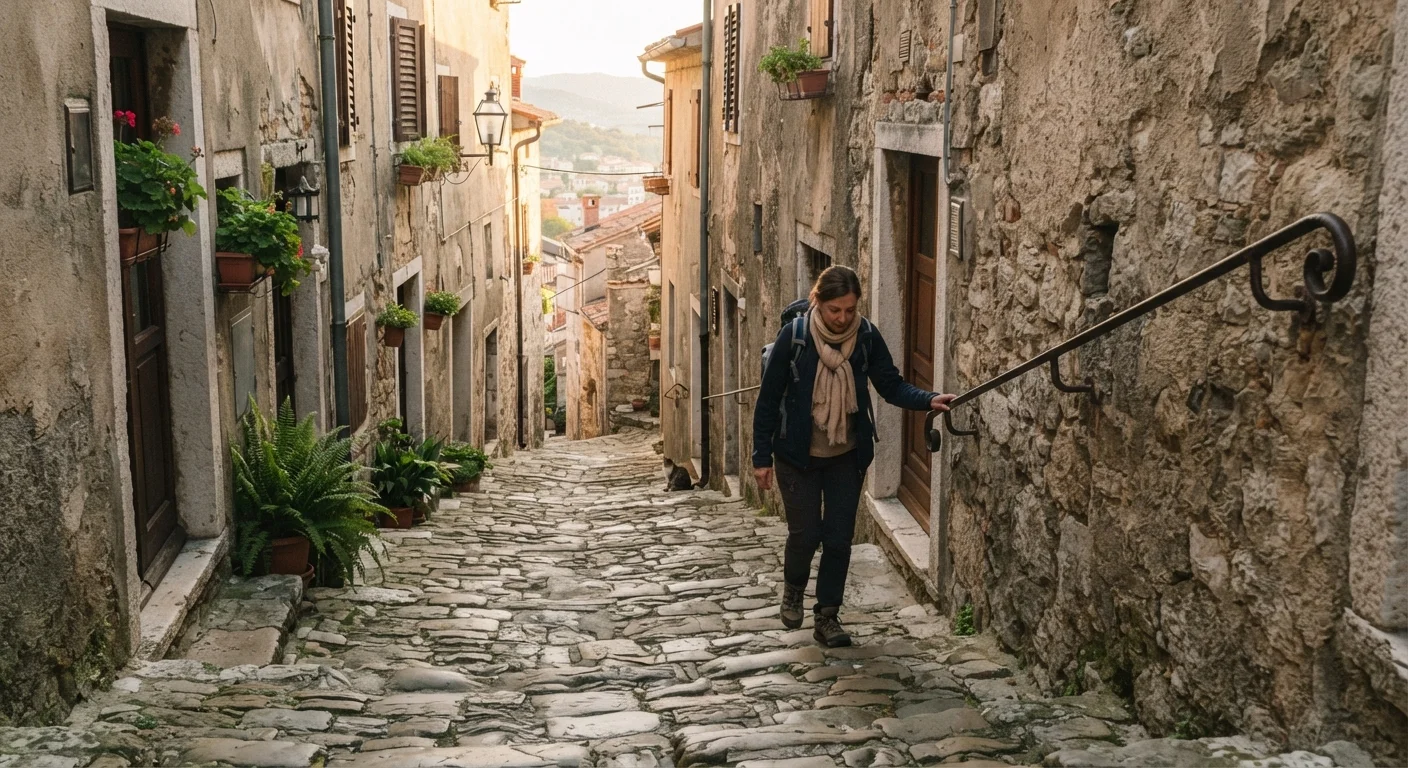
Photo: MyUrbanEscapes.net | Small Escapes. Big Experiences. editorial
—— In This Article
Key Takeaways
- Cobblestones, steep stairs, and unmarked drops are common hazards at popular destinations worldwide.
- Footwear, walking aids, and route research are your first line of defense against falls abroad.
- Many falls occur in accommodations — bathrooms and thresholds pose the highest indoor risk.
- Pre-trip physical preparation can meaningfully reduce your vulnerability on uneven terrain.
- Knowing how to respond quickly after a stumble limits injury severity and speeds recovery.
Why Popular Destinations Pose Unexpected Fall Risks
The destinations seniors most want to visit — Rome's cobbled piazzas, Machu Picchu's stone terraces, Lisbon's steep hillside lanes — are often the ones with the most unforgiving footing. Charm and physical hazard frequently travel together. Historic sites predate modern accessibility standards, and even newer tourist hotspots can feature unmarked elevation changes, slick stone surfaces after rain, and poor lighting in archways or underground passages.
Falls are one of the leading causes of travel-related injury for adults over 65, according to general travel medicine literature. Yet most are preventable with the right habits, gear, and situational awareness. The tips below are designed to help you move confidently through real-world terrain — not avoid it altogether. For broader pre-departure preparation, see our guide on building physical stamina before a trip.
Medication and balance awareness
Some medications — including certain blood pressure drugs, sedatives, and diuretics — can affect balance, coordination, or blood pressure when standing quickly. If you take any such medications, discuss travel-specific risks with your doctor before departure. This is general information only; your healthcare provider is the right person to assess your individual situation.
On-the-Ground Safety Habits That Make a Real Difference
Choose footwear engineered for grip, not appearance
Sandals, loafers, and smooth-soled dress shoes are among the most common contributors to travel falls. On wet stone, tiled plazas, or sloped pathways, traction matters enormously. Look for closed-toe shoes with a rubber lug sole and a low, wide heel — these features reduce slip risk and improve stability without requiring specialized hiking boots. Break in new footwear at home before your trip; blisters and discomfort change your gait in ways that increase stumble risk.
Smooth-soled shoes are among the most common contributors to travel falls on historic terrain.
Use a walking pole or collapsible cane — even if you don't need one at home
A lightweight trekking pole or folding cane provides a third point of contact with the ground, dramatically improving balance on uneven surfaces. Many travelers who have no daily need for a walking aid find them indispensable on cobblestones or mountain paths. A collapsible model fits easily in checked luggage or a day bag. Using one is not a sign of limitation — it is a practical tool that experienced hikers and seasoned travelers of all ages rely on.
A collapsible walking pole is a practical tool, not a sign of limitation, on uneven terrain.
Slow your pace and scan the ground a few steps ahead
Tourist sites are visually overwhelming by design — murals, skylines, and signage constantly pull your gaze upward. This is exactly when uneven pavers, step-downs, and drainage grates cause falls. Train yourself to pause before entering a new surface and take a moment to scan it. Walk at a pace that lets you react, especially in areas with crowds that may jostle you or obscure hazards underfoot. Rushing between sites is rarely worth the risk.
Visual distractions at tourist sites are a leading reason seniors miss hazards underfoot.
Identify handrails before you need them
Many historic stairways have handrails on only one side — or none at all. As you approach steps, locate the rail before you commit to the descent. If there is no rail and the steps are steep, consider whether an alternate route exists. When a rail is available, use it even if you feel steady; conditions change quickly in heat, after a meal, or following hours of walking when fatigue sets in. Don't let pride override a simple precaution.
Locating a handrail before descending stairs is one of the simplest fall-prevention habits.
Stay alert to hidden drops, gaps, and raised thresholds
Unmarked step-downs at shop entrances, gaps between ferry gangways and docks, raised thresholds in historic doorways, and uneven curbs near busy roads are frequently underestimated hazards. They are easy to miss mid-conversation or when wearing bifocals that alter depth perception at the lower field of vision. A habit of pausing briefly at any transition between surfaces — indoors to outdoors, pavement to grass, street to shop — builds the reflex to check before stepping.
Pausing briefly at surface transitions is a simple reflex that prevents a significant share of falls.
Know what to do immediately after a stumble
Even careful travelers occasionally trip. If you stumble, resist the instinct to spring up immediately — adrenaline can mask pain, and rising too quickly after a sudden movement increases fall risk further. Stay still for a moment, assess whether you feel pain or dizziness, and accept assistance from those nearby. If you fall and hit your head, experience chest pain, or cannot bear weight on a limb, seek medical evaluation promptly rather than waiting to see how you feel. Traveling with a written list of your medications and your physician's contact information will help local providers assist you effectively.
After a stumble, stay still briefly and assess before rising — adrenaline can mask real injury.
Research terrain before booking excursions
Before committing to a shore excursion, walking tour, or day trip, ask specifically about the surface types, elevation changes, and distance involved. Many tour operators will share this on request, and traveler review platforms often include comments about accessibility. Choosing routes that match your current stamina and mobility is not limiting your experience — it is protecting it.
Putting It All Together Before You Go
Fall prevention starts well before you board a plane. Research your destination's terrain using street-level mapping tools and traveler forums that specifically discuss accessibility. When booking accommodations, ask direct questions — listing language can be misleading, as explored in our article on why "no steps" listings don't always mean what you think. Once you've arrived, do a slow walkthrough of your rental or hotel room to identify thresholds, bathroom grab bars, and any loose rugs — the bathroom safety assessment guide provides a useful checklist for this.
If you're choosing between cruise ports or shore excursions, factor in physical demands early. Our guide to matching cruise destinations to your comfort level covers how to weigh terrain difficulty against your mobility. Finally, revisit your full safety preparation picture — many seniors have gaps they haven't considered, detailed in what seniors often overlook when planning for travel safety.
This article provides general travel safety information for educational purposes and is not a substitute for personalized medical advice. Consult your healthcare provider before traveling, particularly if you have mobility concerns, balance conditions, or take medications that may affect coordination.

Travel Health & Safety Editorial Team
Travel Health & Safety Editorial Team is the collective byline for our editorial team and contributor network. Articles published under this byline or an editorial pen name are researched, written, and reviewed according to our editorial standards for clarity, consistency, and independence before publication.
View author profile