
The American Southwest for Senior Travellers: Parks, Pueblos, and Practical Logistics
A complete guide to exploring the Southwest — covering national parks, altitude considerations, accessibility, best seasons, and how to pace an unhurried itinerary.
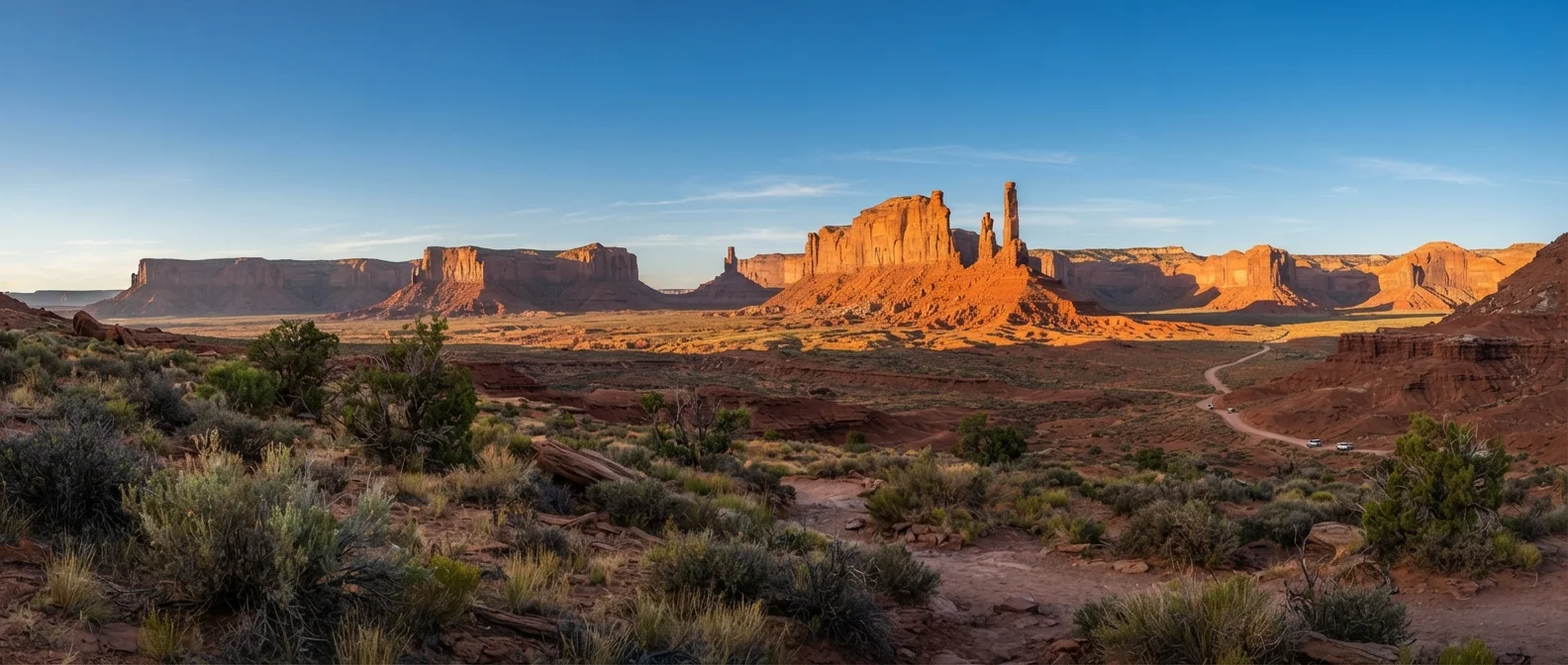
Photo: MyUrbanEscapes.net | Small Escapes. Big Experiences. editorial
—— In This Article
Key Takeaways
- Spring and fall offer the most comfortable temperatures for seniors visiting Southwest parks.
- Altitude above 6,000 feet requires acclimatization time — plan rest days at elevation.
- The America the Beautiful Senior Pass grants lifetime access to national parks for travelers 62 and older.
- Many park visitor centers and paved viewpoints are wheelchair-accessible without any hiking required.
- Self-paced road trips allow flexible rest stops and personalized daily mileage.
Why the Southwest Works Well for Senior Travelers
The American Southwest — broadly encompassing Arizona, New Mexico, Utah, and southern Nevada — ranks consistently among the most rewarding domestic regions for travelers aged 60 and older. The reasons are structural, not just scenic. Major gateways including Phoenix, Tucson, Albuquerque, Las Vegas, and Salt Lake City all have large international airports with direct flights from most U.S. cities, eliminating the need for complex connections. Once on the ground, distances between headline destinations are drivable in comfortable half-day segments.
The region's cultural depth is equally compelling. Indigenous history stretching back thousands of years is preserved at sites like Mesa Verde, Chaco Culture, and Bandelier — places where you absorb meaning at a slow walk rather than a sprint. That rhythm suits travelers who prefer depth over volume. For those weighing accommodation types, our guide to locating accessible vacation rentals covers how to find properties that genuinely meet mobility and comfort needs throughout the region.
62+
Age for America the Beautiful Senior Pass
U.S. citizens and permanent residents 62 and older qualify for a lifetime national parks pass, per the National Park Service.
~4.7M
Annual Grand Canyon visitors
The Grand Canyon attracts approximately 4–5 million visitors annually, with shoulder seasons notably less crowded, according to NPS visitation data.
48–72 hrs
Typical altitude adjustment window
Most travelers adjusting to moderate altitude (5,000–8,000 ft) experience symptom resolution within two to three days with rest and hydration.
Altitude and Climate: What You Need to Know First
The Southwest's biggest variable — and the one most frequently underestimated — is elevation. Sedona sits at roughly 4,350 feet. Santa Fe is near 7,000 feet. Bryce Canyon's rim exceeds 8,000 feet. At these altitudes, the air holds less oxygen, and physical exertion becomes measurably harder, even for people who are otherwise fit. Symptoms of mild altitude adjustment — fatigue, mild headache, disrupted sleep — can appear within hours of arrival and typically resolve within 48 to 72 hours with adequate rest and hydration.
Altitude Requires Advance Planning
If you have a cardiovascular or respiratory condition, or take medications that affect blood pressure or circulation, consult your physician before booking any high-elevation destination in the Southwest. Do not assume that feeling well at sea level predicts how you will feel at 7,000 feet — the difference is physiologically significant. Allow at least one full rest day after arriving at elevation before attempting any physical activity.
Heat is the other defining factor. Phoenix and the Sonoran Desert floor regularly exceed 105°F from June through August. At these temperatures, outdoor activity before 8 a.m. and after 5 p.m. is the standard local practice — not a precaution for the faint-hearted. The Health and Safety hub has additional guidance on heat management and pre-trip health preparation worth reviewing before you finalize your itinerary.
This article provides general travel information. Consult your physician before traveling to high-altitude destinations or in extreme heat, particularly if you have cardiovascular, respiratory, or other chronic health conditions.
Best Seasons to Visit
For most senior travelers, March through May and September through November represent the optimal windows. Daytime temperatures in the 60s–80s°F are common across desert elevations, wildflowers bloom in April and May in many canyon areas, and the summer crowd pressure has either not yet arrived or has subsided.
Winter travel is viable in the lower desert zones — Tucson, Phoenix, and the Sonoran region attract a large seasonal population of retirees for exactly this reason. Higher elevation parks like Zion and Bryce remain open year-round, but icy trails in winter introduce real hazards that warrant serious consideration. Summer, despite the heat, works well at elevation — Taos and Santa Fe remain pleasant when Arizona's desert floor is at its most punishing.
Shoulder Season Offers the Best Balance
Late September through mid-November delivers the Southwest's most favorable combination of cooler temperatures, thinner crowds, and full park services. Many popular viewpoints and trailheads that are packed in July are comfortably uncrowded in October, allowing a more relaxed and personal experience without competing for parking or space at scenic overlooks.
Anchor Destinations: Parks and Pueblos Worth Prioritizing
Rather than attempting a rushed sweep, the most satisfying Southwest trips are built around three or four anchor destinations with day-trip flexibility built in.
- Grand Canyon South Rim (Arizona): The rim trail is largely paved and flat, offering unobstructed views without descending into the canyon. Shuttle buses run frequently and eliminate parking stress. The canyon interior descent is strenuous and not necessary to have a profound experience here.
- Sedona (Arizona): Renowned for red rock scenery accessible by Jeep tour, scenic drive, or flat paved walkways near Uptown. The town itself is compact and walkable with abundant dining options.
- Santa Fe (New Mexico): One of the most culturally rich small cities in the country — museums, galleries, and the historic Plaza are all within easy walking distance. Healthcare facilities are also solid for a city of its size.
- Mesa Verde National Park (Colorado): The cliff dwellings require ranger-guided tours involving ladders and some climbing — review specific tour requirements in advance. The Chapin Mesa Archeological Museum and several mesa-top sites are accessible with minimal exertion.
- Zion National Park (Utah): The free shuttle system runs the length of the canyon floor. The Pa'rus Trail is paved and accessible. The Narrows and Angels Landing are strenuous and not appropriate for all visitors — the canyon's grandeur is fully visible from the valley floor.
Our complete guide to warm-weather escapes explores how to match destination types to your comfort priorities across the broader Southwest region.
Book ranger-guided tours at Mesa Verde well in advance — Cliff Palace and Balcony House tours sell out weeks ahead in peak season, and same-day availability is rare.
These tours are the only access point for the most significant cliff dwellings; missing them due to last-minute planning is one of the most common disappointments in Southwest travel.
Request a ground-floor room or accessible unit when booking Sedona hotels — the town's terrain is deceptively sloped in places that aren't obvious from online listings.
Many Sedona properties are built into hillside lots, and interior room elevations can vary significantly from the parking level, creating unexpected mobility challenges.
Accessibility on the Ground
The National Park Service has invested significantly in accessibility infrastructure. Most visitor centers are fully accessible, and many parks offer paved viewpoints, accessible restrooms, and compliant parking areas. Where trails are unpaved or involve significant grade changes, ranger staff can advise on the most suitable options for individual mobility levels — this is a conversation worth having at the visitor center on arrival, not after you've already committed to a route.
Motorized mobility devices are permitted on paved surfaces and designated paths in all national parks. Some parks also offer beach wheelchairs or all-terrain mobility devices on loan — availability varies by location and season, so confirm directly with the park before your visit. Travelers who use RVs as their base may find the Desert Southwest RV destinations guide useful for identifying campgrounds with full hookups and accessible facilities near the parks listed here.
Accessibility Features Vary by Park and Season
While the NPS has made substantial accessibility improvements across its properties, individual trail conditions, shuttle availability, and loan equipment programs differ by park, season, and funding. The NPS website maintains updated accessibility information for each park, and calling the visitor center directly before your trip is the most reliable way to confirm current conditions for your specific mobility needs.
Pacing an Unhurried Southwest Itinerary
The cardinal mistake in Southwest trip planning is overloading the calendar. Grand Canyon to Zion to Bryce to Monument Valley to Mesa Verde is a beautiful list on paper and an exhausting week in practice. A more sustainable model treats each destination as a two- or three-night base, leaving one day per stay as genuinely unscheduled — available for a revisit, a rest, or an unexpected discovery.
Build drives of no more than three hours between overnight stops. The Southwest is scenic at highway speed, but fatigue accumulates on long desert stretches. Mid-afternoon heat in summer makes post-lunch driving more draining than morning hours. Starting early and being settled by mid-afternoon is a rhythm that aligns well with both the climate and a comfortable pace.
Warm-weather travel planning for seniors offers a foundational framework for structuring a trip of this type if you are approaching Southwest travel for the first time.
Practical Logistics: Getting There and Getting Around
Fly into the gateway city closest to your itinerary's start point — Phoenix Sky Harbor, Albuquerque Sunport, Las Vegas Harry Reid International, and Salt Lake City International all offer broad domestic connectivity. Car rental is effectively essential for park-based itineraries unless you are joining an organized tour; public transit does not connect the major parks.
The America the Beautiful Senior Pass, available to U.S. citizens and permanent residents aged 62 and older, provides lifetime access to national parks and federal recreational lands for a one-time fee. This is one of the most straightforward travel savings available to senior Americans — the Senior Traveler's Complete Guide to Saving on Every Trip covers this and other discount programs in detail. The pass can be purchased online through the U.S. Geological Survey store or in person at any fee-collecting federal recreation site.
Travel insurance that covers trip interruption and emergency medical evacuation is worth considering for any Southwest trip, particularly given the remote terrain between parks. Verify current visa, entry, and health requirements with official government sources before any cross-border travel. Prices, availability, and park operating hours can change — always confirm details directly with parks and service providers before your departure date.
“The best Southwest trips are not the ones that cover the most ground — they are the ones where travelers give themselves permission to stay long enough to actually see what they came to see.”
— Top Destinations Editorial Team, Senior Travel Planning editors

Top Destinations Editorial Team
Top Destinations Editorial Team is the collective byline for our editorial team and contributor network. Articles published under this byline or an editorial pen name are researched, written, and reviewed according to our editorial standards for clarity, consistency, and independence before publication.
View author profile