
Coastal Towns vs. Inland Cities: Choosing the Right US Destination as a Senior
Weighing coastal charm against inland convenience? Here's how each setting stacks up for accessibility, pace, climate, and ease of travel for older Americans.
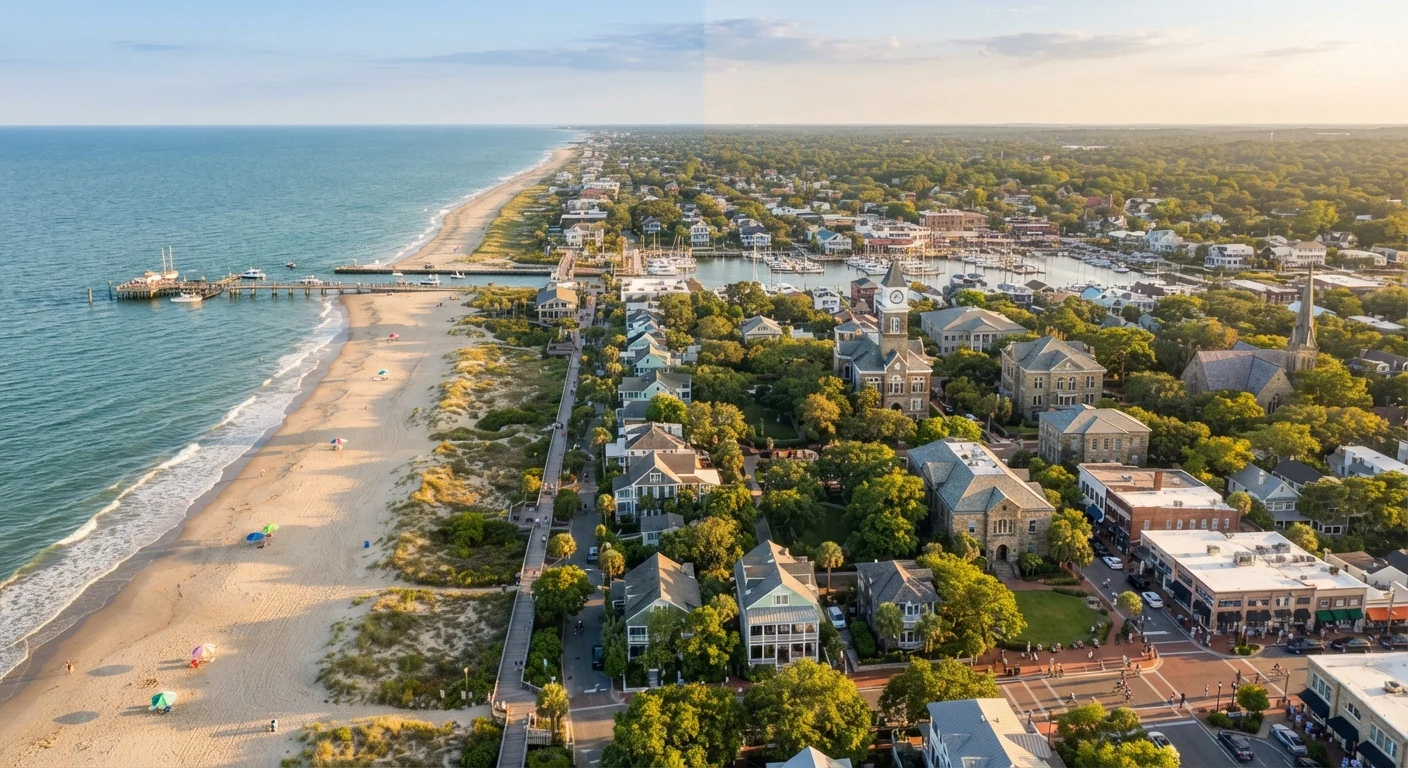
Photo: MyUrbanEscapes.net | Small Escapes. Big Experiences. editorial
—— In This Article
Key Takeaways
- Coastal towns typically offer calmer pacing and scenic walks, but terrain and humidity can vary widely by region.
- Inland cities generally provide stronger healthcare infrastructure, transit options, and year-round accessibility.
- Climate sensitivity, mobility needs, and preferred activities are the three most useful filters when choosing between the two.
- Neither setting is universally superior — the right choice depends on your specific travel priorities.
- Both environments have standout senior-friendly examples across the US worth considering.
How the Two Settings Differ From the Start
Choosing between a coastal town and an inland city is rarely just about scenery. It involves climate exposure, terrain underfoot, distance from medical facilities, transportation infrastructure, and the general pace of daily life. For seniors, each of those factors carries real weight.
Coastal towns in the US range from the flat, wide-planked boardwalks of Cape May, New Jersey to the hillier terrain of Carmel-by-the-Sea in California. Inland cities cover an equally broad spectrum — from the flat, grid-based walkability of San Antonio to the denser, transit-rich neighborhoods of Pittsburgh. Generalizations only go so far, but meaningful patterns do emerge when you compare these environments through a senior-focused lens.
For a closer look at how terrain shapes the experience, see our comparison of mountain versus beach town travel styles after 65.
Climate and Comfort: Coastal vs. Inland Realities
Coastal locations benefit from maritime influence — temperatures tend to be moderated by proximity to water, which can reduce extreme heat in summer and soften cold in winter. However, humidity levels along the Gulf Coast and Southeast Atlantic seaboard can make even moderate temperatures feel oppressive for those with respiratory or cardiovascular sensitivities.
Inland cities vary dramatically. The desert Southwest — Tucson, Albuquerque — offers dry heat that many older travelers find more manageable than coastal humidity, despite higher peak temperatures. Midwestern cities like Kansas City face wide seasonal swings, making spring and fall the most comfortable windows for visits.
The practical upshot: neither setting guarantees comfort. Seasonal timing matters as much as geography. Travelers with climate-related health considerations should consult their physician before committing to a destination with known extremes.
| Coastal Towns | Inland Cities | |
|---|---|---|
| Climate predictability | Moderated by water, humidity varies widely | Wide regional variation; dry climates available |
| Terrain for walking | Often uneven — sand, cobblestone, bluffs | Typically flatter grids; varies by city |
| Healthcare access | Limited in smaller or seasonal towns | Generally strong in mid-size to large cities |
| Public transportation | Often minimal outside major resort areas | Broader options in established urban centers |
| Year-round activity range | Seasonal gaps common in smaller towns | Cultural programming typically year-round |
| Overall pace | Slower, leisure-focused | Variable; neighborhoods range from relaxed to busy |
Accessibility, Terrain, and Getting Around
Flat, paved beach promenades are genuinely accessible — but they represent a fraction of the coastal experience. Sand, cobblestone historic districts, and steep coastal bluffs are far more common. Seniors using mobility aids should research specific town layouts rather than assuming a coastal location is inherently flat.
Inland cities, particularly those with established transit systems, often outperform coastal towns on practical accessibility. Cities like Washington D.C., Chicago, and San Antonio have invested significantly in ADA-compliant transit, wide sidewalks, and proximity to medical centers. The accessibility trade-offs between urban and rural rentals is a useful companion read for seniors weighing accommodation options alongside destination type.
For culturally rich destinations where mobility is less of a burden, see our guide to accessible cultural hubs across America.
Research the Specific Town, Not Just the Region
A coastal town's accessibility profile can differ dramatically from a neighboring one — flat boardwalk communities and cliff-top villages may share the same coastline. Before booking, look up the town's terrain on street-level mapping tools and check whether your accommodation is within comfortable walking distance of restaurants, pharmacies, and any transport links. This step takes 20 minutes and can prevent significant frustration on arrival.
Healthcare Proximity and Peace of Mind
One underappreciated factor in destination planning for older travelers is proximity to quality healthcare. Inland cities — especially mid-size and large metros — typically host major hospital systems, specialists, and urgent care networks within a short drive.
Many coastal towns, by contrast, are seasonal communities where medical infrastructure is limited. A popular beach destination in the off-season may have reduced clinic hours, and the nearest hospital could be 30–60 minutes away. This matters for routine prescription needs as much as emergencies.
Seniors managing chronic conditions or traveling solo should treat healthcare access as a non-negotiable planning criterion, not an afterthought. Destinations worth considering on budget grounds are covered in our look at affordable US cities for senior travelers, many of which also score well on healthcare proximity.
60+ min
Typical drive to nearest hospital in some rural coastal areas
The Rural Health Information Hub notes that many seasonal coastal communities lack year-round hospital services, affecting response times for visitors.
~90%
ADA compliance rate in major US transit systems
The Federal Transit Administration reports that the vast majority of fixed-route transit vehicles in large US urban areas meet ADA accessibility standards.
Pace, Culture, and What You'll Actually Do
Coastal towns tend to attract travelers seeking a slower rhythm — morning walks on the shore, afternoon reading, seafood dinners at early seatings. That unhurried character suits many seniors perfectly. But visitors staying more than a few days may find the activity range limited, particularly outside peak season when restaurants and attractions reduce their hours.
Inland cities offer broader cultural programming: museums, performing arts, historic neighborhoods, farmers markets, and culinary scenes that function year-round. For travelers who find fulfillment in structured cultural engagement rather than passive relaxation, an inland destination typically delivers more per day.
The US regions that reward slow, relaxed travel covers destinations in both categories worth exploring at a measured pace. And if you're considering a longer stay, our guide on what extended stays in a US city really involve offers an honest assessment.

Top Destinations Editorial Team
Top Destinations Editorial Team is the collective byline for our editorial team and contributor network. Articles published under this byline or an editorial pen name are researched, written, and reviewed according to our editorial standards for clarity, consistency, and independence before publication.
View author profile