
Accessible Cultural Hubs Across America Worth Putting on Your Travel List
Museums, music scenes, historic districts, and arts quarters — a curated look at US cities where culture is rich and getting around doesn't require a lot of effort.
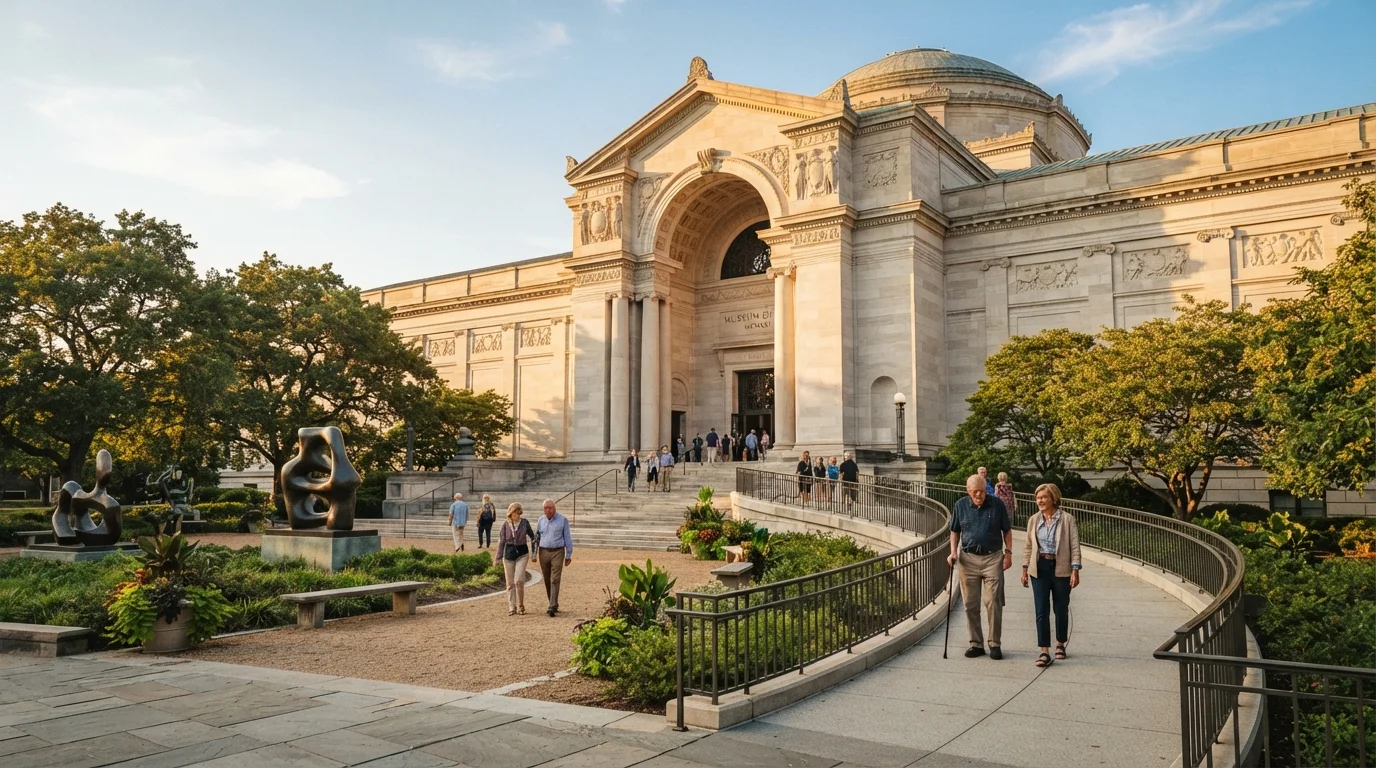
Photo: MyUrbanEscapes.net | Small Escapes. Big Experiences. editorial
—— In This Article
Key Takeaways
- Several major US cities combine deep cultural offerings with flat terrain, good transit, and accessible venues.
- Proximity to quality healthcare and manageable airport logistics matter as much as the cultural calendar.
- Free or reduced museum admission for seniors is widely available but often requires knowing where to look.
- Pacing matters: cities with compact cultural districts allow meaningful visits without exhausting walking distances.
- Mild climates extend comfortable travel windows well beyond the traditional summer season in many of these destinations.
Why Cultural Access and Physical Accessibility Must Go Together
A city can have world-class museums and a thriving arts scene, but if navigating it requires steep hills, scarce seating, or confusing transit, many older travelers will find the experience more draining than rewarding. The cities highlighted here earn their place on this list by scoring well on both dimensions: genuine cultural depth and the practical infrastructure that makes access straightforward.
Factors evaluated include terrain and walkability, availability of accessible transit, proximity to major medical centers, airport ease, and how broadly cultural institutions have invested in senior-friendly admission policies and physical accommodations. For travelers weighing coastal versus inland options, our guide to coastal towns versus inland cities breaks down how each setting performs on these same criteria.
Washington, D.C. — Free World-Class Museums on Flat Ground
The US capital is arguably the most culturally generous city in the country for older travelers. The Smithsonian Institution's 19 museums and galleries — including the National Museum of American History, the National Air and Space Museum, and the National Portrait Gallery — charge no admission. The National Mall connecting them is largely flat and wide, with benches placed at regular intervals.
The Metro system is fully ADA-compliant with elevators at most stations, and the city's medical infrastructure is exceptionally strong. Fly into Reagan National for a short, manageable approach to the city center. Avoid peak summer heat; spring and fall offer comfortable temperatures and thinner crowds.
Nineteen Smithsonian museums charge no admission — the cultural value-to-cost ratio is unmatched anywhere in the US.
Philadelphia, Pennsylvania — Historic Core, Compact and Walkable
Philadelphia's historic district is genuinely compact. Independence Hall, the Liberty Bell Center, the National Constitution Center, and the Reading Terminal Market all sit within a comfortable walk of one another on relatively flat ground. The Philadelphia Museum of Art — yes, the one with the famous steps — has an accessible entrance on the side that bypasses the stairs entirely.
SEPTA's transit network covers the city well, and Philadelphia Amtrak connections make it reachable without flying if that's a preference. The city's restaurant and cultural scene is rich without requiring constant car trips, and the concentration of excellent hospitals makes it a reassuring destination for travelers managing health conditions.
Philadelphia's historic core packs an extraordinary amount of American history into a walkable, largely flat district.
San Antonio, Texas — River Walk, Missions, and Mild Winters
San Antonio consistently ranks as one of the most accessible mid-size cities in the South for older travelers. The River Walk — a network of paths along the San Antonio River through the city center — is flat, shaded, and entirely paved. It connects hotels, restaurants, and cultural venues without requiring visitors to navigate busy streets.
The San Antonio Missions National Historical Park, a UNESCO World Heritage Site, features well-maintained paths and interpretive signage. Winters are mild enough for comfortable outdoor exploration from November through March, avoiding the intense summer heat. Healthcare facilities are plentiful, and San Antonio International Airport is manageable in size.
San Antonio's River Walk is one of America's most naturally accessible urban corridors — flat, shaded, and culturally rich.
Savannah, Georgia — Squares, Galleries, and a Measured Pace
Savannah's 22 historic squares are its organizing logic — green, shaded gathering spaces spaced throughout a grid that visitors can navigate block by block. The city has invested in accessible pathways through many squares, and the historic district's relatively flat terrain suits travelers who want to explore on foot without committing to long distances.
The Telfair Museums (comprising three sites, including the Jepson Center for the Arts) offer strong cultural programming, and the city's African American heritage sites provide meaningful historical context. Savannah is a measured-pace destination — it rewards lingering rather than rushing, which aligns well with how many older travelers prefer to spend their time.
Savannah's grid of historic squares creates a natural, low-pressure structure for exploring a city rich in art and history.
Minneapolis, Minnesota — Arts Infrastructure That Rivals Cities Twice Its Size
Minneapolis punches well above its weight culturally. The Minneapolis Institute of Art (Mia) holds a permanent collection of more than 90,000 works and charges no general admission. The Walker Art Center, adjacent to an acclaimed sculpture garden, is fully accessible. The Guthrie Theater — one of the most respected regional theaters in the country — sits on the Mississippi riverfront with sweeping views and accessible seating throughout.
The city's skyway system, an enclosed network of second-floor pedestrian bridges connecting downtown buildings, means that even during cold snaps, visitors can move between hotels, restaurants, and cultural venues without stepping outside. For those interested in quieter, slower travel, our guide to unhurried American regions covers destinations that complement a Minneapolis visit.
Minneapolis's enclosed skyway system makes downtown cultural exploration genuinely weather-proof for older visitors.
Santa Fe, New Mexico — Arts Density at High Altitude, Moderate Pace
Santa Fe has one of the highest concentrations of art galleries per capita in the United States. Canyon Road, its famous gallery corridor, is a gentle uphill walk lined with over 80 galleries and studios. The New Mexico Museum of Art, the Georgia O'Keeffe Museum, and the Museum of International Folk Art all sit within manageable distance of the central Plaza.
One honest caveat: Santa Fe sits at roughly 7,000 feet above sea level, and altitude adjustment typically takes a day or two. Travelers with cardiac or respiratory conditions should consult their physician before visiting — this is general information, not medical advice. Once acclimated, the dry climate, clear skies, and unhurried cultural environment make Santa Fe a genuinely distinctive US destination.
Santa Fe's arts density and dry climate make it a compelling destination — budget a day for altitude adjustment before exploring.
Chicago, Illinois — World-Class Institutions with Strong Accessible Infrastructure
Chicago's cultural anchor institutions — the Art Institute of Chicago, the Field Museum, the Shedd Aquarium, and the Museum of Science and Industry — are among the finest in North America. All are fully ADA-compliant, and the Museum Campus area along the lakefront places several of them within walking distance of one another on flat ground.
The Chicago Transit Authority's 'L' train and extensive bus network provide accessible options across the city, and O'Hare and Midway airports offer efficient connections from most US cities. Grant Park and Millennium Park provide flat, open public space between cultural stops. Chicago's medical infrastructure is world-class — a meaningful consideration for travelers with complex health needs.
Chicago's Museum Campus clusters world-caliber institutions on flat lakefront ground, reducing transit friction between visits.
A Note on Altitude and Climate Variation
Not all US cultural cities share the same climate or elevation profile. Santa Fe, for instance, sits at approximately 7,000 feet — a significant elevation that can affect travelers with certain health conditions. Washington, D.C. and Philadelphia experience humid summers that may be uncomfortable for extended outdoor walking. Checking seasonal conditions and consulting a healthcare provider before travel is always advisable, particularly for destinations with notable elevation or temperature extremes. This article provides general destination information, not personalized health or travel advice.
Making the Most of Your Cultural City Visit
Cultural city travel rewards deliberate planning. Book museum entry in advance where possible — many institutions offer timed-entry slots that eliminate long standing queues. Check each venue's accessibility page before arrival; most major US museums now publish detailed information on elevator locations, wheelchair loan programs, and sensory-friendly hours. If extended stays interest you, our article on what a long stay in a US city really looks like offers an honest assessment of the trade-offs involved.
Senior discounts at cultural venues are more widespread than many travelers realize — our roundup of lesser-known senior admission concessions covers venues that go well beyond the obvious. And for travelers conscious of daily costs, affordable US cities for senior travelers pairs naturally with the destinations listed here.
Plan Around Museum Quiet Hours
Many major US museums offer designated low-sensory or quieter hours, typically on weekday mornings before peak visitor times. These windows tend to have smaller crowds, shorter queues at elevators, and more available seating — all of which significantly improve the experience for older visitors. Contact the museum directly or check its accessibility page in advance, as schedules vary by institution and season.

Top Destinations Editorial Team
Top Destinations Editorial Team is the collective byline for our editorial team and contributor network. Articles published under this byline or an editorial pen name are researched, written, and reviewed according to our editorial standards for clarity, consistency, and independence before publication.
View author profile