
Spain's Smaller Cities: Why Senior Travelers Are Choosing Salamanca, Seville, and San Sebastián Over Madrid
Spain's secondary cities often offer flatter terrain, fewer crowds, and a more manageable pace than the capital—without sacrificing culture or cuisine.
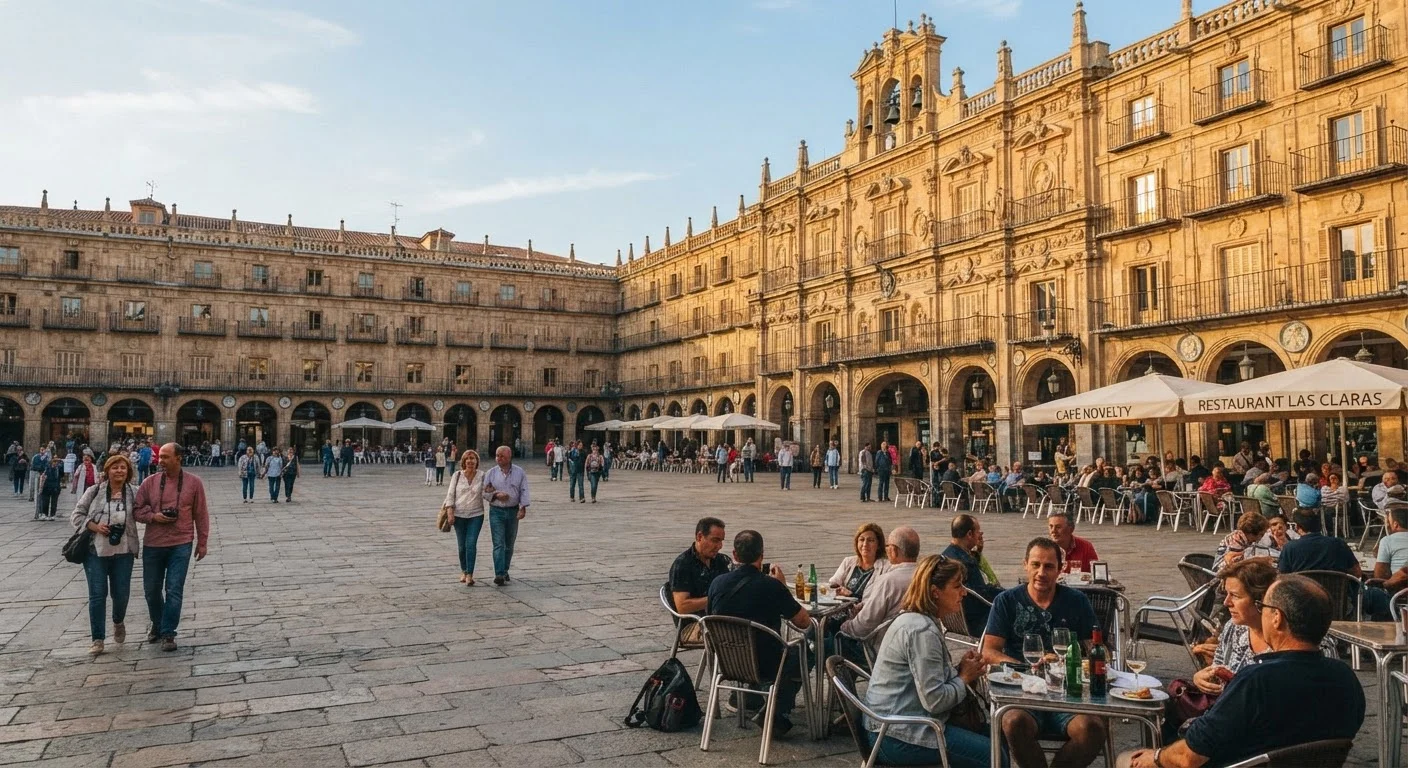
Photo: MyUrbanEscapes.net | Small Escapes. Big Experiences. editorial
—— In This Article
Key Takeaways
- Salamanca, Seville, and San Sebastián each offer a more manageable pace than Madrid without sacrificing cultural depth.
- Terrain varies significantly: Salamanca and Seville are largely flat, while San Sebastián has some hilly areas but excellent waterfront promenades.
- All three cities have good rail or bus connections, reducing the logistical complexity of independent travel.
- Smaller city centers mean shorter walking distances between major sights, reducing fatigue.
- Crowd levels at main attractions are noticeably lower than at equivalent Madrid or Barcelona sites.
Why Skip Madrid for These Three Cities?
Madrid is a world-class capital with genuine appeal, but for senior travelers its sheer scale can work against a comfortable visit. The metro system, while efficient, involves long corridors and frequent escalator gaps. Museum queues at the Prado and Reina Sofía can stretch for an hour or more during peak season. And distances between neighborhoods—Malasaña, La Latina, Retiro—add up quickly on foot.
Spain's secondary cities sidestep most of these friction points. Historic cores are tighter and easier to navigate, crowd levels are lower, and the general pace of daily life aligns well with the unhurried rhythm many senior travelers prefer. For those comparing destinations across southern Europe, our guide to European cities that reward a slower pace provides useful context alongside these Spanish options.
| Salamanca | Seville | San Sebastián | |
|---|---|---|---|
| Terrain / Walkability | Flat historic center, very walkable | Largely flat, tram supplements walking | Flat promenade and old town; hills optional |
| Crowd Levels | Low to moderate year-round | Moderate; high in spring festival season | Low to moderate outside August |
| Best Visiting Season | March–June, September–November | April–May, September–October | May–June, September–October |
| Rail Access from Madrid | Under 2 hours by high-speed rail | 2.5 hours by AVE high-speed rail | 5+ hours; better via Bilbao or Barcelona |
| Primary Appeal | Historic architecture, university culture | Flamenco, Moorish heritage, warm climate | World-class food, coastal scenery |
| Healthcare Facilities | University hospital on city outskirts | Multiple major public hospitals | Hospital Universitario Donostia nearby |
Salamanca: A University City That Moves at a Human Scale
Salamanca's old city—a UNESCO World Heritage Site—is built from warm amber sandstone and organized around a central plaza, the Plaza Mayor, that functions as a genuine public living room rather than a tourist set piece. Distances from the plaza to the cathedral, the university façade, and the Convento de San Esteban are all under fifteen minutes on flat ground.
The city's connection to one of Europe's oldest universities gives it an intellectual energy without the edge of a major capital. Cafés and restaurants follow Spanish lunch hours (roughly 2–4 p.m.), and evening meals don't begin in earnest until 9 p.m.—travelers who adapt to this rhythm find the city rewarding rather than exhausting. Salamanca is well connected to Madrid by high-speed rail in under two hours, making it easily combined with a brief capital stopover if desired.
Timing Your Visit Around Spanish Rhythms
Adapting to Spain's later meal schedule—lunch from 2 p.m., dinner from 9 p.m.—significantly improves the travel experience in all three cities. Midday downtime aligns naturally with the siesta hours when many smaller shops close, and it provides a built-in rest period that reduces fatigue on active sightseeing days. Planning one major landmark or activity per morning, then resting midday, is a practical structure that suits both the culture and most senior travelers' energy levels.
Seville: Culture, Warmth, and Manageable Terrain
Seville is Spain's fourth-largest city but doesn't feel like it at street level. Its historic barrios—Santa Cruz, El Arenal, Triana—are compact and largely flat, and most major landmarks (the Alcázar, the Cathedral, the Museo de Bellas Artes) cluster within a walkable zone along the Guadalquivir River. The city has invested in accessible infrastructure, and its tram system covers the central corridor effectively.
The principal caution for senior travelers is the summer climate: July and August temperatures in Seville regularly exceed 100°F (38°C), making midday activity genuinely uncomfortable and potentially risky for people with cardiovascular or respiratory conditions. Visiting in spring (April–May) or autumn (September–October) transforms the experience entirely—mild temperatures, manageable crowds, and the city's famous orange-blossom season. Readers considering southern Spain alongside southern Europe more broadly may find value in comparing it with Portugal's senior-friendly coastal cities, which offer a cooler Atlantic alternative.
~2.5 hrs
Madrid to Seville by AVE high-speed rail
Spain's AVE network connects Madrid and Seville with multiple daily departures, making Seville easily accessible without flying.
38°C+
Average July high temperature in Seville
Spain's national meteorological agency (AEMET) records Seville as one of the hottest cities in Western Europe during summer months.
3
Michelin-starred restaurants per capita ranking
San Sebastián has one of the highest concentrations of Michelin-starred restaurants per capita of any city in the world, according to Michelin Guide data.
San Sebastián: Pintxos, Promenades, and a Coastal Setting
San Sebastián (Donostia in Basque) is consistently ranked among Europe's leading food destinations, and that reputation is grounded in its dense concentration of pintxos bars and Michelin-recognized restaurants within a very small old town footprint. The Parte Vieja (Old Town) is flat and compact; the La Concha beach promenade is one of the most celebrated urban seafronts in Europe and is fully accessible along its entire length.
Some areas outside the old town, particularly the hill leading to Monte Urgull, involve steeper terrain—but these are entirely optional. The city's main cultural and culinary draws are all at or near sea level. San Sebastián is smaller than Seville or Salamanca in population, which means shorter waits, a quieter atmosphere outside festival periods, and a genuinely local feel in its restaurants and markets. For travelers weighing European options against more budget-conscious alternatives, a comparison of Mexico and Spain for senior travelers on tighter budgets lays out the cost tradeoffs in detail.

Top Destinations Editorial Team
Top Destinations Editorial Team is the collective byline for our editorial team and contributor network. Articles published under this byline or an editorial pen name are researched, written, and reviewed according to our editorial standards for clarity, consistency, and independence before publication.
View author profile