
Sea Days vs. Port Days: How to Pace Yourself on a Longer Cruise
Balancing activity and rest across a multi-day cruise itinerary — practical strategies for seniors who want to enjoy every day without exhaustion.
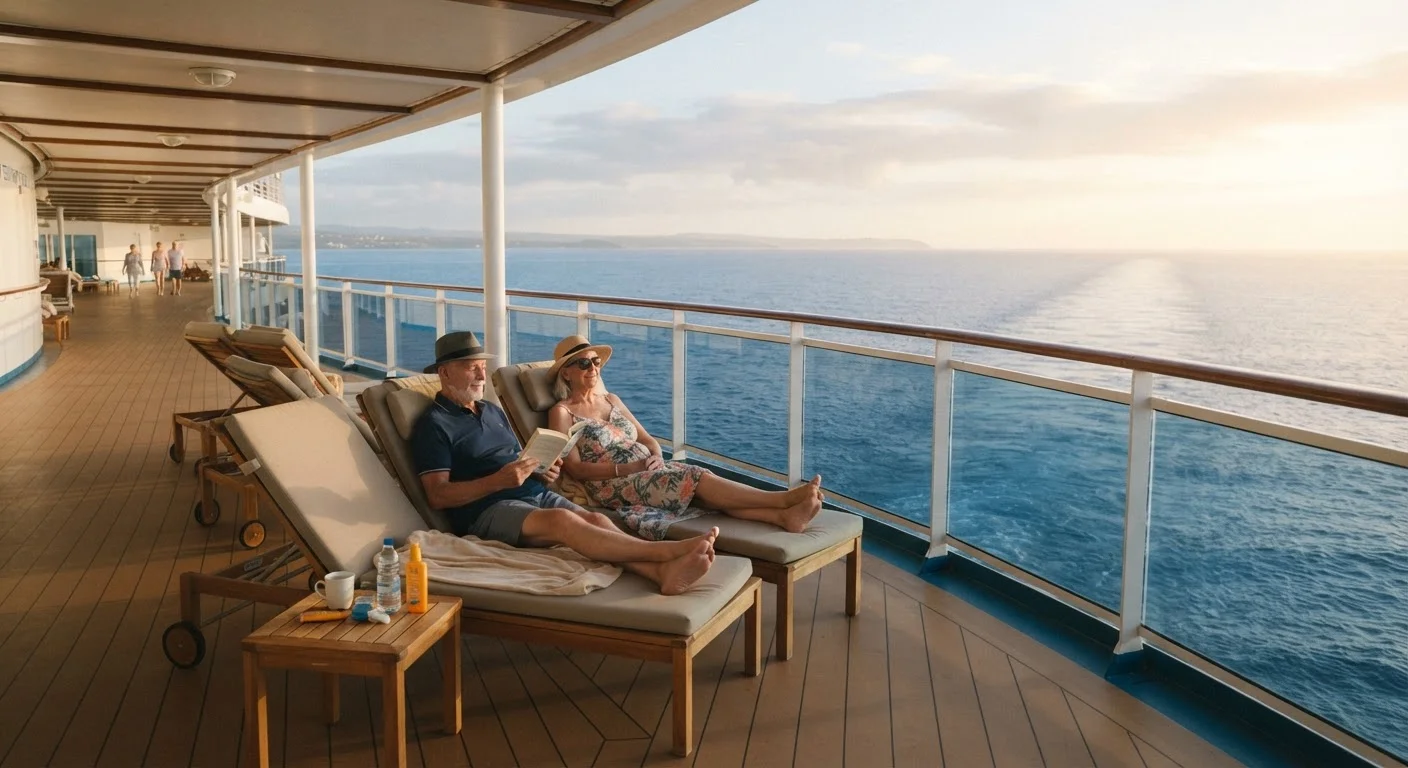
Photo: MyUrbanEscapes.net | Small Escapes. Big Experiences. editorial
—— In This Article
Key Takeaways
- Sea days are valuable recovery time — treat them as deliberate rest, not wasted days.
- Planning port activities around your energy peaks helps prevent exhaustion and injury.
- Most modern cruise ships offer robust onboard amenities designed for comfort and low-impact activity.
- A simple written daily intention — not a packed schedule — keeps you engaged without overcommitting.
- Always consult your doctor before a longer cruise if you have ongoing health conditions.
Why Pacing Matters More on Longer Cruises
A week-long cruise can feel forgiving — one or two slow days won't significantly disrupt the experience. But on itineraries of ten nights or more, cumulative fatigue becomes a genuine concern. Port days involve more walking, more standing, more heat exposure, and more sensory stimulation than most travelers account for in advance. Without deliberate pacing, the second half of a longer voyage can feel noticeably harder than the first.
For senior travelers especially, the gap between how much you want to do and how much your body can sustain comfortably is worth thinking through honestly before you sail. This isn't about limitation — it's about strategy. The travelers who pace themselves well tend to enjoy more of the trip, not less. See our guide to choosing the right cruise for more on matching itinerary length to your stamina.
A Note on Health and Medical Needs
This article offers general travel-pacing guidance and is not a substitute for medical advice. If you manage a chronic condition, take multiple medications, or have mobility considerations, speak with your healthcare provider before booking or departing on a longer cruise. Ships carry medical staff, but their capabilities vary significantly by vessel and itinerary.
Making the Most of Sea Days
Sea days are among the most underappreciated parts of a cruise itinerary. Without the pressure of a port schedule, they offer unstructured time that can be shaped entirely around your own comfort. Modern cruise ships provide a wide range of low-key options: promenade deck walks, enrichment lectures, cooking demonstrations, card rooms, libraries, and spa treatments.
Rather than treating a sea day as an opportunity to pack in onboard activities, consider using it as a partial reset. Sleep later than usual, eat without rushing, and limit yourself to one or two things that genuinely appeal to you. The entertainment schedule can look daunting — choosing one or two items you genuinely want rather than attending everything is a more sustainable approach.
Treat sea days as intentional recovery, not idle time.
Extended port schedules — especially on itineraries with consecutive active days ashore — can accumulate fatigue quietly. Sea days offer a natural reset that many travelers undervalue. Using them deliberately for rest, gentle movement, and hydration helps you arrive at the next port feeling capable rather than depleted.
Identify your peak energy window and anchor port activities within it.
Most people have a two-to-four-hour window each day when they feel most alert and physically capable. Planning your most demanding shore activity — a walking tour, a market visit, climbing steps at a historic site — during that window reduces strain and increases enjoyment.
Build in a port return buffer of at least 90 minutes before all-aboard time.
Rushing back to the ship is one of the most stressful experiences a cruise can produce. Traffic delays, slow-moving tender boats, or simply moving at a more comfortable pace can make tight turnarounds genuinely risky. A generous buffer protects against anxiety and physical overexertion.
Use onboard wellness amenities actively, not just when something hurts.
Many ships offer heated pools, spa facilities, stretching classes, and walking tracks that are most beneficial when used proactively throughout a voyage. Waiting until fatigue or discomfort sets in misses the preventative value these amenities provide.
Write a daily intention rather than a minute-by-minute schedule.
Over-scheduling is a common way cruisers exhaust themselves. A simple intention — such as 'today I want to see the old town and have a long lunch' — provides direction without locking you into a rigid plan that ignores how you actually feel in the moment.
Managing Port Days Without Overdoing It
Port days present the greatest pacing challenge on any cruise. The excitement of a new destination, combined with a fixed return time, creates pressure to see and do as much as possible. That pressure is where overexertion tends to happen.
Before choosing shore activities, it helps to understand what each port actually demands physically. Some towns involve significant uphill walking or uneven cobblestone streets. Others are flat and compact. Our article on matching destinations to your comfort level can help you assess this before you go. For port-day activity choices, guided excursions vs. independent exploration is worth reviewing — guided options often include transportation and built-in rest stops that make pacing easier.
Sustaining Wellbeing Across the Full Voyage
Pacing well across a longer cruise involves the same basics that support wellbeing anywhere: consistent sleep, adequate hydration, sensible eating, and honest awareness of how you feel each day. On a ship, these are easier to maintain than many travelers expect — meals are always available, medical staff are on board, and you're never far from your cabin if you need rest.
Pay attention to what you eat and drink on port days especially, when the temptation to skip meals or rely on unfamiliar local water sources is highest. Our companion piece on staying hydrated and eating well onboard covers this in practical detail. If a particular port town genuinely captivates you — some Mediterranean destinations reward more time than a standard day allows — it may be worth considering whether a land extension makes sense, as explored in our guide to Mediterranean port towns worth extending.
“The art of travel is not to see everything, but to see what you came for — and to feel well enough to remember it.”
— Cruise Travel Editorial Team, Editorial perspective on senior cruise pacing
This article is for general informational purposes only and does not constitute medical advice. Always consult a qualified healthcare professional regarding your specific health needs before planning or undertaking travel.

Cruise Travel Editorial Team
Cruise Travel Editorial Team is the collective byline for our editorial team and contributor network. Articles published under this byline or an editorial pen name are researched, written, and reviewed according to our editorial standards for clarity, consistency, and independence before publication.
View author profile