
Entertainment Schedules and How to Navigate Them Without Feeling Overwhelmed
Shows, lectures, and social events can crowd a cruise calendar. Learn how to plan a balanced daily routine that fits your energy levels.
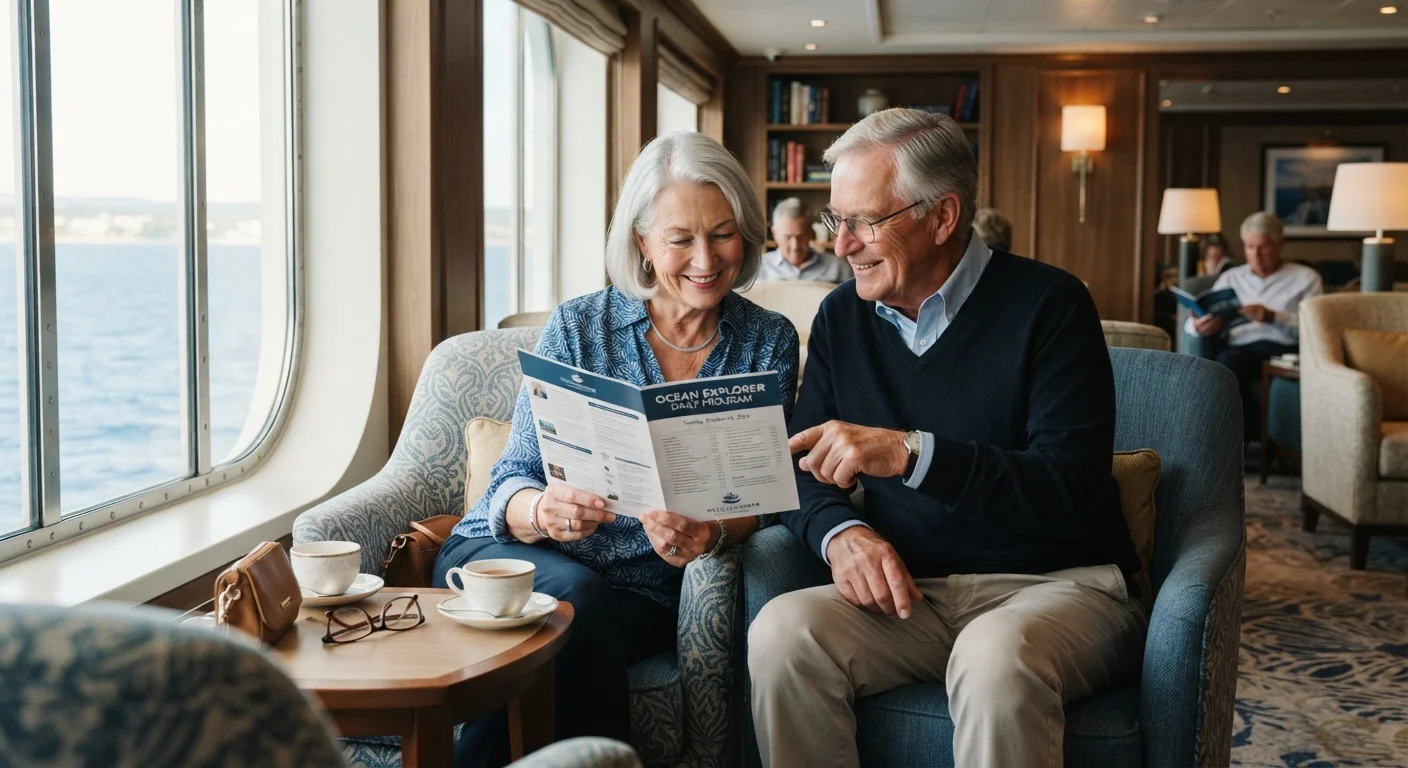
Photo: MyUrbanEscapes.net | Small Escapes. Big Experiences. editorial
—— In This Article
Key Takeaways
- Cruise ships offer far more programming than any one person can attend — selective planning is the goal, not full participation.
- The daily program arrives the night before, giving you time to choose activities that match your energy for the next day.
- Balancing structured events with unscheduled rest time is the most effective strategy for enjoying a full cruise without fatigue.
- Sea days often carry the heaviest entertainment schedules — knowing this helps you pace rest days strategically.
- Most onboard activities can be dropped in or out of without advance booking, reducing pressure to commit far ahead.
Why Cruise Entertainment Schedules Can Feel Overwhelming
Modern cruise ships are engineered to offer something for everyone, all day and well into the night. On a typical sea day, a single program might list morning fitness classes, a guest lecturer in the main theater, a trivia session, a cooking demonstration, afternoon deck games, a wine tasting, pre-dinner cocktail music, a Broadway-style production show, and late-night comedy. That is before accounting for specialty dining, the casino, or the library.
For many travelers — and especially those who are newer to cruising — this volume of options can shift quickly from exciting to anxiety-inducing. The instinct to get full value from the voyage can make it feel as though every skipped event is a missed opportunity. It is not. Understanding that the schedule is a menu, not a to-do list, is the essential mindset shift. If you are still orienting yourself to ship life generally, our complete introduction to life onboard covers the foundational knowledge that will make daily schedule navigation much easier.
You Cannot — and Should Not — Do It All
Cruise entertainment schedules are designed for an entire ship of thousands of passengers with varying interests. Trying to attend every appealing event is a reliable path to exhaustion. Choose two or three anchoring activities per day and treat everything else as a pleasant bonus if energy allows.
Sea days tend to carry the densest activity calendars. If you want to understand how the rhythm of sea days versus port days shapes your overall energy across a voyage, reading a cruise itinerary thoughtfully before you board is time well spent.
How to Plan a Balanced Daily Routine Onboard
What you will need
Ship's Daily Program
The printed or digital schedule listing all onboard activities, show times, and events for the coming day.
Cruise Line App
Many lines offer a smartphone app with a searchable, filterable daily schedule that updates in real time.
Notebook or Small Planner
Useful for writing down your chosen two or three daily anchor events and any reservation times.
Collect the Daily Program the Night Before
Your stateroom attendant will place the next day's program in your cabin each evening, typically during turndown service. If your ship uses a mobile app, the schedule is usually loaded by 8 p.m. Reviewing it before bed — rather than in the morning rush — gives you time to think calmly about what genuinely appeals to you.
Sort Events Into Three Categories
Scan the full schedule and mentally — or physically — sort events into three groups: Must-do (shows or lectures you genuinely want to prioritize), Nice-to-do (events you would enjoy if energy allows), and Skip (anything that holds no interest or conflicts with rest time). Most items will fall into the latter two categories, and that is perfectly fine.
Anchor Your Day With One or Two Fixed Events
Choose no more than two must-do events and treat them as your day's anchors. Everything else is optional. This structure gives your day shape without turning it into a schedule-chasing exercise. Evening shows, enrichment lectures, or a late-afternoon cocktail hour all make strong anchors because they leave mornings and afternoons flexible.
Build in Deliberate Rest Windows
Treat rest as a scheduled item, not an afterthought. Block a one- to two-hour window in the afternoon specifically for quiet time — reading on the balcony, a short nap, or simply sitting in a lounge without an agenda. Pacing yourself across sea and port days is one of the most important skills for enjoying a longer cruise without arriving home exhausted.
Check Reservation Requirements in Advance
Some onboard events — specialty dining tied to a show, popular comedy or production performances, cooking demonstrations — have limited seating and require advance booking. Scan the daily program for any reservation symbols or notes and make bookings early in the day, ideally at Guest Services or through the ship's app. Missing a reserved event is less likely to cause disappointment than discovering an event is full when you arrive.
Give Yourself Permission to Change Plans
A day at sea that turns out rougher than expected, a shore excursion that tires you more than anticipated, or simply a stronger-than-usual need for rest — all of these are valid reasons to abandon the plan you made the night before. The schedule is a tool, not a contract. Adjusting in real time based on how you feel is sound judgment, not failure.
Circle, Don't Highlight Everything
When you review the daily program, circle only your firm commitments — one or two items. Star anything that would be nice to attend if you feel up to it. This visual separation makes it much easier to let go of optional events without guilt when you need rest.
Watch for Back-to-Back Venue Changes
Some events listed close together in time are held in opposite ends of a large ship. Factor in walking distance and elevator waits, especially on sea days when hallways and lifts are busiest. Rushing between venues is rarely worth the effort and can be physically taxing.
One final note: your physical comfort at the destination ports also affects how much energy you bring back to the ship each evening. If you find that shore days consistently drain you, it may be worth matching cruise destinations to your physical comfort level more carefully before your next booking. A well-matched itinerary leaves you with more energy to enjoy what the ship itself has to offer.

Cruise Travel Editorial Team
Cruise Travel Editorial Team is the collective byline for our editorial team and contributor network. Articles published under this byline or an editorial pen name are researched, written, and reviewed according to our editorial standards for clarity, consistency, and independence before publication.
View author profile