
River Cruise vs. Ocean Cruise: Which Experience Suits Older Travelers Better?
River and ocean cruises differ in pace, ship size, and accessibility. Here's how seniors can weigh both options side by side.
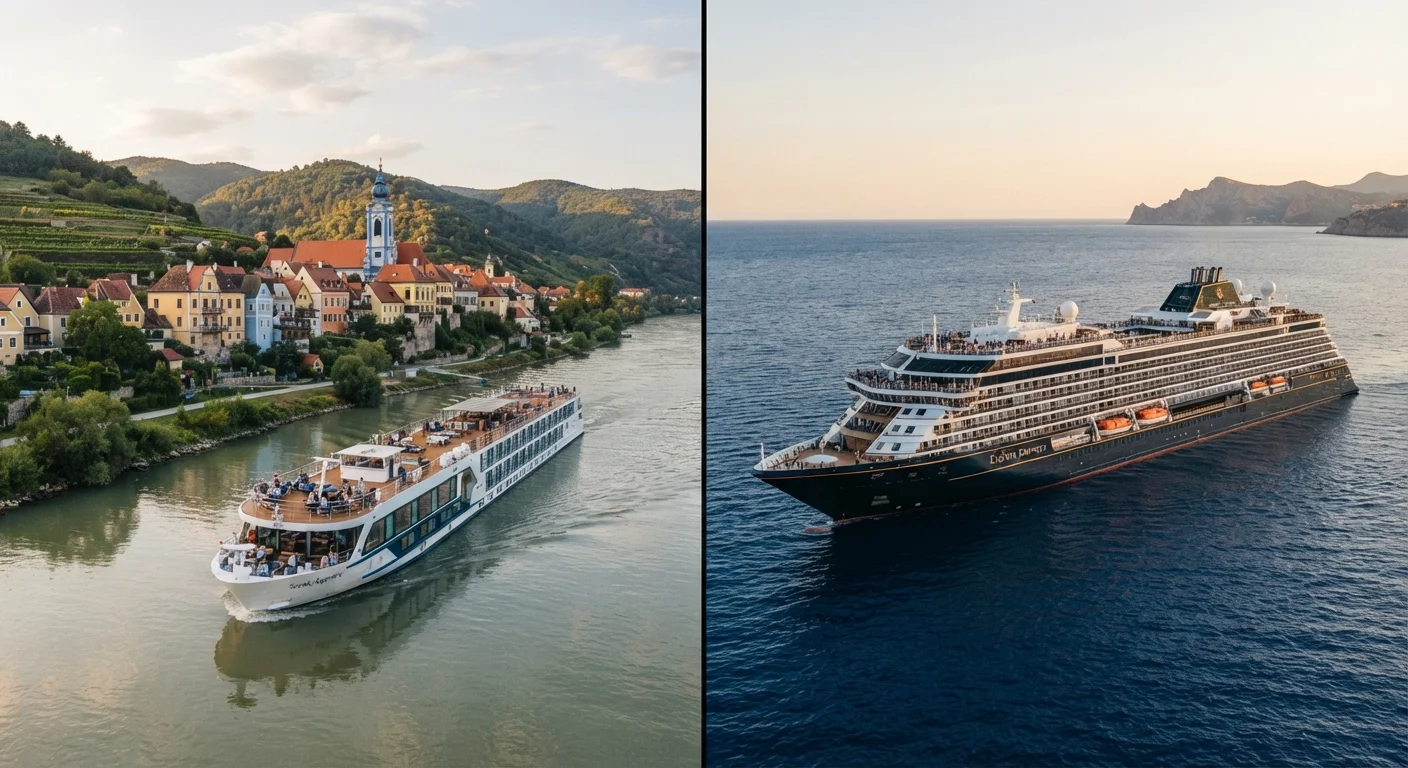
Photo: MyUrbanEscapes.net | Small Escapes. Big Experiences. editorial
—— In This Article
Key Takeaways
- River cruises use small ships with no sea sickness risk, while ocean cruises offer far more onboard amenities.
- Ocean ships generally have more comprehensive medical facilities; river ships have minimal onboard health resources.
- River cruise cabins tend to be compact; ocean ships offer a wider range of accessible cabin configurations.
- River itineraries dock in town centers, reducing the need for long transfers to sightseeing areas.
- Budget and travel insurance considerations differ meaningfully between the two cruise types.
- Neither option is universally superior — the right choice depends on mobility, health needs, and personal travel style.
How the Two Cruise Types Differ at a Glance
River and ocean cruises share the word "cruise" but deliver fundamentally different experiences. Understanding those differences upfront helps older travelers make a choice aligned with their health, mobility, and holiday priorities.
River cruise ships — most commonly seen on Europe's Rhine, Danube, and Douro rivers — typically carry between 100 and 190 passengers. Ocean cruise ships range from boutique vessels carrying a few hundred guests to megaliners accommodating over 5,000. That size gap affects everything from noise levels and walking distances to onboard medical resources and accessibility infrastructure. For a deeper look at how vessel size shapes the daily senior experience, see our guide to cruise ship size.
| Criterion | River Cruise | Ocean Cruise |
|---|---|---|
| Ship size (typical passengers) | 100–190 guests | 500–5,000+ guests |
| Motion / seasickness risk | Minimal — calm inland waterways | Moderate to higher — open sea |
| Onboard walking distances | Very short — compact single-deck layout | Extensive — multiple decks and corridors |
| Accessible cabin availability | Limited selection | Wider range of accessible options |
| Onboard medical facilities | Basic first aid only | Medical center with staff on most ships |
| Shore access | Direct mooring in town centers | Tender or shuttle often required |
| Dining & entertainment variety | Limited — one or two dining venues | Extensive — multiple restaurants, shows |
| Pricing structure | Largely all-inclusive | Varies widely by line and package |
| Destination focus | Europe, Southeast Asia, Egypt (river towns) | Worldwide — Caribbean, Alaska, Mediterranean |
Both formats have genuine strengths and real limitations for senior travelers. The sections below break down the factors that matter most.
Accessibility and Mobility Considerations
Accessibility is rarely one-size-fits-all, and the two cruise formats approach it differently. Ocean ships — particularly newer builds — are increasingly designed with step-free corridors, wider cabin doorways, roll-in showers, and elevator access across decks. Modern cruise ship accessibility features have improved substantially, and travelers using wheelchairs or walkers will often find ocean ships better equipped with dedicated accessible staterooms.
River ships present a different picture. Their compact layout means passengers never walk more than a short distance to reach a meal, a lounge, or their cabin — a meaningful advantage for those with limited stamina. However, river vessels are constrained by waterway bridges and locks, which cap the ship's height and limit cabin ceiling clearance. Accessible cabins exist on most modern river ships, but options are fewer than on ocean vessels. Shore excursions on river cruises frequently involve cobblestoned town centers that can be challenging for those with mobility aids.
Shore Excursion Accessibility Varies Widely
Even when a ship itself is fully accessible, the ports it visits may not be. River cruise itineraries frequently include medieval town centers with uneven cobblestones, steep hillside streets, or limited elevator access at key attractions. Ocean cruise ports such as Cozumel or Nassau tend to have more developed tourist infrastructure, though this also varies. Travelers who rely on mobility aids should ask cruise lines directly about the terrain at each port before booking a specific itinerary.
Health, Safety, and Medical Resources
For seniors managing ongoing health conditions, the availability of onboard medical support is a legitimate planning factor. Ocean cruise ships of mid-size and larger typically operate dedicated medical centers staffed by physicians and nurses, stocked with diagnostic equipment and emergency medications. Evacuation to a shoreside hospital, while rare, is more straightforward when a ship is near a major port city.
River cruise ships carry very limited medical resources — usually a first aid kit and staff trained in basic response. Given that river itineraries dock in a new town almost every day, access to local hospitals is generally quick; however, the standard of care in smaller European towns may vary. Travelers with complex or unstable medical needs should discuss both options with their physician before booking. For a detailed side-by-side look at health and safety trade-offs, our health and safety comparison covers the topic in depth.
190
Maximum passengers on most river ships
River vessel capacity is limited by waterway infrastructure, which naturally creates a more intimate onboard environment than most ocean ships.
~50%
River cruise passengers aged 60 or older
Industry research from river cruise operators consistently shows that older adults make up a substantial majority of river cruise bookings, reflecting the format's natural appeal to this demographic.
Daily
Port stops on typical river itineraries
Most European river itineraries dock at a new port every day, giving passengers frequent opportunities to step ashore independently without organized excursions.
Budget, Value, and What's Included
River cruises are typically all-inclusive or near-all-inclusive — most fares bundle meals, excursions, port fees, and sometimes even wine with dinner. This transparency makes budgeting straightforward. Ocean cruises vary widely: some lines operate on an inclusive model while others charge separately for specialty dining, shore excursions, drinks packages, and gratuities. Seniors on fixed incomes may find river cruise pricing easier to manage simply because the final cost is more predictable.
That said, ocean cruises offer a broader price spectrum. Repositioning sailings, shoulder-season bookings, and longer voyages can represent strong value. General information about travel discounts for senior travelers is available through senior travel discount resources. Travel insurance — covering medical evacuation, trip interruption, and pre-existing conditions — is strongly advisable for both formats; costs and coverage terms differ, so comparing policies carefully before booking is worthwhile. This is general guidance only; consult a licensed insurance professional for advice suited to your personal circumstances.

Cruise Travel Editorial Team
Cruise Travel Editorial Team is the collective byline for our editorial team and contributor network. Articles published under this byline or an editorial pen name are researched, written, and reviewed according to our editorial standards for clarity, consistency, and independence before publication.
View author profile