
Onboard Medical Facilities: What Cruise Ships Can and Cannot Provide
Understanding the limits of shipboard medical care helps seniors plan appropriately, from medication storage to chronic condition management.
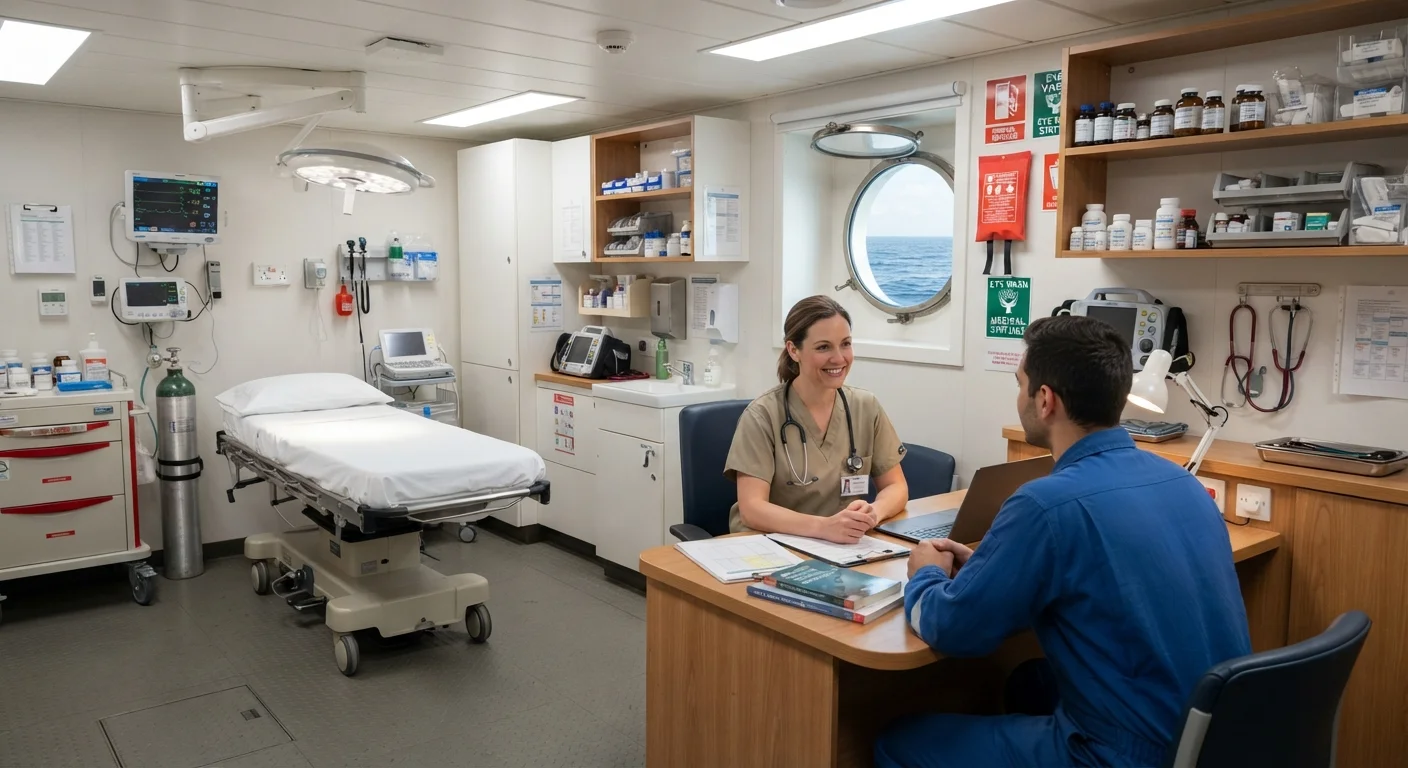
Photo: MyUrbanEscapes.net | Small Escapes. Big Experiences. editorial
—— In This Article
What Cruise Ship Medical Centers Typically Provide
Most oceangoing cruise ships maintain a dedicated medical center staffed around the clock. Industry guidelines from the Cruise Lines International Association (CLIA) recommend that ships carry at least one licensed physician and two or more registered nurses, along with equipment for basic emergency and diagnostic care.
| Minimum physician requirement | At least one licensed physician on oceangoing ships (CLIA recommended standards) |
| Typical nursing staff | 2–3 registered nurses per ship (General industry standard) |
| Common onboard equipment | Defibrillators, X-ray, basic lab testing, IV therapy (CLIA recommended guidelines) |
| Medical center billing | Fee-for-service; not typically covered by standard U.S. Medicare (General cruise industry practice) |
| Medevac cost range | Can exceed $50,000 depending on location and circumstances (General travel insurance industry estimates) |
| Prescription storage | Refrigerated storage usually available on request for insulin and biologics (Common cruise line accommodation) |
Standard capabilities generally include treatment of minor injuries and illnesses, intravenous fluid administration, cardiac monitoring with defibrillation, basic X-ray imaging, and limited laboratory analysis such as blood glucose and urinalysis. Many ships also carry medications for common acute conditions — pain, nausea, allergic reactions — though the onboard formulary is far more limited than a hospital pharmacy.
For a fuller picture of what these facilities look like in practice, see what cruise ship health centers actually offer.
This Is General Information, Not Medical Advice
The content in this article describes how cruise ship medical facilities generally operate and is intended for educational purposes only. It is not a substitute for advice from your personal physician. Always consult a qualified healthcare professional before traveling with any chronic condition, recent surgery, or complex medication regimen.
Clear Limitations Seniors Should Understand Before Sailing
Shipboard medical centers are designed for stabilization and basic acute care — not advanced treatment. Several important limitations apply, and understanding them before you book is essential for seniors managing chronic or complex health conditions.
- No specialized surgery: While a ship's physician can perform minor procedures, complex surgeries are not available. Serious cardiac events, strokes, or trauma requiring surgery will likely require medical evacuation to a shoreside hospital.
- Limited imaging: Most ships carry X-ray equipment but not CT scanners or MRI machines. Neurological emergencies in particular are difficult to fully evaluate at sea.
- Restricted medication supply: If you depend on specialty medications, biologics, or controlled substances, the ship's formulary almost certainly will not stock them. Bring more than enough for your entire voyage, plus a buffer for delays.
- Variable port care: If care is needed ashore, medical quality varies significantly by destination. Remote itineraries — polar regions, small Pacific islands — may have very limited local resources.
What ship medical centers can and cannot do explores these limitations in more depth, including how itinerary choice affects your access to emergency care.
Practical Steps for Senior Travelers Before Departure
~1 per 1,000
Estimated shipboard medical visit rate per passenger
Industry estimates suggest roughly one medical center visit occurs per thousand passenger-days at sea.
30%+
Cruise passengers aged 60 and older
The Cruise Lines International Association has consistently reported that travelers aged 60 and above represent a substantial share of total cruise passengers.
Advance preparation significantly reduces health-related stress at sea. Consider the following steps well before embarkation:
- Consult your physician: Discuss your planned itinerary, duration at sea, and any chronic conditions. Ask specifically whether your condition is stable enough for extended travel away from specialist care.
- Carry complete medical documentation: A written summary of your conditions, current medications (generic and brand names), allergies, and recent lab values helps shipboard staff treat you effectively if needed.
- Arrange adequate prescription supplies: Pack all medications in original labeled containers and carry them in your carry-on luggage, not checked baggage. Request refrigerated storage in advance if you use insulin or biologics.
- Understand your insurance: Standard U.S. Medicare generally does not cover care aboard a ship or in foreign ports. Cruise line medical policies versus your own health coverage explains how shipboard billing works and why supplemental travel health insurance — including medical evacuation coverage — warrants serious consideration.
For a broader overview of health and safety planning, the Cruise Health and Safety for Seniors complete overview is a helpful starting point. You can also explore the Cruise Health and Safety hub for additional resources tailored to older travelers.

Cruise Travel Editorial Team
Cruise Travel Editorial Team is the collective byline for our editorial team and contributor network. Articles published under this byline or an editorial pen name are researched, written, and reviewed according to our editorial standards for clarity, consistency, and independence before publication.
View author profile