
Onboard Medical Facilities: What Cruise Ship Health Centers Actually Offer
A factual look at what shipboard medical centers typically provide, their limitations, and why travel insurance still matters.
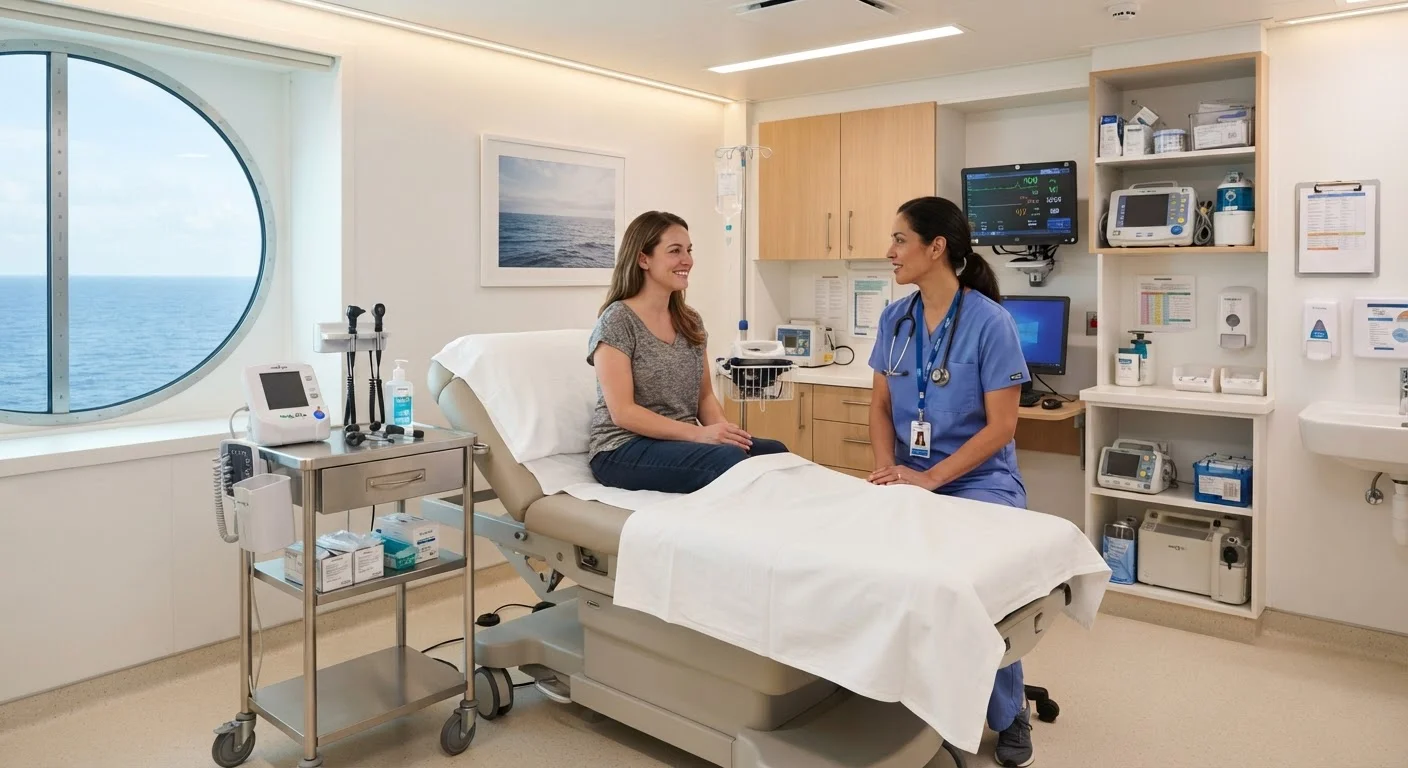
Photo: MyUrbanEscapes.net | Small Escapes. Big Experiences. editorial
—— In This Article
Key Takeaways
- Cruise ship medical centers are staffed by licensed doctors and nurses, not just first-aid personnel.
- Standard equipment includes diagnostic tools, an ICU-level bed, and basic surgical capability for stabilization.
- Onboard care is designed for acute emergencies and stabilization — not ongoing complex treatment.
- Medical services onboard are billed separately and can be expensive without travel insurance.
- Serious conditions typically require medical evacuation to a shoreside hospital.
- Travelers with chronic conditions should consult their physician before sailing.
What You'll Typically Find in a Cruise Ship Medical Center
Cruise ship medical centers are purpose-built spaces located below the waterline on most large vessels — a practical location that minimizes motion during rough seas. On mainstream ocean cruise ships carrying 1,000 or more passengers, you can generally expect the following:
- Medical staff: At least one licensed physician (often with emergency medicine or internal medicine training) and two or more registered nurses on duty around the clock.
- Diagnostic equipment: X-ray machines, electrocardiogram (ECG) monitors, basic laboratory testing for blood counts and chemistry panels, and pulse oximetry.
- Treatment capability: IV fluid administration, wound suturing, splinting for fractures, management of allergic reactions, and cardiac defibrillation.
- Isolation facilities: A small number of beds for patients who need monitoring or isolation, including at least one equipped at an intensive-care level for stabilization.
- Pharmacy: A limited formulary of common medications, though this is not a full dispensing pharmacy.
For a broader look at how these facilities fit into the overall onboard health picture, see the Cruise Health & Safety hub for essential planning considerations.
~$1,000+
Typical cost of a single shipboard medical consultation with tests
Costs vary widely by cruise line and treatment complexity; figures are general estimates based on commonly reported passenger experiences.
$50,000+
Potential cost of a medical evacuation at sea
Air or helicopter evacuation from a ship in international waters can involve significant expense; travel insurance with evacuation coverage is widely recommended.
1 per 1,000
Approximate ratio of onboard physicians to passengers on large ships
ACEP guidelines recommend at least one physician per 1,000 passengers on large ocean vessels, though actual staffing varies by cruise line.
The Real Limitations: What Shipboard Care Cannot Do
Understanding what a medical center cannot provide is just as important as knowing what it can. Even well-equipped shipboard facilities are not substitutes for shoreside hospitals, and senior travelers with complex health histories should plan accordingly.
Shipboard centers are not equipped to perform:
- Major surgery (beyond basic wound closure or emergency stabilization)
- Advanced imaging such as CT scans or MRI
- Specialized cardiac intervention like angioplasty
- Long-term management of chronic conditions such as dialysis
- Comprehensive neurological assessment for complex stroke care
When a condition exceeds what the shipboard team can safely manage, medical evacuation — by helicopter or tender to a port — becomes necessary. This process can be logistically complex and financially significant without insurance coverage.
For a detailed look at capability boundaries, What Ship Medical Centres Can and Cannot Do provides a thorough breakdown of realistic expectations.
Before You Sail: Ask the Cruise Line Directly
Most cruise lines have a dedicated accessibility or special needs desk that can answer specific medical questions before you book. Ask whether the ship has refrigerated medication storage, oxygen concentrators available for rent, or experience accommodating your particular condition. Getting answers in writing gives you clarity and documentation.
Costs, Coverage, and Why Travel Insurance Matters
One of the most important — and frequently overlooked — aspects of shipboard medical care is the cost. Unlike medical care covered under your regular health plan at home, onboard treatment is typically billed directly to your stateroom account at the time of service. Fees for a physician consultation, diagnostic tests, and medications can add up quickly.
Standard Medicare does not cover care delivered in international waters, which applies to the majority of cruise itineraries. Some Medicare Advantage and Medigap supplement plans offer partial emergency coverage abroad, but exclusions are common. How onboard medical billing works explains these gaps in detail and is worth reviewing before you book.
Travel insurance with medical and evacuation coverage is widely considered essential for senior cruisers, particularly those with pre-existing conditions. Evacuation alone can cost tens of thousands of dollars without coverage. This article is for general informational purposes and is not a substitute for personalized financial or insurance advice — consult a licensed insurance professional for guidance specific to your situation.
River Cruises Have Different Medical Resources
River cruise ships typically carry far fewer passengers than ocean vessels and may have a nurse rather than a physician onboard. Shoreside hospitals are generally more accessible on river itineraries because ships dock in or near towns most evenings. However, the reduced onboard capability makes pre-trip health planning even more important for those choosing river voyages.
How Seniors Can Prepare Before Sailing
Preparation significantly reduces the chance that a medical situation will derail your trip. A few practical steps are widely recommended by travel medicine professionals:
- Consult your physician before booking: Discuss your itinerary, any chronic conditions, and whether your current health allows for the rigors of ocean travel. This is general guidance — always follow advice from your own healthcare provider. This content is for informational purposes only and does not constitute medical advice.
- Carry complete medication records: Bring a written list of all medications, dosages, and prescribing physicians, plus your physician's contact information.
- Pack an adequate medication supply: Bring enough prescription medication to last the entire cruise plus several additional days in case of itinerary changes or delays.
- Review your health coverage: Contact your insurance provider and confirm what — if anything — is covered at sea or in foreign ports.
- Inquire with the cruise line directly: Ask whether the specific ship on your itinerary has refrigeration for medications, oxygen availability, or any equipment relevant to your needs.
If you're still in the process of selecting a voyage, the Choosing a Cruise hub offers structured guidance on matching ship features to your personal health and mobility requirements.
Frequently Asked Questions

Cruise Travel Editorial Team
Cruise Travel Editorial Team is the collective byline for our editorial team and contributor network. Articles published under this byline or an editorial pen name are researched, written, and reviewed according to our editorial standards for clarity, consistency, and independence before publication.
View author profile