
Why Sedona, Arizona Keeps Drawing Older Travelers Back
Sedona's red rock scenery, mild climate, and walkable arts scene make it a perennial favourite for senior travellers seeking beauty without the bustle.
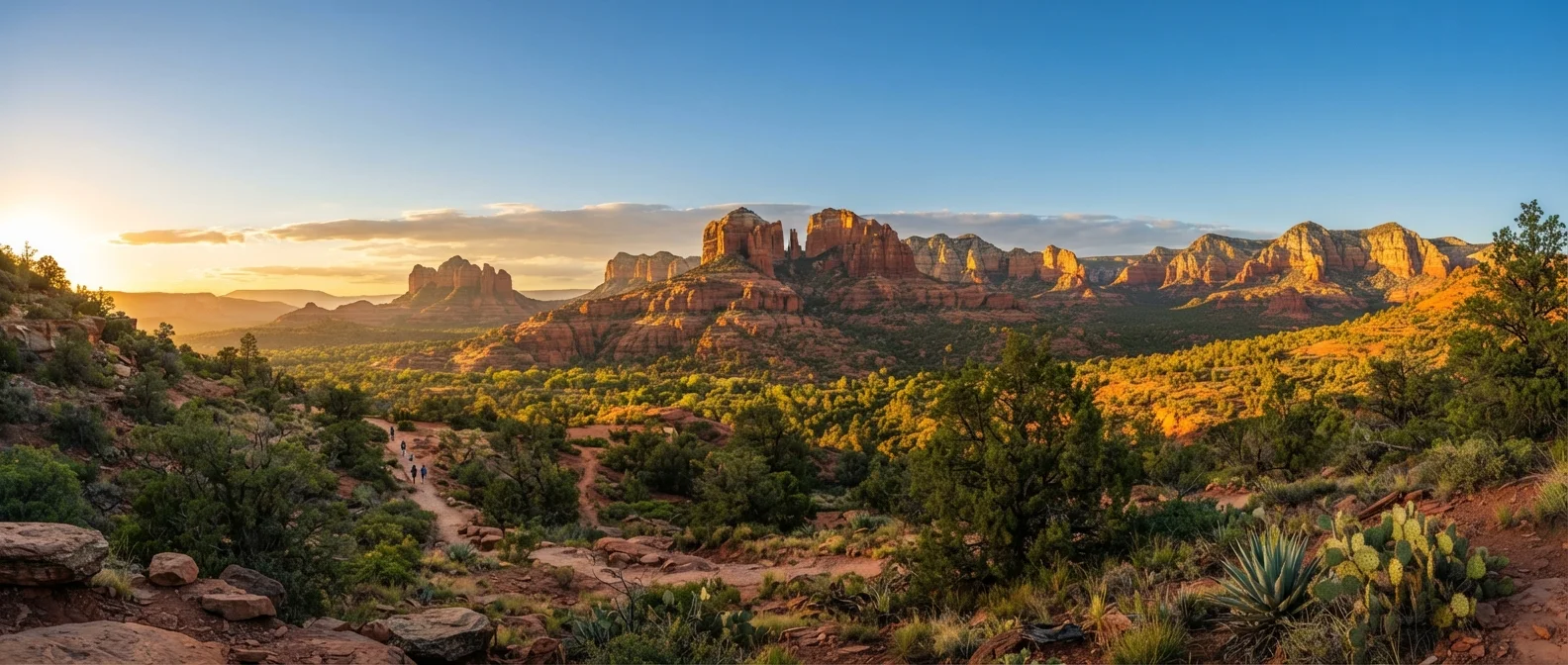
Photo: MyUrbanEscapes.net | Small Escapes. Big Experiences. editorial
—— In This Article
Key Takeaways
- Sedona's moderate elevation and year-round mild climate make it physically accessible for most older travelers.
- The Tlaquepaque Arts & Shopping Village and Uptown district are walkable, paved, and free of steep grades.
- Jeep tour operators and accessible trail options mean non-hikers can still experience the red rock landscape.
- Flagstaff Medical Center is roughly 30 miles north, providing nearby hospital access if needed.
- Extended vacation rental stays in Sedona can reduce daily costs and allow a genuinely unhurried pace.
- Spring and fall offer the most comfortable temperatures and manageable visitor numbers.
What Makes Sedona Work for Older Travelers
Sedona delivers something rare in American tourism: genuine spectacle without logistical complexity. The red sandstone formations — Cathedral Rock, Bell Rock, Courthouse Butte — are visible from paved roads, hotel terraces, and restaurant patios. You don't need to earn the view with a strenuous hike. For senior travelers, that distinction matters enormously.
The town itself is compact enough to navigate without a rigid plan. Uptown Sedona, the main commercial corridor along SR 89A, is flat, paved, and lined with galleries, cafes, and spa facilities. The Tlaquepaque Arts & Shopping Village — a Spanish Colonial-style complex — offers shaded walkways and artisan studios at an easy stroll. Neither area demands physical endurance; both reward a slow, curious pace.
Sedona's climate also plays a central role. At roughly 4,350 feet, it avoids the desert floor heat of Phoenix while escaping the high-altitude cold of Flagstaff. Spring and autumn temperatures frequently sit in the 65–80°F range — warm enough for outdoor time, cool enough for comfort. This positions Sedona squarely within the broader appeal that warm-weather destinations hold for older travelers.
4,350 ft
Sedona's approximate elevation
Lower than many plateau destinations in the region, reducing altitude adjustment concerns for most visitors.
80+
Art galleries in Sedona
Sedona is consistently recognized as one of the most concentrated arts communities in the American Southwest.
~120 mi
Distance from Phoenix Sky Harbor Airport
Phoenix serves as the primary gateway for most travelers flying into the Sedona area.
Getting Around Without Overexerting
A personal vehicle or rental car remains the most practical way to reach Sedona and move between its scenic areas. Flagstaff Pulliam Airport is about 30 miles north, and Phoenix Sky Harbor — the region's major hub — is roughly 120 miles south. Both provide good access without a full cross-country journey.
Within town, a local trolley service runs between key points along SR 89A, useful for cutting out parking stress on busy weekends. Jeep tour operators offer guided excursions into backcountry terrain that would otherwise be inaccessible by standard vehicle — and many of these accommodate passengers who prefer not to hike at all. For the red rock landscape in its raw form, these tours are among the most accessible options available anywhere in the Southwest.
For those considering an extended stay — which allows for a genuinely unhurried pace and reduces the fatigue of constant packing and unpacking — Sedona has a well-developed vacation rental market. Our analysis of why longer vacation rental stays benefit senior travelers is directly relevant here, particularly for visitors who want to treat Sedona as a temporary home base rather than a rushed stop.
Book Jeep Tours and Heritage Sites Early
Sedona's guided jeep tours and the Palatki and Honanki Heritage Sites both require advance reservations, particularly during spring and fall peak periods. Booking several weeks ahead — especially for weekend dates — avoids disappointment and allows better scheduling around rest days. Heritage site reservations are managed through the Coconino National Forest; check their official site for current procedures.
Cultural Depth Beyond the Scenery
Sedona's appeal isn't limited to landscape. The town has cultivated one of Arizona's most concentrated arts communities, with over 80 galleries representing fine art, sculpture, Native American jewelry, and contemporary Southwest work. The Sedona Arts Center, in operation since 1958, anchors a local creative culture that gives the destination intellectual texture alongside its visual drama.
The region also carries significant Indigenous history. Nearby Palatki Heritage Site and Honanki Heritage Site — managed by the Coconino National Forest — preserve ancient Sinagua cliff dwellings and rock art that date back over a thousand years. Access to both sites requires advance reservations, but the terrain is manageable and the ranger-led interpretation is thorough. For seniors interested in broader Southwest cultural history, our guide to the American Southwest for senior travellers covers these themes across the wider region.
Practical Considerations Before You Go
Medical access in Sedona is reasonable. Verde Valley Medical Center in Cottonwood (about 20 miles southwest) and Flagstaff Medical Center (30 miles north) both serve the area, and urgent care clinics operate within Sedona itself. Travelers managing ongoing health needs should verify the availability of specific services and confirm any travel health questions with their personal physician before departure.
Costs in Sedona run higher than many comparable Arizona towns — accommodation in particular reflects the destination's popularity. Visiting in shoulder season (October–November or March–April) can reduce both prices and crowds. Those sensitive to budget considerations may find it useful to compare Sedona against the destinations covered in our overview of affordable U.S. cities where seniors travel well without overspending.
Entry to Sedona requires no special permits, but Red Rock Pass fees apply for parking at many trailheads and recreation areas — a minor administrative step worth noting in advance. Road conditions on Schnebly Hill Road and some forest routes can be rough; standard two-wheel-drive vehicles are fine for all paved routes, which cover virtually every major viewpoint.
“Sedona is one of those rare places where the landscape itself does the work — you don't have to go looking for wonder; it surrounds you from the moment you arrive.”
— Arizona Office of Tourism, State tourism authority, Arizona
Frequently Asked Questions

Top Destinations Editorial Team
Top Destinations Editorial Team is the collective byline for our editorial team and contributor network. Articles published under this byline or an editorial pen name are researched, written, and reviewed according to our editorial standards for clarity, consistency, and independence before publication.
View author profile