
Navigating Washington D.C.'s Smithsonian Museums with Mobility Considerations
Learn how to plan a comfortable visit to the Smithsonian museums, including wheelchair access, timed entry, rest areas, and getting between the Mall sites.
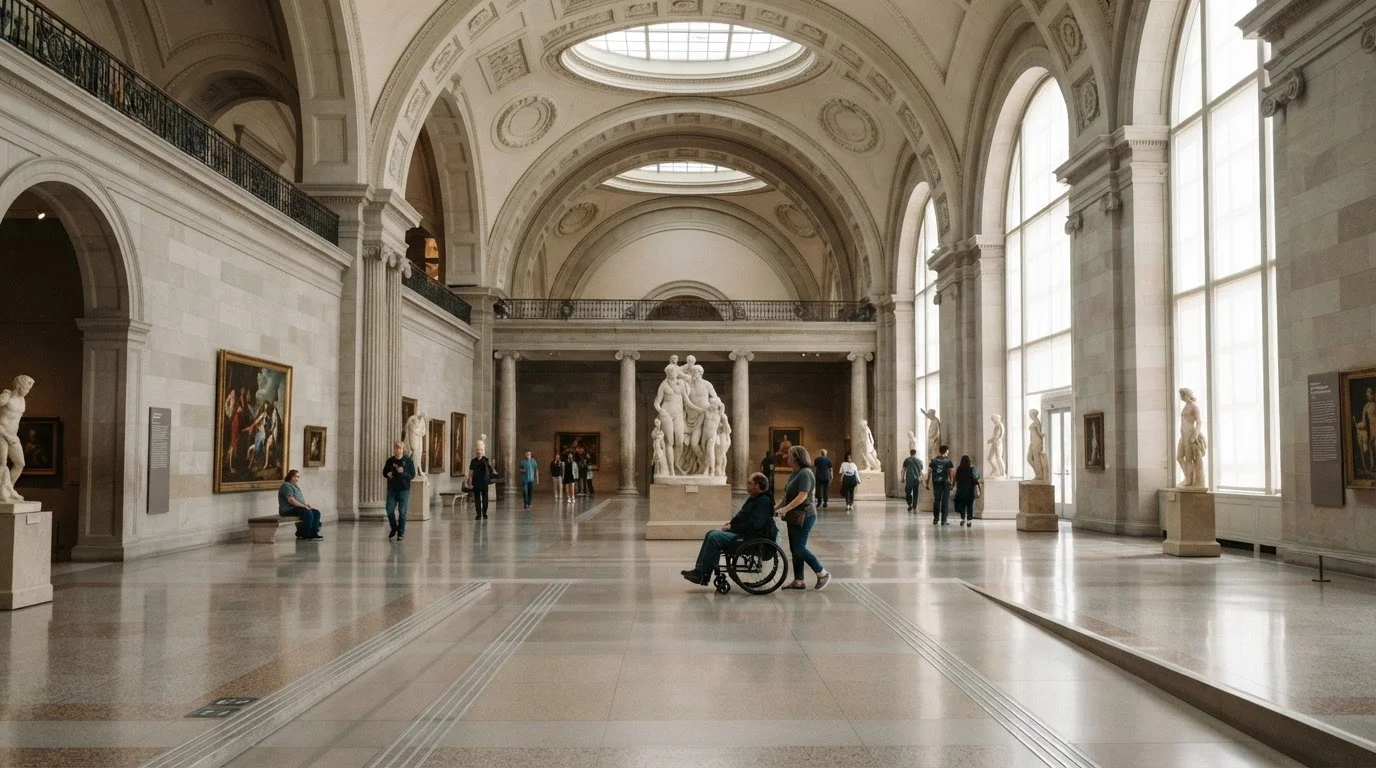
Photo: MyUrbanEscapes.net | Small Escapes. Big Experiences. editorial
—— In This Article
Key Takeaways
- All Smithsonian museums on the National Mall are free to enter and fully wheelchair accessible.
- Advance planning — timed entry passes and museum maps — reduces physical strain considerably.
- Wheelchairs and scooters can be borrowed at several Smithsonian locations at no cost.
- Weekday morning visits mean smaller crowds and easier navigation between exhibits.
- Strategic routing and accessible Metro stops help visitors conserve energy across a full day.
- Rest areas and accessible restrooms are distributed throughout each museum building.
Why the Smithsonian Is Genuinely Well-Suited for Older Visitors
The Smithsonian Institution's 19 museums and galleries in Washington D.C. represent one of the most accessible cultural complexes in the United States. Every building is free to enter, all are compliant with the Americans with Disabilities Act, and the institution has invested substantially in features that go beyond minimum legal requirements — including automatic doors, tactile exhibit elements, and audio description programs.
For senior travelers, the appeal is practical as well as cultural. Hard floors throughout most buildings are smooth and predictable, making wheelchair and scooter use straightforward compared to outdoor destinations with variable terrain. Climate control is consistent year-round, which matters significantly for visitors who are sensitive to heat or cold. And because the museums are clustered along and near the National Mall, a single multi-day visit can cover an extraordinary breadth of American history, art, science, and culture without requiring a car or long-distance travel within the city.
That said, the scale of the complex deserves honest acknowledgment. Some individual museum buildings are enormous — the National Museum of Natural History alone spans 325,000 square feet of exhibit space. Without deliberate planning, the sheer size can become exhausting. The steps below are designed to help you navigate selectively, conserve energy, and leave each day feeling enriched rather than depleted.
What you will need
If your D.C. trip involves arriving by air, our guidance on navigating airports with mobility considerations can help you plan the journey from the gate to the city.
Step-by-Step: Planning and Executing Your Visit
Research accessibility features for each museum you plan to visit
Before booking travel, visit the Smithsonian Institution's official website and download the accessibility guide and floor map for each museum on your itinerary. Note the location of accessible entrances — many buildings have a primary entrance and a secondary accessible entrance that bypasses stairs entirely. Identify elevator banks, accessible restroom locations, and any galleries that require navigating ramps versus flat corridors.
Register for timed-entry passes where required
Several high-demand Smithsonian museums — including the National Museum of African American History and Culture — require free timed-entry passes. These passes are released online and can fill weeks in advance, particularly during spring and summer. Securing an early morning time slot (typically 10 a.m. opening) allows you to move through galleries before peak crowds arrive, making wheelchair navigation and finding seating considerably easier.
Plan your route between museum buildings
The National Mall stretches roughly two miles from the Capitol to the Lincoln Memorial, and individual museum buildings are spread across it. Attempting to walk the full length is taxing even for highly mobile visitors. Instead, plot a geographic cluster — for example, the Natural History Museum, the National Gallery of Art, and the Air and Space Museum sit within a manageable range of each other. Use the Circulator DC bus (accessible, low-floor vehicles) or accessible Metro stations such as Smithsonian (Blue/Orange/Silver lines) and L'Enfant Plaza to bridge longer distances.
Arrange mobility aid loans or confirm your own equipment on arrival
Several Smithsonian buildings — including the National Museum of Natural History and the National Air and Space Museum — loan manual wheelchairs free of charge on a first-come, first-served basis. Arrive early if you plan to borrow one. If you travel with a personal power scooter, confirm that the museum's corridors and elevators accommodate your scooter's turning radius; most Smithsonian spaces are designed for standard scooter widths. If you are flying to D.C., review guidance on traveling with mobility equipment: traveling with mobility aids by air before you pack.
Build deliberate rest breaks into your schedule
Each Smithsonian museum contains benches and seating areas throughout its galleries — these are not incidental but are standard features of the layout. Identify two or three planned rest stops on your floor map before entering. Museum cafes and cafeterias (present in most large buildings) offer seated rest with food and beverages. Limit yourself to two or three major exhibit halls per visit rather than attempting a comprehensive tour; the collections are vast, and overextending leads to fatigue and discomfort.
Confirm accessible restroom locations before entering each gallery
Accessible restrooms are available on multiple floors in every Smithsonian building, but their placement varies. Locate the nearest accessible restroom on your floor map each time you move to a new level or wing. Staff at information desks inside each museum can direct you to the closest facility — do not hesitate to ask. Planning restroom stops around exhibit transitions rather than urgency makes the experience more comfortable.
Visit on a Weekday Morning
Weekday mornings — particularly Tuesday through Thursday before noon — consistently see the lowest visitor volumes at National Mall museums. Smaller crowds mean easier wheelchair navigation, quicker elevator access, and more available seating. Weekend afternoons, especially in spring and summer, are the most congested periods and are generally harder to navigate for visitors with mobility considerations.
Verify Entry Requirements Before You Arrive
Smithsonian entry policies, timed-pass requirements, and temporary closures can change without extended notice. Always check the official Smithsonian Institution website (si.edu) within one to two weeks of your visit to confirm current access conditions for each museum on your itinerary. Do not rely solely on third-party travel sites for this information.
The Mall's Outdoor Terrain Requires Caution
The National Mall's pathways are largely paved, but some sections feature gravel, uneven brick, or compacted gravel that can challenge wheelchairs and scooters. Stick to paved paths along the perimeter roads where possible. After rain, low-lying sections of the Mall can become soft or slippery — adjust your route accordingly and allow additional travel time between buildings.
Visitors who find the Smithsonian's accessibility approach instructive may also want to compare it against other travel contexts. Our national park accessibility checklist covers the very different terrain and logistics of outdoor park visits, while our guide to cruising with a mobility aid addresses the unique challenges of shipboard travel for wheelchair and scooter users.
Smithsonian Accessibility Office
Provides advance guidance on accessibility features, sign language interpretation scheduling, and sensory-friendly visit options.
Museum floor maps (downloadable PDFs)
Help visitors identify accessible entrances, elevator locations, accessible restrooms, and rest seating before arrival.
Wheelchair or mobility scooter (personal or borrowed)
Reduces fatigue on hard floors and long gallery corridors; several Smithsonian buildings loan manual wheelchairs free of charge.
Washington Metro SmarTrip card
Allows smooth, accessible transit between Mall-adjacent Metro stations, reducing the need to walk long outdoor distances.
Refillable water bottle
Water fountains and accessible bottle-filling stations are located throughout the museums; staying hydrated reduces fatigue.

Top Destinations Editorial Team
Top Destinations Editorial Team is the collective byline for our editorial team and contributor network. Articles published under this byline or an editorial pen name are researched, written, and reviewed according to our editorial standards for clarity, consistency, and independence before publication.
View author profile