
Costa Rica for Senior Travelers: Accessibility, Climate Zones, and What to Realistically Expect
Costa Rica's natural beauty is compelling, but terrain and infrastructure vary widely. Here's an honest overview for seniors considering a visit.
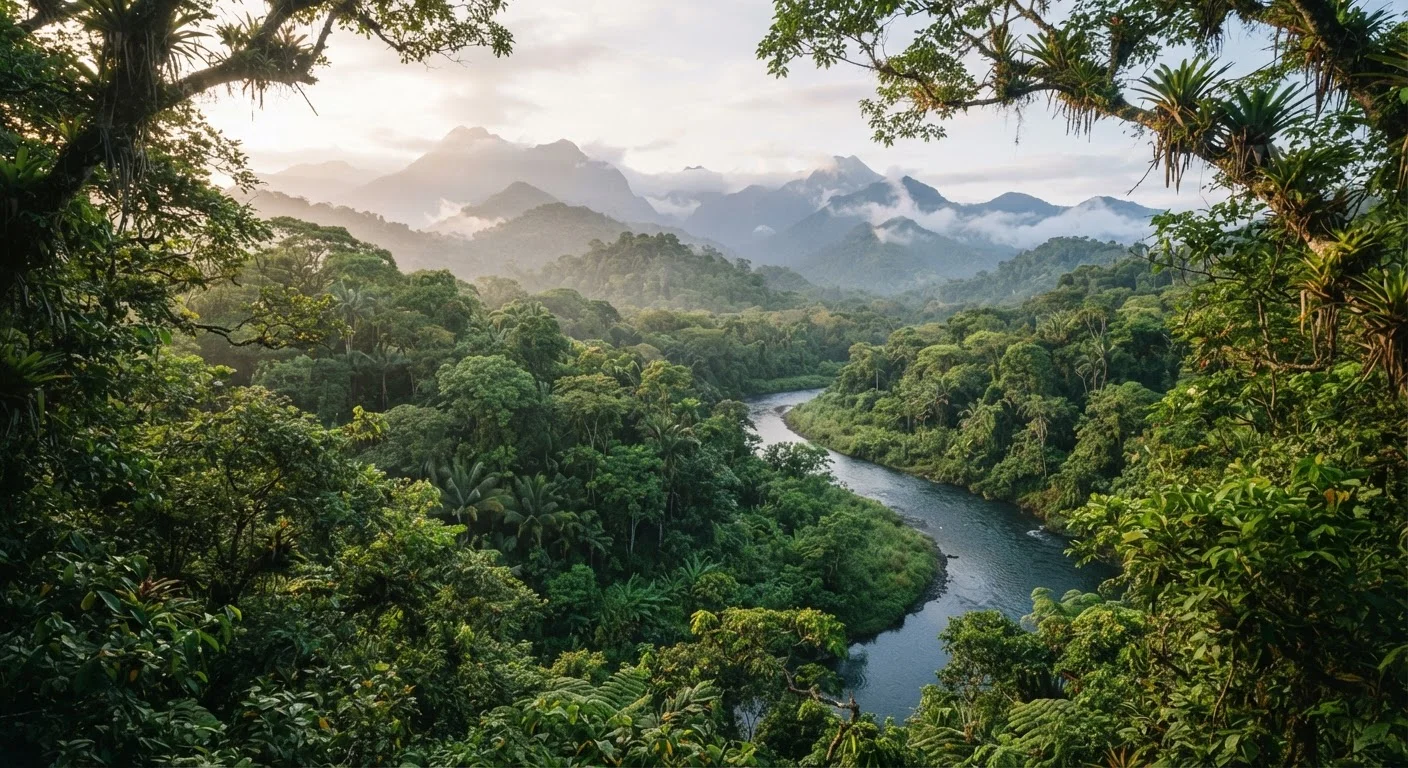
Photo: MyUrbanEscapes.net | Small Escapes. Big Experiences. editorial
—— In This Article
Key Takeaways
- Costa Rica offers genuinely warm weather year-round, but climate varies considerably by altitude and coast.
- Terrain is frequently uneven and hilly, making mobility a real planning consideration.
- Healthcare infrastructure is concentrated in San José; rural areas have limited medical access.
- Many popular eco-lodges and nature sites are not wheelchair-accessible or ADA-equivalent.
- The Guanacaste region and Central Valley offer the most senior-friendly logistics overall.
- English is widely spoken in tourist zones, reducing language-barrier stress for first-time visitors.
Direct U.S. flights reduce transit fatigue
Multiple U.S. carriers offer nonstop service to San José's Juan Santamaría International Airport from cities including New York, Miami, Los Angeles, and Houston, keeping travel time manageable for most seniors.
Dry-season Guanacaste suits mobility-limited travelers
The northwest Pacific coast offers flatter beach access, paved resort areas, and reliable dry weather from December through April — reducing the logistical friction common elsewhere in the country.
English widely spoken in tourist zones
Most hotels, tour operators, and restaurants in major tourist corridors have English-speaking staff, significantly lowering the communication barrier for first-time international travelers.
Private healthcare accessible in San José
The capital has internationally recognized private hospitals that serve foreign visitors, offering a meaningful safety net compared to more remote Central American destinations.
Mild Central Valley climate suits heat-sensitive seniors
San José and surrounding highland towns sit at elevations that keep temperatures consistently in the mid-60s to mid-70s°F, avoiding the intense humidity of the coasts.
Rich wildlife without extensive physical exertion
Lodges near Manuel Antonio and Tortuguero offer wildlife viewing — including sloths, monkeys, and birds — from accessible grounds and guided boat tours that require minimal walking.
Uneven terrain is pervasive, not exceptional
Cobblestone streets, steep lodge paths, unpaved access roads, and root-crossed forest trails characterize much of Costa Rica. Travelers with limited mobility or balance concerns will find many popular sites genuinely difficult to navigate.
Nature reserves rarely meet ADA-equivalent standards
Most national parks and eco-lodges were built to minimize footprint rather than maximize accessibility. Boardwalks exist at a few sites, but wheelchair or walker access is limited across the majority of the country's signature attractions.
Rural medical access is limited and distant
Outside San José, reaching hospital-level care can take hours on winding mountain or coastal roads. Seniors with complex or active health conditions face real risk if an emergency arises in a remote location.
Higher cost than regional alternatives
Costa Rica is among the most expensive destinations in Central America. Daily costs for comfortable accommodations, food, and organized tours add up quickly, particularly during peak dry-season months.
Rain-season conditions can significantly limit activities
From May through November, heavy afternoon rains, muddy trails, and road closures can curtail planned excursions across most of the country. Travel outside the dry season requires flexible scheduling and lower expectations.
What Makes Costa Rica Appealing — and Complicated — for Seniors
Costa Rica consistently ranks among the most-visited destinations in Central America, and for understandable reasons: stable democracy, well-established tourism infrastructure, direct flights from major U.S. hubs, and biodiversity that is genuinely world-class. For seniors drawn to wildlife, tropical scenery, and a slower pace than Europe's city circuits, it checks compelling boxes.
But the country's defining feature — varied, dramatic terrain — is also its main accessibility challenge. Volcanic mountain ranges, dense rainforest, and rugged coastlines create spectacular scenery and create logistical difficulty in nearly equal measure. Uneven cobblestone streets, steep hillside lodges, and unpaved access roads to nature reserves are common rather than exceptional. Seniors evaluating this destination should weigh the draw of the environment against a frank look at what their daily movement will actually involve. See what senior-friendly actually means in practice for a useful framework to apply before booking any international trip.
Climate Zones: Choosing the Right Region
Costa Rica is not a single climate — it is several. The Pacific coast, particularly Guanacaste province, has a well-defined dry season from roughly December through April, with reliable sunshine and low humidity. This is the most predictable window for seniors who want beach access and outdoor activities without rain disruption.
The Caribbean coast receives rain year-round, with brief drier spells in September–October and February–March. The Central Valley, where San José sits at around 3,700 feet elevation, stays mild — typically 65–75°F — and avoids coastal humidity extremes. For seniors sensitive to heat, the Central Valley or highland areas like Monteverde offer natural climate control. The tradeoff is cooler, mistier conditions and steeper terrain. Warm-weather travel has well-documented appeal for older travelers, but the definition of "warm" in Costa Rica depends entirely on where you go.
Altitude Consideration for Seniors
The Central Valley sits above 3,500 feet — an elevation that some travelers with cardiac or respiratory conditions may notice, particularly in the first day or two. This is not high altitude by Andean standards, but it is worth discussing with a healthcare provider before travel, especially for those unaccustomed to elevation. Symptoms like mild breathlessness or fatigue at arrival are common and usually resolve quickly, but anyone with preexisting cardiovascular conditions should seek personal medical guidance before planning a highland itinerary.
Pros and Cons: An Honest Assessment
Before committing to an itinerary, weigh Costa Rica's genuine strengths against the infrastructure realities that don't always surface in promotional materials.
Direct U.S. flights reduce transit fatigue
Multiple U.S. carriers offer nonstop service to San José's Juan Santamaría International Airport from cities including New York, Miami, Los Angeles, and Houston, keeping travel time manageable for most seniors.
Dry-season Guanacaste suits mobility-limited travelers
The northwest Pacific coast offers flatter beach access, paved resort areas, and reliable dry weather from December through April — reducing the logistical friction common elsewhere in the country.
English widely spoken in tourist zones
Most hotels, tour operators, and restaurants in major tourist corridors have English-speaking staff, significantly lowering the communication barrier for first-time international travelers.
Private healthcare accessible in San José
The capital has internationally recognized private hospitals that serve foreign visitors, offering a meaningful safety net compared to more remote Central American destinations.
Mild Central Valley climate suits heat-sensitive seniors
San José and surrounding highland towns sit at elevations that keep temperatures consistently in the mid-60s to mid-70s°F, avoiding the intense humidity of the coasts.
Rich wildlife without extensive physical exertion
Lodges near Manuel Antonio and Tortuguero offer wildlife viewing — including sloths, monkeys, and birds — from accessible grounds and guided boat tours that require minimal walking.
Uneven terrain is pervasive, not exceptional
Cobblestone streets, steep lodge paths, unpaved access roads, and root-crossed forest trails characterize much of Costa Rica. Travelers with limited mobility or balance concerns will find many popular sites genuinely difficult to navigate.
Nature reserves rarely meet ADA-equivalent standards
Most national parks and eco-lodges were built to minimize footprint rather than maximize accessibility. Boardwalks exist at a few sites, but wheelchair or walker access is limited across the majority of the country's signature attractions.
Rural medical access is limited and distant
Outside San José, reaching hospital-level care can take hours on winding mountain or coastal roads. Seniors with complex or active health conditions face real risk if an emergency arises in a remote location.
Higher cost than regional alternatives
Costa Rica is among the most expensive destinations in Central America. Daily costs for comfortable accommodations, food, and organized tours add up quickly, particularly during peak dry-season months.
Rain-season conditions can significantly limit activities
From May through November, heavy afternoon rains, muddy trails, and road closures can curtail planned excursions across most of the country. Travel outside the dry season requires flexible scheduling and lower expectations.
Healthcare, Safety, and Practical Logistics
San José has private hospitals — including CIMA Hospital and Clínica Bíblica — that provide care to international patients at standards comparable to many U.S. facilities. Travel insurance that covers medical evacuation is strongly recommended, particularly for travelers venturing into rural or remote regions where the nearest hospital may be hours away on poor roads.
Safety concerns in Costa Rica are generally limited to petty theft in tourist areas rather than violent crime, but seniors should apply standard urban awareness in San José and beach towns. Taxis should be official red cabs with meters, or use pre-arranged app-based services where available.
~3 hrs
Average flight time from Miami to San José
Juan Santamaría International Airport is served by multiple U.S. carriers, making Costa Rica one of the more logistically accessible Central American destinations for U.S.-based seniors.
30+
National parks and protected areas
Costa Rica's protected land covers roughly 25% of its territory, offering exceptional wildlife diversity — though accessibility within parks varies widely by site and season.
For those comparing value across the region, a side-by-side look at Costa Rica, Panama, and Guatemala can help frame the cost-accessibility tradeoffs more concretely. Costa Rica is notably more expensive than its neighbors, which is worth factoring into trip planning. Additional context on accessible coastal options worldwide appears in our overview of affordable beach destinations for older travelers.
This article is for general informational purposes only. Travelers should verify entry requirements, health recommendations, and safety advisories with official government and healthcare sources before travel. Consult a qualified healthcare professional regarding any personal health considerations related to travel.

Top Destinations Editorial Team
Top Destinations Editorial Team is the collective byline for our editorial team and contributor network. Articles published under this byline or an editorial pen name are researched, written, and reviewed according to our editorial standards for clarity, consistency, and independence before publication.
View author profile