
Assumptions About International Travel That Hold Seniors Back Unnecessarily
Many older adults talk themselves out of international travel based on fears that closer examination simply don't hold up. Here's what the evidence actually shows.
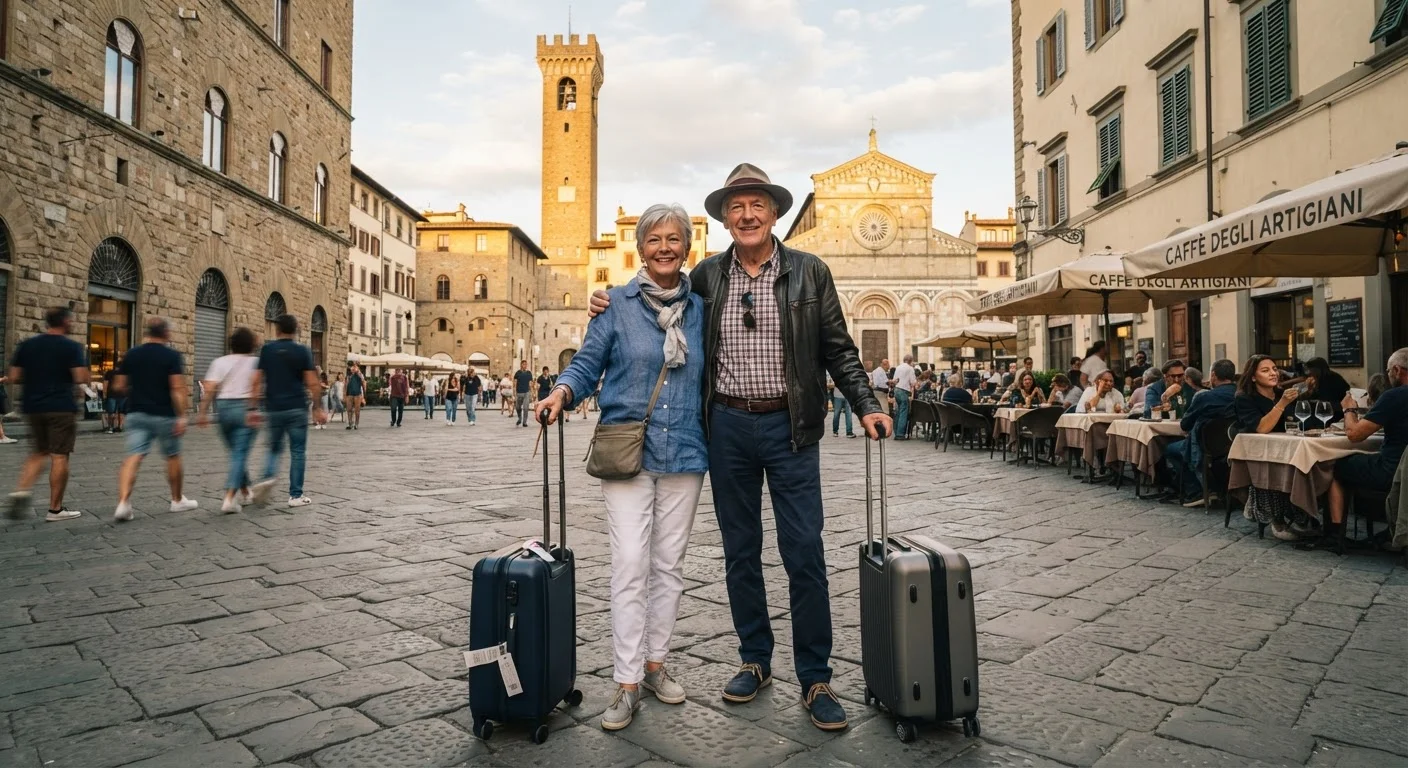
Photo: MyUrbanEscapes.net | Small Escapes. Big Experiences. editorial
—— In This Article
Key Takeaways
- Many international destinations are specifically designed with accessibility, walkability, and healthcare proximity in mind.
- Language barriers are far less limiting than assumed, especially with modern translation tools and widespread English in tourist areas.
- International travel does not require peak physical fitness — pacing, planning, and destination choice matter far more.
- Travel insurance and advance medical preparation can address most legitimate health-related concerns before departure.
- Long-haul flights carry manageable risks for most travelers when standard precautions are followed.
Why These Assumptions Persist — And Why They Matter
Most senior travelers who opt out of international travel aren't making that decision based on experience. They're making it based on what they expect the experience to be — and those expectations are frequently built on outdated information, secondhand warnings, and a general cultural tendency to frame aging as a reason for restriction rather than recalibration.
The cost of these assumptions is real. International travel exposes travelers to different healthcare systems, food cultures, architectural heritage, and social environments in ways that domestic travel rarely replicates. When unfounded fears gate that access, the loss is concrete. The goal of this piece is not to argue that international travel is risk-free — it isn't, and no honest travel resource would claim otherwise. The goal is to distinguish risks that warrant genuine preparation from fears that don't reflect current reality.
Myth
International travel is too physically demanding for anyone over 65.
Fact
Destination and trip design matter far more than age. Dozens of international cities and regions are specifically well-suited to travelers with limited mobility or stamina.
The assumption conflates travel difficulty with age itself, when the real variable is how a trip is structured. Cities like Lisbon (outside the historic Alfama), Vienna, and Kyoto's flatter Arashiyama district offer extensive flat walking, excellent public transport, and elevator-equipped metro systems. River cruises through France, Portugal, and the Netherlands eliminate most logistical strain while delivering rich cultural access. Pacing — not age — determines whether international travel is exhausting or genuinely restorative. For a concrete framework on what makes a destination genuinely suitable, see what 'senior-friendly' actually means when researching international destinations.
Myth
Not speaking the local language makes international travel unsafe or impossibly frustrating.
Fact
English is widely spoken in tourist areas across Europe, East Asia, and much of Latin America, and translation apps have made communication far more manageable than a decade ago.
In practice, most senior travelers navigate non-English-speaking countries with minimal difficulty. English proficiency among service workers in major tourist destinations is high in much of Western Europe, Scandinavia, the Netherlands, and parts of Japan and South Korea. Beyond that, offline translation apps handle menus, signage, and basic conversations competently. Carrying a card with your hotel address in the local script — a simple, free preparation step — eliminates one of the most common navigation anxieties. The full practical picture is covered in navigating language barriers abroad as an older traveler.
Myth
International healthcare systems are unreliable, making medical emergencies abroad catastrophic.
Fact
Many popular international destinations have healthcare infrastructure that is comparable to, or in some cases exceeds, what travelers would find in many US cities.
Countries such as Germany, Japan, Australia, Canada, and most of Western Europe maintain highly capable hospital systems, often with English-speaking staff in urban centers. Comprehensive travel insurance that includes medical evacuation coverage addresses the gap for destinations with more limited facilities. The critical preparation step is purchasing appropriate insurance before departure and carrying a clear list of medications, dosages, and emergency contacts — not avoiding travel altogether. For the US senior traveler who wants the familiarity of a near-abroad option, Canada offers healthcare infrastructure and English-language access that reduces this concern significantly.
Myth
Long international flights are too dangerous for older travelers due to blood clot risk.
Fact
Deep vein thrombosis risk on long flights is real but manageable with well-established, evidence-based precautions that most travelers can follow.
The risk of DVT increases with immobility on any long-haul journey, but it is not unique to older travelers, and standard precautions — periodic movement, hydration, and compression socks where appropriate — meaningfully reduce it. The genuine clinical picture is more nuanced than blanket avoidance suggests. Travelers with specific conditions should consult their physician before any long flight, but the evidence does not support the conclusion that air travel over a certain age is categorically dangerous. For a detailed, evidence-based breakdown, see senior travel and deep vein thrombosis: separating myth from medical reality.
Myth
International food and water will inevitably make older travelers ill.
Fact
Food and water risks vary enormously by destination and are substantially reduced through informed precautions — most well-traveled international destinations carry low overall risk.
Travelers who conflate food risks in, say, Western Europe or Japan with those in regions where water infrastructure is genuinely limited are working from an inaccurate mental map. In high-income destinations — which account for the majority of senior travel — tap water is safe, food hygiene standards are rigorously enforced, and gastrointestinal illness is no more common than at home. Where risk is higher, practical habits such as drinking bottled water, avoiding raw produce washed in tap water, and eating at busy establishments with visible turnover provide meaningful protection. For a destination-calibrated overview, food safety abroad for seniors: when caution is genuinely warranted sets out where vigilance is actually warranted.
Myth
International travel is significantly more expensive than domestic travel for seniors on fixed incomes.
Fact
Many international destinations, particularly in Southern and Eastern Europe, Southeast Asia, and Central America, offer lower daily costs than comparable US travel experiences.
Portugal, Greece, Croatia, Costa Rica, and several Southeast Asian destinations consistently offer lower average accommodation, dining, and transport costs than equivalent US destinations. Transatlantic airfare, while a real upfront cost, is often offset by lower in-country spending once travelers arrive. The assumption that international automatically means expensive leads many seniors to pay more for domestic travel than a thoughtfully planned international trip would cost. Myths about budget travel that hold seniors back explores the broader pattern of cost misconceptions that lead to unnecessary overspending.
Preparation Over Avoidance: What Actually Reduces Risk
The most consistent finding across all of the myths above is that the practical response to a legitimate concern is preparation, not avoidance. Travel insurance with medical coverage, a pre-departure consultation with a physician, destination-appropriate vaccinations, offline translation tools, and a carefully chosen itinerary that matches terrain to mobility level — these are the actual levers that determine how a trip goes.
Don't Skip Pre-Departure Medical Preparation
Seniors managing chronic conditions, taking multiple medications, or with recent surgical or cardiac history should speak with their physician before booking any long-haul international trip. This conversation is not a barrier to travel — it's the step that makes travel genuinely safe. Bring a written medication list and emergency contact information on every trip, regardless of destination.
Travelers who also carry assumptions about safety abroad may benefit from examining those separately. Myths about senior travel safety that cause more harm than good addresses the gap between perceived and actual risk in more detail. Similarly, what seniors often overlook when planning for travel safety covers the preparation gaps — expired passports, untested equipment — that create avoidable problems.
This article provides general travel information and education. It is not medical or financial advice. Travelers with specific health conditions should consult a qualified healthcare professional before planning any international trip.

Top Destinations Editorial Team
Top Destinations Editorial Team is the collective byline for our editorial team and contributor network. Articles published under this byline or an editorial pen name are researched, written, and reviewed according to our editorial standards for clarity, consistency, and independence before publication.
View author profile