
Why Seniors Often Skip Travel Vaccinations — and Why That's a Risk
Explores the common reasons senior travelers overlook destination-specific vaccinations and what the general health risks of that decision can involve.
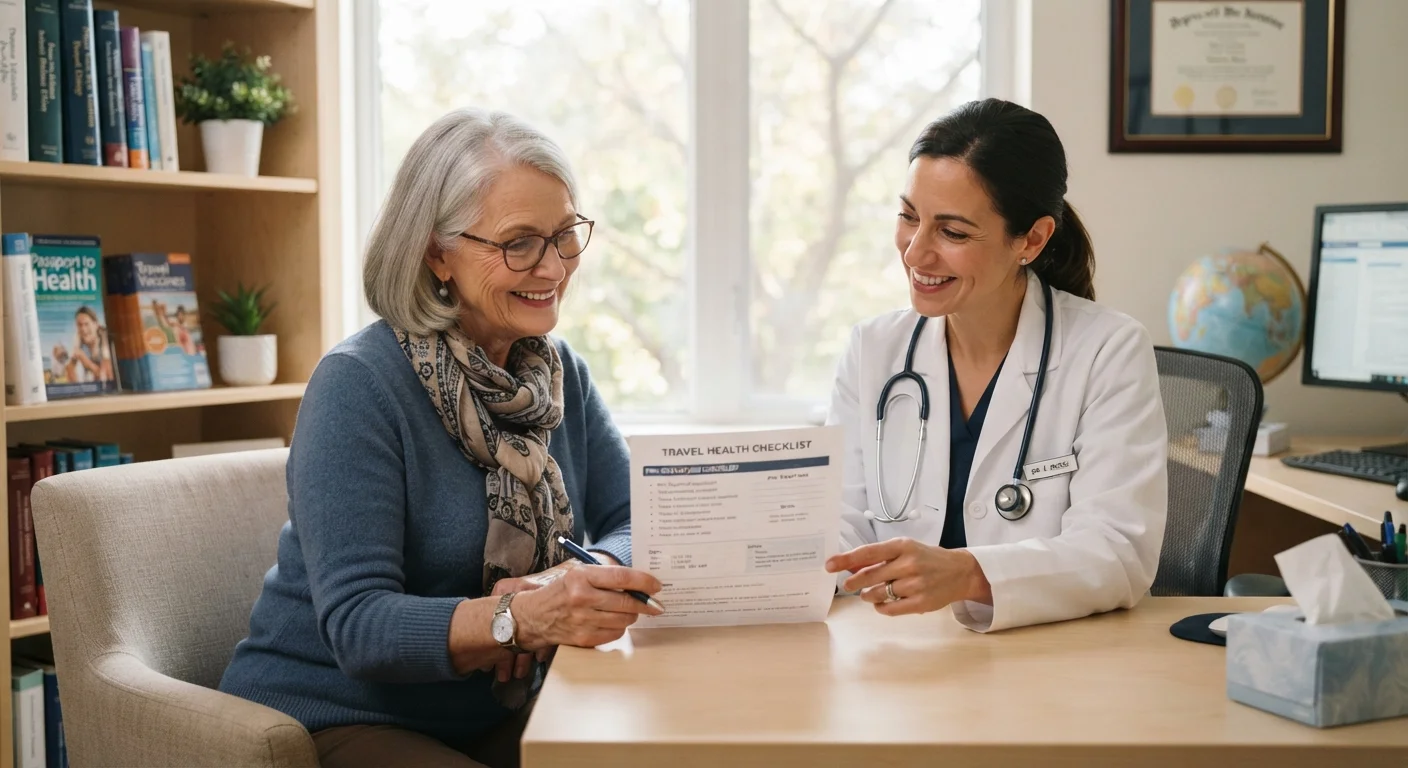
Photo: MyUrbanEscapes.net | Small Escapes. Big Experiences. editorial
—— In This Article
Key Takeaways
- Seniors often skip travel vaccinations due to false assumptions about their destination or personal health status.
- Older immune systems may respond differently to infections, making destination-specific vaccines especially important.
- Some vaccines require weeks to take effect, so late scheduling can leave travelers unprotected.
- A travel medicine consultation with a qualified healthcare provider is the essential first step.
- Skipping vaccinations is one of several pre-trip health gaps covered in broader senior travel safety planning.
Why This Pattern Is So Common Among Senior Travelers
Travel vaccinations occupy an awkward middle ground in trip planning. They're medical decisions that happen during what feels like a logistics phase, and for many senior travelers, they simply don't make the mental checklist until it's too late to act properly. That's understandable — but it carries real consequences.
The reasons seniors skip or delay travel vaccinations tend to cluster around a handful of predictable assumptions: that the destination seems safe enough, that existing health routines are sufficient, or that the whole process is more complicated than it's worth. The mistakes below map those assumptions to the specific risks they create — and to straightforward ways of doing things differently.
For a broader look at pre-trip health gaps that affect senior travelers, this related article on common pre-trip oversights covers overlapping territory worth reading alongside this one.
Assuming a familiar or popular destination doesn't require any vaccinations.
Why it happens: Seniors often associate vaccine requirements with remote or "exotic" destinations, underestimating risk in well-traveled regions like parts of Europe, the Caribbean, or Southeast Asia.
Believing that existing chronic-disease management makes additional vaccines unnecessary.
Why it happens: Some seniors assume that because they already manage their health carefully, they're adequately protected — or that vaccines might interact with existing conditions.
Scheduling vaccine appointments too close to the departure date.
Why it happens: Travel planning often focuses on logistics first — flights, hotels, itineraries — with health preparation treated as an afterthought.
Concluding that vaccines are only for travelers with weakened immune systems.
Why it happens: There's a common misconception that vaccines are a precaution only for people who are visibly ill or immunocompromised, rather than a standard protective measure for all travelers.
Relying solely on travel insurance as a substitute for health preparation.
Why it happens: Seniors sometimes feel that comprehensive travel insurance covers any health eventuality, making vaccine preparation seem redundant.
How to Build Vaccine Planning Into Your Trip Preparation
The most effective change most senior travelers can make is simple: treat the travel medicine consultation as a trip-planning step, not an afterthought. Booking that appointment at the same time you book your flights reframes it as a normal part of getting ready — which it is.
This Is General Information, Not Medical Advice
This article provides general educational information about travel vaccinations for older adults. It is not a substitute for personalized medical advice. Please consult a qualified healthcare provider — ideally one with travel medicine expertise — before making any decisions about vaccinations or travel health preparation.
During that consultation, bring a list of your current medications, your itinerary, and any relevant medical history. A provider with travel medicine experience can assess destination-specific risks, review which vaccines you may already have current coverage for, and identify any timing constraints that affect your schedule.
Vaccination planning also connects naturally to other health and safety preparation. Our Senior Health Prep hub covers the full range of steps worth taking before any trip, and our guide to food and water safety abroad addresses the complementary risks seniors face once they've arrived at their destination.
4–6 weeks
Minimum lead time recommended before departure
The U.S. Centers for Disease Control and Prevention (CDC) generally recommends visiting a travel health provider at least four to six weeks before international travel to allow adequate time for vaccinations to take effect.
2+
Doses required for some travel vaccines
Several destination-specific vaccines require more than one dose administered over a defined schedule, meaning last-minute appointments may leave travelers without full protection.
The goal isn't to create anxiety — it's to remove uncertainty. Most vaccination preparation is straightforward once it's scheduled, and arriving at your destination knowing you've addressed these risks is a genuine confidence boost. Practical safety awareness during active travel is the natural next step once the pre-departure preparation is in place.
This article is for general informational and educational purposes only. It is not medical advice and should not be used as a substitute for consultation with a qualified healthcare provider. Always seek professional medical guidance before making decisions about vaccinations or travel health.

Senior Trip Planning Editorial Team
Senior Trip Planning Editorial Team is the collective byline for our editorial team and contributor network. Articles published under this byline or an editorial pen name are researched, written, and reviewed according to our editorial standards for clarity, consistency, and independence before publication.
View author profile