
New Zealand vs. Australia: Choosing the Right Long-Haul Pacific Destination for Older Travelers
Both countries are English-speaking and welcoming, but they offer very different paces, landscapes, and accessibility considerations for seniors.
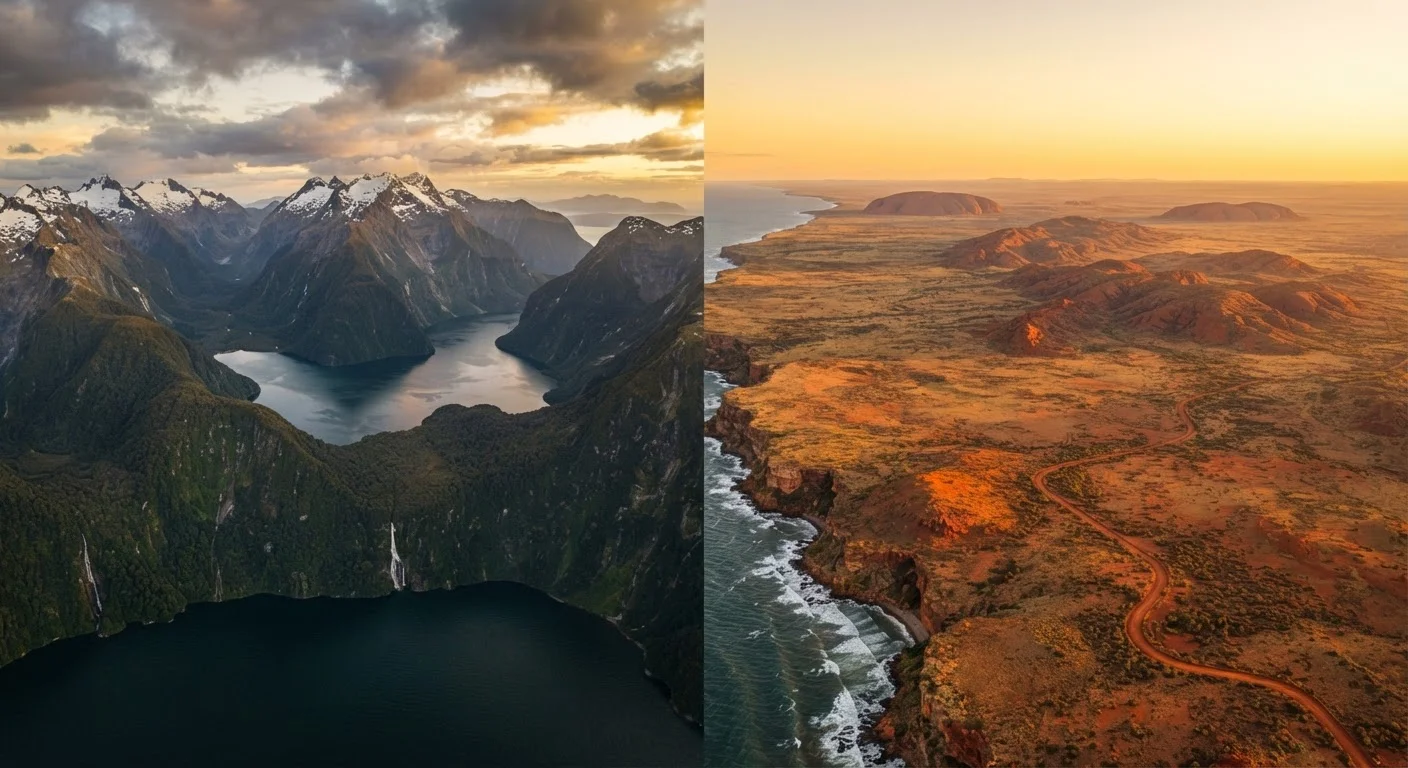
Photo: MyUrbanEscapes.net | Small Escapes. Big Experiences. editorial
—— In This Article
Key Takeaways
- Both countries are English-speaking, politically stable, and have strong healthcare infrastructure — reducing common senior travel concerns.
- Australia's sheer size means significant internal flights are often necessary; New Zealand's compact South and North Islands are far easier to navigate by road or rail.
- New Zealand generally offers a quieter, less crowded pace, while Australia's major cities provide extensive accessibility infrastructure.
- Flight duration from the US is long for both — typically 12–17 hours depending on routing — making stopover planning important for older travelers.
- Australia tends to carry higher day-to-day costs in cities; New Zealand's costs are somewhat lower though vary by region.
- Both destinations reward a minimum of two to three weeks; a rushed itinerary risks exhausting rather than restoring.
How These Two Destinations Actually Differ for Senior Travelers
New Zealand and Australia are often bracketed together as a combined Pacific itinerary — and for good reason. Both are English-speaking, politically stable, and operate excellent healthcare systems. Visas for US citizens are straightforward for both countries, though requirements can change, so always verify current entry rules through official government sources before booking.
The critical difference for older travelers is scale. Australia is roughly the size of the contiguous United States. Flying from Sydney to Perth is comparable to crossing the country from New York to Los Angeles. If you want to experience the Great Barrier Reef, the Red Centre, and a major city on one trip, be prepared for several domestic flights. That level of transit can be genuinely fatiguing, and it's worth building in rest days accordingly.
New Zealand, by contrast, fits into an area slightly smaller than California. The ferry crossing between the North and South Islands takes about three hours. A well-paced two-to-three-week self-drive tour can cover iconic highlights — Milford Sound, Queenstown, Rotorua's geothermal fields, the Bay of Islands — without a single domestic flight. For seniors who want to minimize transit stress, this distinction is significant.
For a broader comparison of destinations that require shorter travel times, the US Destinations hub covers senior-friendly domestic options that sidestep long-haul fatigue entirely.
| Criterion | New Zealand | Australia |
|---|---|---|
| Country size | Smaller than California | Size of contiguous US |
| Internal travel demands | Road or ferry — minimal flights needed | Multiple domestic flights often required |
| City accessibility | Good in Christchurch, Wellington | Extensive in Sydney, Melbourne |
| Terrain challenge | Variable — some rugged, uneven ground | Variable — cities flat; outback demanding |
| Healthcare quality | High — public hospitals nationwide | High — major hospitals in all cities |
| Relative daily cost | Moderate; lower outside Auckland | Moderate–high; expensive in Sydney |
| Flight from US West Coast | ~13–14 hours to Auckland | ~14–17 hours to Sydney |
| Pace and crowd level | Quieter; less urban density | Busier; major city tourist infrastructure |
| Wildlife highlights | Unique birdlife; marine mammals | Great Barrier Reef; iconic marsupials |
Accessibility, Healthcare, and Practical Logistics
Both countries score well on healthcare quality by global standards. Australia's public hospital system and New Zealand's ACC (Accident Compensation Corporation) scheme provide emergency care, though it's essential for US travelers to carry comprehensive travel health insurance regardless of destination quality. Consult your personal physician and a travel medicine specialist before any long-haul trip.
Australia's major cities — particularly Sydney and Melbourne — have invested heavily in accessibility infrastructure: step-free transport options, mobility aid hire services, and wide pedestrian pathways in tourist precincts are widely available. Regional Australia varies considerably; rural Queensland or the Northern Territory presents genuine accessibility challenges for travelers with mobility limitations.
New Zealand's terrain is more variable than its compact size suggests. The South Island's spectacular landscapes involve uneven ground, steep inclines, and weather that shifts quickly. Travelers with significant mobility needs should review specific activities carefully rather than assuming accessibility. Christchurch and Wellington are both flat, walkable cities. Queenstown's adventure-sport reputation does not mean it lacks options for those seeking a gentler pace — lakeside walks, wine-region tours, and scenic flights are all viable.
~13–17 hrs
Typical US West Coast flight time to either destination
Non-stop flights from Los Angeles to Auckland or Sydney fall in this range; East Coast departures add 2–3 hours via connecting routings.
3 weeks
Minimum recommended trip length for a meaningful visit
Travel industry consensus and senior travel specialists consistently suggest three weeks as the minimum to allow adequate pacing and recovery time on long-haul Pacific trips.
2 islands
New Zealand's navigable main island structure
New Zealand's North and South Islands are connected by a regular inter-island ferry, making self-drive touring genuinely practical without domestic flights.
For those weighing whether a structured tour or independent approach suits their trip better, the group tour vs. independent travel comparison lays out the trade-offs in detail.
Pacing, Cost, and Making the Long Haul Work
The flight itself deserves careful planning. Non-stop routes from US West Coast cities to Sydney or Auckland run approximately 13–17 hours. Most travelers find a one-night stopover in Honolulu or Fiji meaningfully reduces arrival fatigue — a worthwhile consideration regardless of your general fitness level.
Cost-wise, both destinations are broadly comparable to Western Europe for mid-range travelers. Australia's major cities rank among the more expensive in the Asia-Pacific region; accommodation, dining, and internal transport in Sydney or Melbourne reflect that. New Zealand is generally modestly cheaper outside Auckland, and self-catering rental accommodation is widely available — a useful strategy for longer stays. See our guide to senior-friendly lodging strategies for approaches that apply well to both destinations.
A minimum of three weeks is advisable for either country visited alone; attempting both on a single trip under four weeks often produces exhaustion rather than satisfaction. Seniors considering an extended stay — a month or more — will find both countries offer long-stay visitor visas, though terms differ and should be confirmed through official immigration sources. The long-stay international travel trade-offs article covers the practical considerations that apply to that kind of extended trip.
Travel Insurance Is Non-Negotiable Here
Both Australia and New Zealand have strong healthcare systems, but neither provides free treatment to visiting US citizens in non-emergency situations. Comprehensive travel health insurance — including medical evacuation coverage — is essential for any long-haul international trip. Review policy terms carefully before departure and consult your primary care physician about any health conditions that may affect coverage or in-destination care needs.
If the Pacific long-haul feels like too large a first international step, Canada offers an underappreciated international alternative — familiar infrastructure, no language barrier, and a fraction of the transit time.

Top Destinations Editorial Team
Top Destinations Editorial Team is the collective byline for our editorial team and contributor network. Articles published under this byline or an editorial pen name are researched, written, and reviewed according to our editorial standards for clarity, consistency, and independence before publication.
View author profile