
Why the Gulf Coast Is One of America's Most Welcoming RV Regions for Older Travelers
From Florida's Panhandle to Texas's Padre Island, discover what makes the Gulf Coast a standout choice for senior RV road trips.
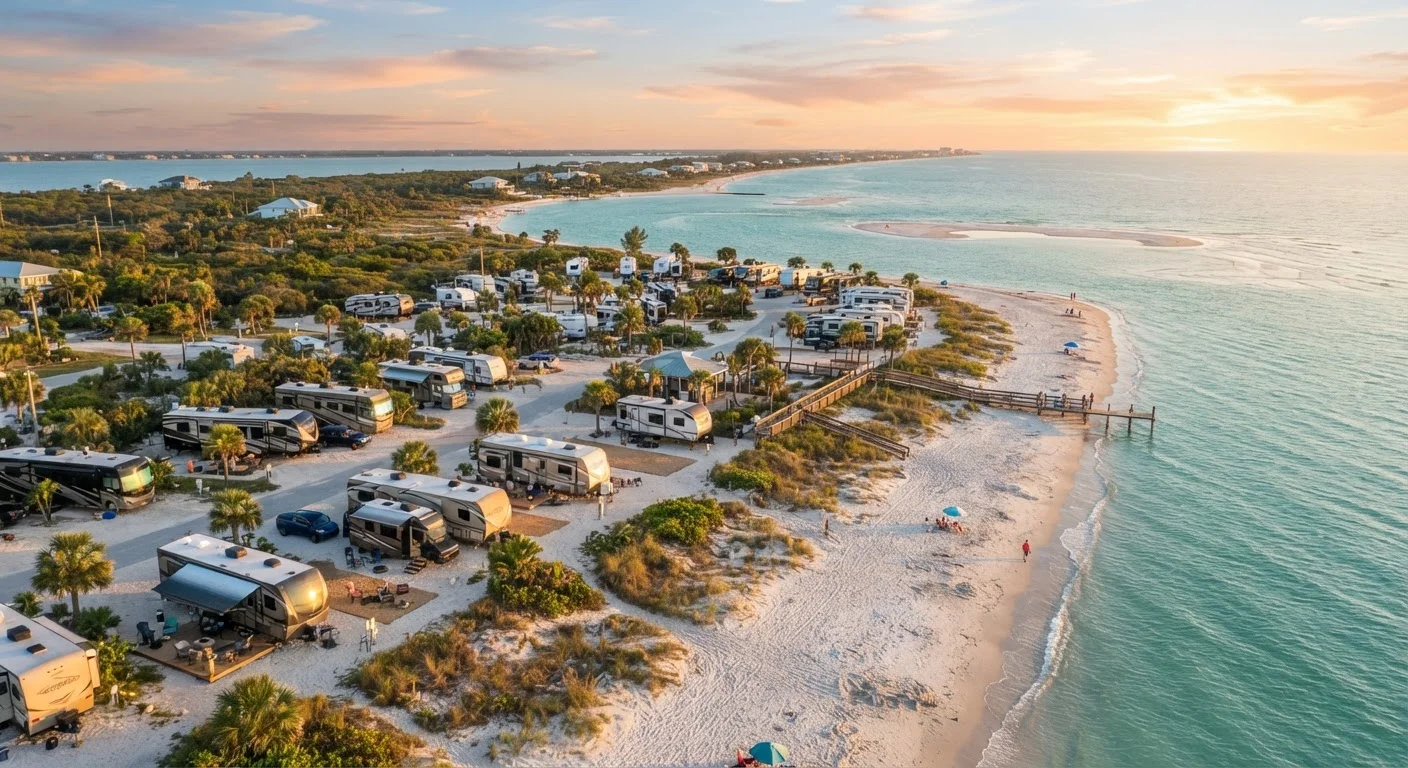
Photo: MyUrbanEscapes.net | Small Escapes. Big Experiences. editorial
—— In This Article
Key Takeaways
- The Gulf Coast's flat terrain reduces driving stress and is friendlier for larger RVs.
- Mild winters make the region popular among seniors escaping northern cold from November through March.
- Many campgrounds along this corridor offer full hookups, paved sites, and on-site amenities suited to older travelers.
- Proximity to regional medical centers adds a meaningful safety cushion for travelers managing health conditions.
- The route spans five states, offering genuine variety without demanding difficult driving conditions.
What Makes the Gulf Coast Distinctly Accessible
Senior RVers often cite driving anxiety — particularly on steep grades, narrow mountain roads, or congested urban freeways — as one of their biggest concerns. The Gulf Coast largely sidesteps these challenges. From Pensacola to Padre Island, the primary highway corridors run through low-lying coastal terrain, with gentle grades and well-maintained roads suited to a range of RV sizes.
This matters practically. Flat driving reduces fuel consumption, puts less strain on braking systems, and is simply less fatiguing over long days behind the wheel. For travelers who may be returning to RV travel after several years away, or who are managing conditions that make extended driving more tiring, that consistency is genuinely valuable.
The region also benefits from dense campground infrastructure. Unlike some scenic but remote corridors, the Gulf Coast has a high concentration of private parks, state campgrounds, and Corps of Engineers sites within short distances of one another — meaning shorter driving days are easy to plan without sacrificing amenities.
Plan Shorter Driving Days from the Start
A common adjustment experienced senior RVers make is targeting 150–200 miles per driving day rather than pushing to cover distance. The Gulf Coast's campground density makes this easy to plan — there's rarely a need to drive more than two to three hours between quality stops. Building in flexibility also lets you linger at destinations that surprise you.
Climate, Comfort, and the Snowbird Effect
The Gulf Coast's winter climate is a central draw. While temperatures vary by latitude — south Texas runs warmer than the Florida Panhandle — the entire region offers significantly milder winters than most of the continental US. Daytime highs frequently reach the mid-60s to low 70s Fahrenheit from December through February, with overnight lows rarely dipping below freezing along the immediate coast.
This is why the term "snowbird" was practically coined for this corridor. Hundreds of thousands of older travelers migrate south each fall, creating a well-established RV culture with community activities, organized events, and campgrounds designed specifically with long-term stays in mind. For senior travelers who value social connection on the road, the Gulf in winter offers a ready-made community.
Understanding why warm climates resonate so strongly with older travelers goes beyond preference — there are practical dimensions too. Our article on why warm-weather destinations appeal to senior travelers explores those reasons in more depth.
900+
Miles of Gulf Coast RV corridor
The driving distance from Pensacola, Florida, to Corpus Christi, Texas, spans approximately 900 miles along the primary Gulf Coast route.
60s–70s°F
Typical winter daytime highs along the coast
Gulf Coast coastal areas regularly see daytime temperatures in this range from December through February, making outdoor activity comfortable for most travelers.
5 States
States in the Gulf Coast RV corridor
Florida, Alabama, Mississippi, Louisiana, and Texas each offer distinct landscapes, cultures, and campground options along this single connected route.
Key Stops Along the Corridor
The Gulf Coast's variety is one of its underappreciated strengths. Each state along the route contributes something distinct.
- Florida Panhandle: White-sand beaches near Destin and Panama City Beach, with state parks offering full-hookup sites steps from the water.
- Alabama and Mississippi: Quieter stretches with less traffic and lower campground costs, including Gulf Shores and Ocean Springs — towns with walkable downtowns and good medical access.
- Louisiana: A cultural shift into Cajun country, with state parks near the Atchafalaya Basin and New Orleans accessible as a day trip via well-signed routes.
- Texas Gulf Coast: Padre Island National Seashore offers one of the longest undeveloped barrier island stretches in the US, with Corpus Christi and Rockport serving as comfortable base towns with full services.
For travelers weighing whether a coastal setting suits their broader travel style, our piece on coastal towns vs. inland cities walks through the tradeoffs in practical terms.
Healthcare Access and Peace of Mind
For many senior travelers, proximity to quality medical care is not optional — it's a planning requirement. The Gulf Coast corridor performs well here. Regional medical centers and hospital systems are distributed throughout the area, with larger facilities in cities like Mobile, Biloxi, New Orleans, Houston, and Corpus Christi. Even smaller coastal towns typically maintain urgent care clinics and pharmacy access.
This doesn't eliminate the need for preparation, but it does reduce one of the most common sources of anxiety for older RVers traveling with managed health conditions. Carrying a current medication list, understanding your insurance coverage across state lines, and identifying the nearest facilities at each stop are all recommended practices — your healthcare provider can help you think through what's appropriate for your individual situation.
Verify Campground Accessibility Before Booking
Accessibility descriptions in campground listings are not standardized, and what one park calls an "accessible site" may not meet your specific needs. Before booking, call the campground directly and ask specific questions: Is the site paved? Is there a level surface from the RV door to the utility connections? Are the restrooms ADA-compliant? A five-minute phone call can prevent significant inconvenience on arrival.
If you're interested in how the Gulf Coast experience compares to a very different type of RV itinerary, our guide to the national parks RV circuit outlines a more rugged alternative with its own set of accessibility considerations.
Frequently Asked Questions

Rv Travel Editorial Team
RV Travel Editorial Team is the collective byline for our editorial team and contributor network. Articles published under this byline or an editorial pen name are researched, written, and reviewed according to our editorial standards for clarity, consistency, and independence before publication.
View author profile