
Myths About Cruising After 70 That Put People Off Before They Even Book
Common assumptions about age limits, physical demands, and isolation on ships — examined against what cruising actually looks like for older adults.
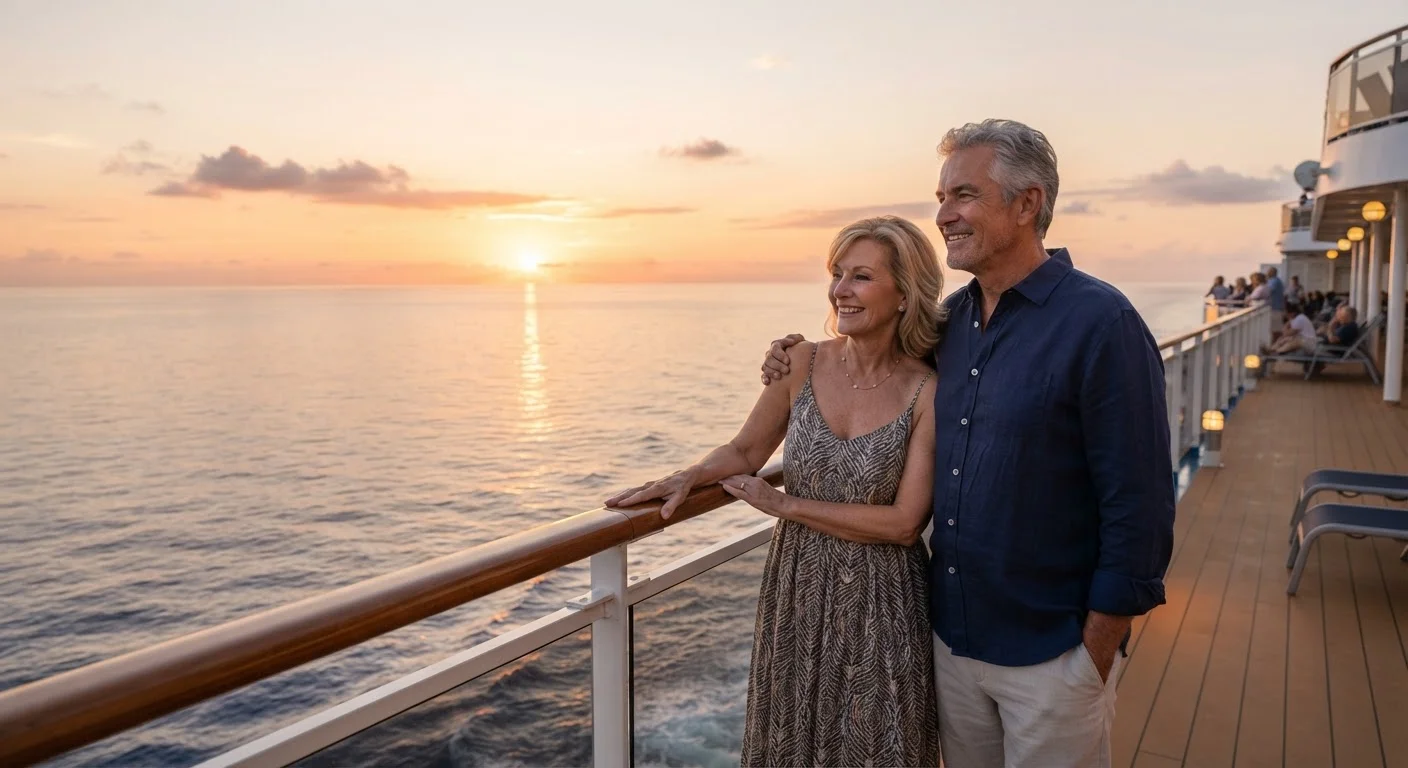
Photo: MyUrbanEscapes.net | Small Escapes. Big Experiences. editorial
—— In This Article
Key Takeaways
- Modern cruise ships are designed with significant accessibility features that support older travelers with mobility needs.
- There is no universal upper age limit for cruising, though some lines require medical documentation for travelers over a certain age.
- Onboard medical centers, quiet zones, and flexible dining make cruising one of the more manageable forms of senior travel.
- Solo travelers over 70 have more cabin and social options than the 'couples-only' reputation suggests.
- Physical demands on a cruise can be as light or as active as a traveler chooses — participation is never compelled.
Why These Myths Have Staying Power
Cruising has carried an outdated image problem for years. Some of it traces back to earlier decades when ships were less accessible, itineraries were narrowly designed, and the industry hadn't yet invested in the infrastructure that older travelers need. The assumptions formed then have persisted even as the reality has changed considerably.
What's worth understanding is that most objections seniors raise — too physically demanding, too isolating, too medically risky — reflect concerns that modern cruise lines have specifically worked to address. That doesn't mean every ship suits every traveler, but it does mean the sweeping dismissals rarely hold up to scrutiny. The myths below are among the most common, and the most worth examining before writing off a cruise entirely.
For a broader look at how misconceptions affect senior travel decisions, see Cruise Myths That Put Seniors Off Sailing for additional context.
The Myths — and What's Actually True
These paired myth-and-fact breakdowns address the most common barriers seniors cite when considering a cruise for the first time or after a long gap.
Myth
Cruise lines won't let you board if you're over 70 or 75.
Fact
There is no industry-wide upper age limit for cruising. Some lines ask travelers above a certain age to complete a medical fitness form, but outright refusal based on age alone is not standard practice.
The idea of an age cutoff is one of the most persistent myths in senior travel. In practice, cruise lines are generally focused on whether a traveler can safely manage the voyage — not on their birth year. Some lines do require a physician's sign-off for passengers above a specific age threshold or for those with certain medical conditions. This is a precautionary measure, not a barrier. Completing that documentation before departure is manageable for most travelers and gives both parties appropriate reassurance for the trip.
Myth
Cruising is too physically demanding — there's too much walking and standing.
Fact
The physical demands of a cruise are largely self-directed. Travelers can choose low-exertion days, use mobility aids freely, and access nearly all core amenities without covering large distances.
Larger ships do cover significant deck footage, but elevators are plentiful, motorized scooters and wheelchairs are accommodated, and no activity is compulsory. A traveler can spend a full sea day moving no further than their cabin, the dining room, and a deck chair. Shore excursions vary widely in physical intensity — from walking tours to coach-based sightseeing — and many operators offer accessible options. The key is researching specific excursions in advance rather than assuming all involve significant exertion.
Myth
If you have a chronic health condition, cruising is too medically risky.
Fact
Most modern cruise ships carry onboard medical centers staffed by licensed physicians and nurses, equipped to manage a range of common conditions and emergencies.
Onboard medical facilities vary by ship size, but larger vessels typically operate 24-hour medical centers capable of handling routine care, cardiac monitoring, and stabilization before a shoreside transfer if needed. Travelers managing conditions such as diabetes, hypertension, or reduced mobility cruise regularly with appropriate preparation — including carrying sufficient medication, obtaining adequate travel insurance, and informing the ship's medical team of relevant history before departure. This is general information only; travelers with specific health concerns should consult their own physician before booking any trip.
Myth
Cruising is only for couples — solo travelers over 70 will feel out of place.
Fact
Many cruise lines have invested specifically in solo traveler programming, including single-occupancy cabins, hosted dining, and organized social activities.
The couples-only perception belongs to an older era of cruise marketing. Today, a meaningful share of cruise passengers travel solo, and lines have responded with structures that make the experience genuinely social rather than isolating. Hosted tables in dining rooms, single-supplement cabins (which eliminate the price penalty of traveling alone), and group activity schedules give solo travelers regular opportunities to connect with other passengers. For older solo travelers specifically, the predictability and security of a cruise environment can make it considerably less daunting than independent travel abroad.
Myth
The food onboard won't accommodate dietary needs common among older travelers.
Fact
Mainstream cruise lines routinely accommodate low-sodium, diabetic-friendly, gluten-free, and other dietary requirements when notified in advance.
Dining flexibility has become a standard feature on most major ships. Requests submitted before departure — through the booking process or directly with the ship's dining team — are typically noted and honored throughout the voyage. Main dining rooms generally offer multiple menu options at each meal, and many ships include alternative dining venues with distinct menus. It is reasonable to verify specific accommodations directly with the cruise line before booking if dietary needs are a significant concern.
For travelers planning their first cruise after 60, Cruising for the First Time After 60 walks through what the onboard experience looks like in practical detail before you commit to a booking.
What the Onboard Environment Actually Looks Like
Modern large ships are, in many respects, better suited to older travelers than other forms of extended travel. Your accommodation, dining, entertainment, and medical support are all within a compact, climate-controlled environment. There are no check-ins, no packing and repacking between stops, and no driving. Port days are optional — staying onboard when others disembark is always a choice.
~35%
Cruise passengers aged 60 and older
Industry estimates from the Cruise Lines International Association (CLIA) have consistently placed passengers aged 60 and over at roughly a third or more of the total North American cruise market.
24/7
Medical center staffing on large ships
Most large ocean cruise ships operate round-the-clock medical centers with licensed physicians and nurses, according to standard cruise industry practice and CLIA member guidelines.
Accessibility features vary by ship and line, so it's worth researching specific vessels before booking. Key things to ask about include: cabin grab-rail configurations, elevator-to-deck ratios, pool lift availability, and whether the ship's tender ports (where you reach shore by small boat) are manageable given any mobility considerations. The Cruise Health & Safety hub covers these considerations in more depth.
Verify Accessibility Before You Book
Accessibility features vary considerably between ships — even within the same cruise line's fleet. An older vessel may have fewer accessible cabin configurations, narrower corridors, or limited elevator access compared to a newer ship. Always confirm specific accessibility arrangements directly with the cruise line before finalizing a booking, and get written confirmation of any accommodation requests.
Solo travelers over 70 will find the picture has also improved. Dedicated solo cabins, hosted dining tables, and organized group activities mean the experience is far less isolating than commonly assumed. Solo Senior Cruisers: What the Onboard Experience Really Looks Like covers this in detail. When you're ready to evaluate specific options, the Choosing a Cruise hub can help you match a ship and itinerary to your actual needs.

Cruise Travel Editorial Team
Cruise Travel Editorial Team is the collective byline for our editorial team and contributor network. Articles published under this byline or an editorial pen name are researched, written, and reviewed according to our editorial standards for clarity, consistency, and independence before publication.
View author profile