
Questions Worth Asking a Rental Host Before You Book
Listing photos don't show everything. These targeted questions help seniors get honest, specific answers about a property's true accessibility.
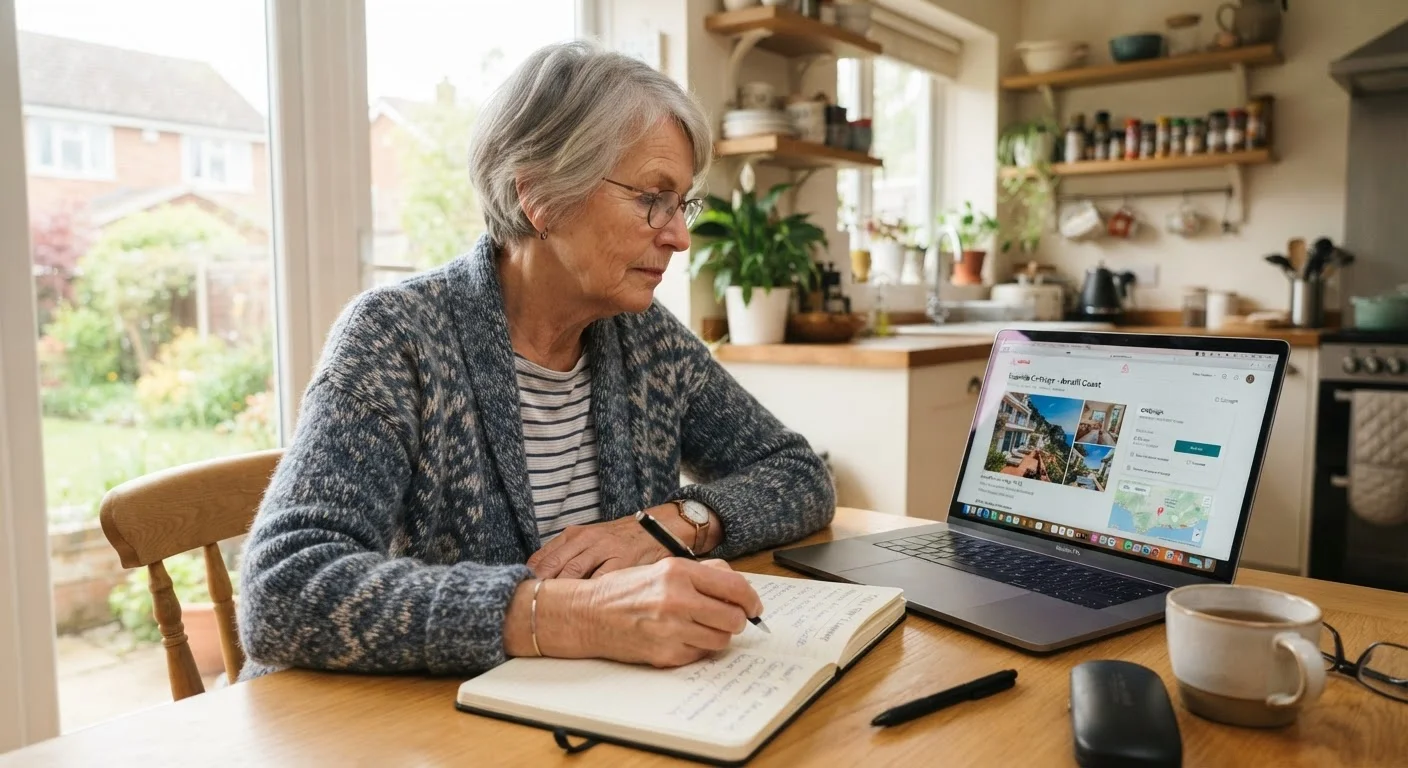
Photo: MyUrbanEscapes.net | Small Escapes. Big Experiences. editorial
—— In This Article
Key Takeaways
- Listing photos and descriptions rarely reveal accessibility details that matter most to senior travelers.
- Direct questions to hosts before booking uncover practical details no filter or review can guarantee.
- Asking about stairs, parking, and emergency access helps seniors evaluate whether a property truly fits their needs.
- A host's responsiveness to your questions is itself useful information about how they manage stays.
- Written confirmation of host answers inside the booking platform creates a useful record.
Why Asking Questions Before Booking Matters
Rental listings are written to attract guests, not to serve as complete accessibility reports. Photos are staged, descriptions are general, and filters like "step-free entry" or "single-level" are self-reported by hosts who may interpret them differently than you would. For senior travelers, the gap between what a listing promises and what a property actually provides can mean a genuinely uncomfortable — or even unusable — stay.
Contacting a host directly before booking closes that gap. It gives you specific, current information and signals to the host that you have particular requirements. As explained in our guide on using both reviews and host communication, guest reviews and direct host answers reveal different things — and both are worth using.
The questions below are designed to be practical, polite, and easy to adapt to your situation.
Questions About Entering and Moving Through the Property
Entry and interior layout are where most accessibility surprises occur. Start here.
Ask exactly how many steps or stairs are present between the entrance and the main living areas.
"Step-free" and "single-level" mean different things to different hosts. Some count only outdoor steps; others forget a half-level between garage and living room. Knowing the precise number lets you decide whether the layout works for your mobility.
Confirm whether the bathroom has grab bars or a walk-in shower with a low or zero threshold.
Standard bathrooms with tubs and no grab bars are a leading source of guest injury in rentals. Hosts may list a property as accessible without having verified bathroom safety features.
Request the actual width of doorways, particularly the bedroom and bathroom doors.
Standard interior doorways in older homes can be as narrow as 28 inches — too narrow for a walker or wheelchair. Knowing the measurement before booking prevents an unusable situation on arrival.
Ask whether the bed height and mattress firmness can be adjusted or supplemented.
Getting in and out of a very low or very soft bed can be difficult or painful. Many hosts can provide risers or a firmer mattress topper if asked in advance, but rarely offer this unprompted.
Clarify the type and location of lighting throughout the property, especially at night.
Poorly lit hallways, dim staircases, and absent nightlights are common in rental properties and create fall risks. Hosts often have battery-operated lights they can place if asked ahead of time.
Once you have answers about the physical layout, cross-reference them with our accessibility features checklist to make sure nothing critical was missed.
Questions About Parking, Neighborhood, and Surroundings
The property itself may be perfectly manageable, but if parking is a long walk away or the nearest pharmacy requires a difficult drive, your stay will be harder than it needs to be.
For help filtering listings by neighborhood type and proximity to services before you even reach out to a host, see our walkthrough on searching rental listings with senior needs in mind.
Questions About Safety and Emergency Access
These questions may feel uncomfortable to raise, but they are among the most important. A well-prepared host will answer them without hesitation.
Raising Safety Questions Is Entirely Reasonable
Some travelers feel awkward asking about emergency access or medical facilities before they have even booked. There is no need to hesitate. Responsible hosts expect and welcome these questions — they reflect the same kind of due diligence any careful guest should exercise. If a host reacts negatively to a safety question, that reaction itself tells you something important about how they approach guest care.
Consider asking: Is there a working carbon monoxide detector and smoke alarm? How far is the nearest hospital or urgent care clinic? Is there a lock box or alternative entry if you lose a key? Are there any health or safety hazards in the immediate area, such as steep outdoor steps or unlit pathways?
A host who deflects or dismisses these questions is itself useful data. For a broader look at what hosts are rarely asked but should be, see questions that uncover safety gaps listings miss.
36 million
U.S. adults treated for fall injuries annually
According to the U.S. Centers for Disease Control and Prevention, falls are the leading cause of injury among older adults, making pre-stay safety checks especially important.
Under 50%
Guests who contact hosts before booking
Industry research on short-term rentals suggests fewer than half of guests send any message to a host prior to confirming a reservation, leaving avoidable questions unasked.
How to Ask — and What to Do With the Answers
The way you frame questions affects the quality of the answers you receive. Be specific rather than general. Instead of asking "Is the place accessible?" ask "How many steps are there between the parking area and the front door?" Specific questions invite specific answers.
Always send your questions through the rental platform's messaging system, not by phone or personal email. This creates a timestamped record of what the host confirmed, which can be valuable if there is a dispute after arrival. Our article on communicating with hosts effectively covers the full arc of host contact from inquiry to check-out.
Save Your Host's Answers as a Reference
Before your trip, copy the key confirmations your host provided in the messaging thread and save them somewhere easy to access offline — a notes app, a printed page, or an email to yourself. If something does not match what was confirmed when you arrive, having that record makes it far easier to raise the issue calmly and get it resolved quickly.
If a host does not respond within 48 hours, or gives vague answers to direct questions, that pattern is worth weighing before you commit to a booking. A responsive, forthcoming host is a good early sign of a well-managed property. For a complete starting point on finding and evaluating rentals as a senior traveler, see this guide to senior vacation rental search.

Vacation Rentals Editorial Team
Vacation Rentals Editorial Team is the collective byline for our editorial team and contributor network. Articles published under this byline or an editorial pen name are researched, written, and reviewed according to our editorial standards for clarity, consistency, and independence before publication.
View author profile