
What Travel Insurance Actually Covers — and What It Doesn't
Medical evacuation, trip cancellation, and pre-existing conditions explained clearly so senior travelers can make informed insurance decisions.
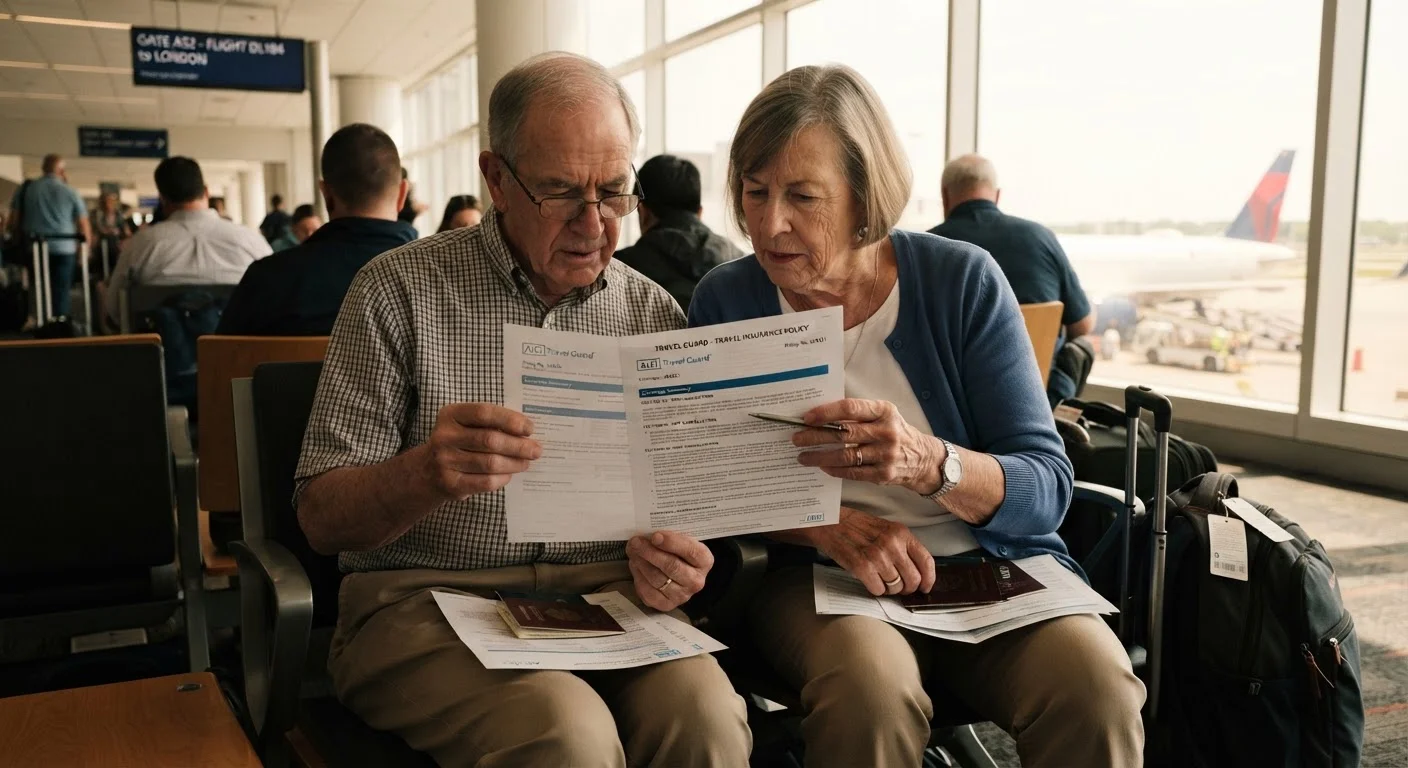
Photo: MyUrbanEscapes.net | Small Escapes. Big Experiences. editorial
—— In This Article
Key Takeaways
- Trip cancellation coverage reimburses prepaid costs only for specific, listed reasons — not any reason you decide not to travel.
- Standard travel insurance rarely covers pre-existing conditions unless a waiver is purchased within a strict time window after booking.
- Medical evacuation coverage is separate from emergency medical coverage and can be one of the most valuable protections for senior travelers.
- Most domestic U.S. health plans provide little or no coverage outside the country, making supplemental travel medical insurance especially important.
- Always read the exclusions section of a policy — it defines what the insurer will not pay, which matters as much as what they will.
What Travel Insurance Is — and What It's Designed to Do
Travel insurance is not a single, uniform product. It is a category of policies that can bundle or separately offer protection against several types of financial risk tied to travel. The major coverage types are trip cancellation and interruption, emergency medical expense, medical evacuation, and baggage and personal belongings.
For senior travelers specifically, the medical components tend to be the most consequential. Standard U.S. health insurance — including original Medicare — generally provides no coverage for medical treatment received abroad. A visit to a hospital overseas can result in substantial out-of-pocket costs without a supplemental policy in place. Understanding what a travel insurance policy actually contains, before you need it, is essential trip preparation.
For a broader look at how these protections fit into senior trip planning, see the Health & Safety hub.
What Travel Insurance Typically Covers
Trip cancellation and interruption reimburses non-refundable, prepaid travel costs if you cancel or cut short a trip for a covered reason. Covered reasons are specific and listed in the policy — they typically include sudden illness or injury, death of a traveling companion or immediate family member, severe weather, or a natural disaster affecting your destination. Canceling because you changed your mind or feel nervous about the trip is generally not covered under a standard policy.
Emergency medical expense coverage pays for treatment you receive at a foreign medical facility due to a sudden illness or accident. This is distinct from routine care or treatment for conditions you were already managing before departure.
Medical evacuation is arguably the coverage seniors should scrutinize most carefully. It pays to transport you to an appropriate hospital — or back to the U.S. — when local medical facilities cannot adequately treat your condition. Air ambulance transport alone can cost tens of thousands of dollars. See our breakdown of medical evacuation coverage for a more detailed assessment.
$100,000+
Typical air ambulance evacuation cost
Medical air transport from a remote international destination to the U.S. can cost well over $100,000, according to general industry estimates from travel insurance educators.
0%
Medicare coverage for most international care
Original Medicare generally covers no medical services received outside the United States, making supplemental travel medical insurance essential for most senior international travelers.
10–21 days
Typical pre-existing condition waiver window
Most insurers require the policy to be purchased within 10 to 21 days of the first trip deposit to qualify for a pre-existing condition waiver, though exact windows vary by insurer.
Baggage and personal effects coverage reimburses for lost, stolen, or damaged belongings, though limits per item and overall caps vary widely. High-value items like medical devices may need to be declared separately.
The Gaps That Catch Senior Travelers Off Guard
The exclusions section of any travel insurance policy is where many claims are denied. The most common gaps for older travelers include:
- Pre-existing conditions: Most standard policies exclude medical claims arising from conditions diagnosed, treated, or that caused symptoms before the policy was purchased. A pre-existing condition waiver — available from many insurers when a policy is purchased within a short window after the first trip deposit — can remove this exclusion. Missing that purchase window is one of the most frequent and costly mistakes senior travelers make.
- Adventure or extreme sports: Skiing, scuba diving, zip-lining, and similar activities are often excluded from standard policies. A rider or specialized plan is required for coverage.
- Government travel advisories: Traveling to a destination with an active Level 3 or Level 4 advisory from the U.S. State Department can void coverage for claims related to that destination.
- Pandemic and epidemic exclusions: Many standard policies contain language that limits claims arising from declared public health emergencies. Read this section carefully.
Buy Your Policy Early — Not Last Minute
The single most important timing rule in travel insurance is to purchase your policy shortly after making your first trip deposit — not the week before you leave. Waiting too long can disqualify you from a pre-existing condition waiver, which is one of the most valuable protections for senior travelers with managed health conditions. Check the specific waiver window in any policy you are considering before committing.
For a thorough guide to decoding the language insurers use, see what the fine print actually means in senior travel health insurance.
Making an Informed Decision Before You Buy
No single policy suits every traveler or every trip. When evaluating options, senior travelers should focus on a few critical questions: Does the policy include a pre-existing condition waiver, and is there still time to qualify? What are the per-incident and lifetime limits on emergency medical coverage? Is medical coverage primary or secondary? Does evacuation coverage include repatriation to your home hospital?
The guide to medical coverage terms explains the specific terminology — such as primary vs. secondary coverage and evacuation limits — that determines how useful a policy actually is in practice.
Seniors managing ongoing health conditions should also consult their physician before traveling and share their itinerary to discuss destination-specific health considerations. This article provides general educational information only and is not a substitute for personalized advice from a licensed insurance professional or healthcare provider.
This article is for informational purposes only and does not constitute insurance, financial, or medical advice. Always review policy documents carefully and consult a qualified professional before making coverage decisions.
Frequently Asked Questions

Travel Health & Safety Editorial Team
Travel Health & Safety Editorial Team is the collective byline for our editorial team and contributor network. Articles published under this byline or an editorial pen name are researched, written, and reviewed according to our editorial standards for clarity, consistency, and independence before publication.
View author profile