
Why Seniors Underestimate Airport Transit Time — and How to Fix It
Common timing mistakes seniors make at airports, from security queues to terminal distances, and how to build in realistic buffers.
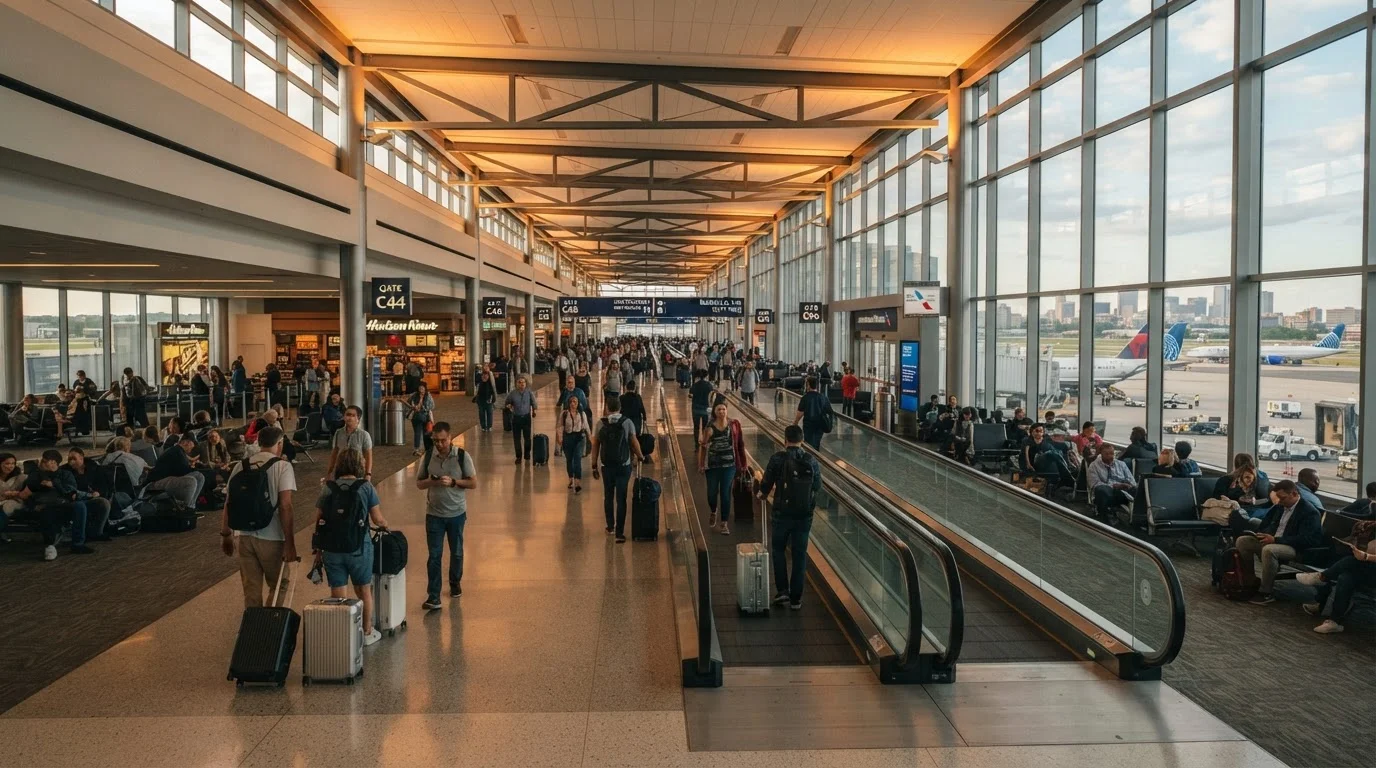
Photo: MyUrbanEscapes.net | Small Escapes. Big Experiences. editorial
—— In This Article
Key Takeaways
- Most seniors arrive at airports with less time than they realize, leading to avoidable stress.
- Security screening, terminal distances, and mobility needs all add significant time to airport transit.
- Building a realistic time buffer — ideally arriving two to three hours early for domestic flights — prevents most problems.
- TSA Cares and wheelchair assistance services are free and can dramatically ease the airport experience.
- Reviewing your terminal map and gate assignment before leaving home saves critical minutes on travel day.
Why the Clock Moves Faster at the Airport Than You Expect
Airport transit is one of the most consistently misjudged parts of travel planning — and for seniors, the gap between expectation and reality is often widest. The combination of changed security procedures, larger terminals, and personal mobility considerations creates a timeline that can easily run an hour longer than most people anticipate.
The good news is that this is entirely fixable with a little advance research. Understanding exactly where time disappears — and why — is the first step toward building a realistic, stress-free airport plan. If you're also managing health preparations before departure, see our guide on common pre-trip health oversights that can compound airport-day stress.
~45 min
Average TSA security wait at busy US airports
The TSA reports that average security wait times at major hub airports regularly exceed 30–45 minutes during peak periods, with additional time for travelers requiring enhanced screening.
1+ mile
Terminal walking distance at large hub airports
At airports such as Atlanta Hartsfield-Jackson and Dallas/Fort Worth, the distance from a security checkpoint to a remote gate can exceed one mile, according to airport authority published terminal guides.
The Most Common Airport Timing Mistakes — and How to Avoid Them
These mistakes show up repeatedly among senior travelers, regardless of experience level. Each one is avoidable with simple preparation.
Assuming the airport experience mirrors what it was ten or twenty years ago.
Why it happens: Many seniors last flew frequently before security procedures expanded significantly after 2001, and before airports grew into the sprawling complexes many now are. Memory anchors expectations to an older, simpler process.
Underestimating how long security screening takes, especially with mobility aids or medical equipment.
Why it happens: Walkers, canes, knee braces, insulin pumps, and CPAP machines all require additional screening steps that most travelers don't anticipate. Even a short security line can take much longer when these items are involved.
Treating the gate as a short walk from the security exit.
Why it happens: At hub airports like Atlanta, Dallas/Fort Worth, or Chicago O'Hare, gates can be a mile or more from the security checkpoint. Travelers who haven't been to a large airport recently routinely misjudge this distance.
Not accounting for check-in and bag drop time.
Why it happens: Online check-in has made the process feel instant, but physical bag drop lines at the counter — especially during peak travel periods — can still run 20 to 40 minutes. Seniors unfamiliar with kiosk systems may need extra counter time.
Skipping a rest stop or restroom break to 'save time,' then struggling at the gate.
Why it happens: Anxiety about missing the flight pushes travelers to rush past comfort needs, which often backfires — especially for seniors managing bladder conditions or fatigue.
Missing Your Flight Has Real Consequences
Rebooking fees, missed connections, and last-minute accommodation costs can add hundreds of dollars to an already tight travel budget. For seniors managing health schedules or cruise embarkation windows, a missed flight can derail an entire trip. Always err on the side of arriving earlier than you think necessary.
Building Your Realistic Airport Timeline
As a general starting point, most travel advisors suggest arriving two hours early for domestic flights and three hours early for international flights. For seniors with mobility considerations, medical equipment, or unfamiliarity with a large hub airport, adding another 30 to 45 minutes on top of that is a reasonable precaution — not an overreaction.
Map out your morning or afternoon in reverse: start from your departure time and work backward, adding realistic chunks for each step — bag drop, security, the walk to the gate, and a short rest. This approach surfaces problems before travel day rather than during it.
For those navigating airports with physical limitations, our article on moving through airports safely with mobility concerns covers wheelchair assistance, corridor navigation, and strategies to reduce physical strain. And if you're heading to a cruise departure after your flight, note that embarkation day carries its own underestimated timeline — see how to arrive ready for embarkation day for practical guidance.
This article is for general informational purposes only. Travelers with significant health or mobility considerations should consult their healthcare provider before travel and contact their airline directly for assistance options.

Senior Trip Planning Editorial Team
Senior Trip Planning Editorial Team is the collective byline for our editorial team and contributor network. Articles published under this byline or an editorial pen name are researched, written, and reviewed according to our editorial standards for clarity, consistency, and independence before publication.
View author profile