
Booking Flights with Mobility or Medical Needs in Mind
Learn which seating, boarding assistance, and airline services to request when planning air travel with physical limitations or health conditions.
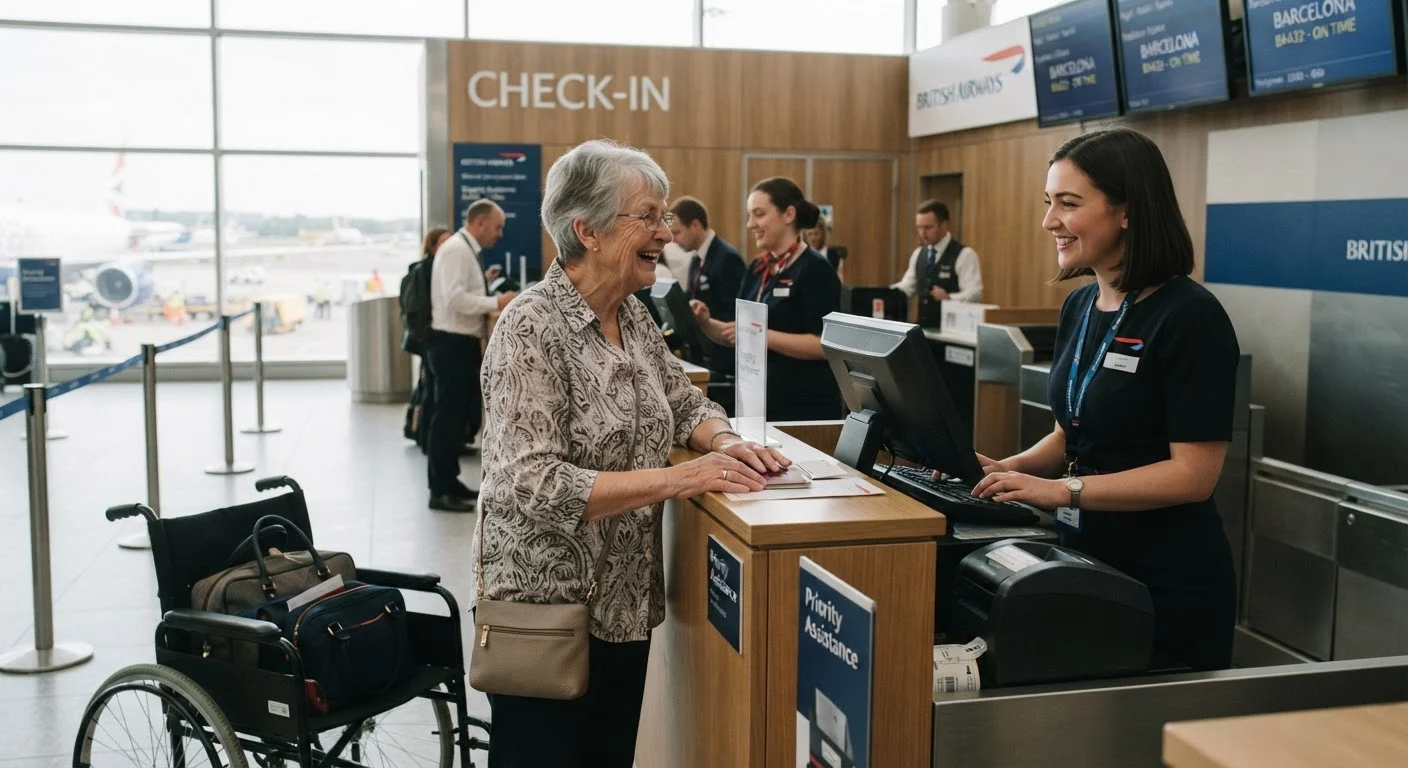
Photo: MyUrbanEscapes.net | Small Escapes. Big Experiences. editorial
—— In This Article
Key Takeaways
- Contact your airline directly after booking to request specific mobility or medical accommodations.
- Choose your seat thoughtfully — aisle seats near the front reduce walking distance and make boarding easier.
- Wheelchair assistance at airports is free and can be arranged at booking or check-in.
- Carry medical documentation and medications in your carry-on, never in checked luggage.
- Confirm all accommodation requests 48–72 hours before departure to avoid last-minute gaps.
Why Booking Strategy Matters for Mobility and Medical Needs
Air travel involves more logistics than most people anticipate — long terminal walks, tight seating, security screening with medical devices, and connecting flights in unfamiliar airports. For seniors managing mobility limitations or health conditions, these details can compound quickly if not planned in advance. The good news: most airlines have well-established processes specifically designed to help, and knowing how to access them makes a genuine difference.
This guide walks through every step from initial booking to day-of departure, so nothing important falls through the cracks. For broader preparation including chronic condition management while traveling, see our Senior Health Prep hub and our article on traveling with a chronic condition.
What you will need
Airline's accessibility or special assistance desk number
Used to request mobility assistance, medical accommodations, and seating arrangements directly with the carrier.
Physician's letter or medical documentation
Required by many airlines for in-cabin medical devices such as portable oxygen concentrators or insulin pumps.
List of current medications and dosages
Helps communicate your medical needs to airline staff, airport medical personnel, or travel companions if needed.
TSA Notification Card
A voluntary card to discreetly inform TSA officers of a disability or medical condition during screening.
Step-by-Step: Requesting the Right Accommodations
The steps below cover the full sequence from post-booking phone call through final confirmation. Following them in order helps ensure no single accommodation — a seat, a device approval, a wheelchair handoff — is left unconfirmed.
Contact the airline's accessibility desk immediately after booking
Don't wait until check-in. As soon as your ticket is confirmed, call the airline's dedicated accessibility or special assistance line — not general customer service. This team handles seating modifications, wheelchair requests, medical equipment approvals, and in-cabin service needs. Have your booking confirmation number ready, and clearly describe your specific needs (e.g., difficulty walking long distances, use of a walker, need for early boarding).
Select a seat that suits your physical needs
Seat selection matters more than many travelers realize. For those with limited mobility, aisle seats in the first few rows of the main cabin or bulkhead rows offer extra legroom and easier access to lavatories. If you use a wheelchair or walker, note that bulkhead seats sometimes have fixed armrests, which can make transferring in and out more difficult. Ask the agent specifically about armrest configuration before confirming a seat.
Request wheelchair or mobility assistance for the airport
Airport wheelchair assistance — from the curb or check-in counter through security, to the gate, and onto the plane — is provided free of charge by the airline under the Air Carrier Access Act (for U.S. flights). You do not need to use a wheelchair full-time to request this service; it's available to anyone who finds walking long airport distances difficult. Request it at booking, and confirm it again at check-in. For a more detailed walkthrough of moving through airports, see our guide to navigating airports with mobility aids.
Arrange approval for medical devices and medications
If you travel with a portable oxygen concentrator (POC), CPAP machine, insulin pump, or similar device, contact the airline's medical desk well before departure — ideally at least two weeks out. Most airlines require written physician documentation for in-cabin medical equipment. Check the airline's website for their specific approved device list. For carrying medications through security, TSA allows prescription medications in carry-on bags and does not require them to be in original containers, though having original labels reduces delays.
Confirm all arrangements 48–72 hours before your flight
Call the airline's accessibility desk again two to three days before departure to verify every accommodation is still recorded on your reservation. Booking system errors, equipment changes, and staff handoffs can occasionally cause requests to disappear. Reconfirm: seat assignment, wheelchair assistance at each airport, any medical equipment approvals, and your early boarding status. Keep a written note of the agent's name and the date you called.
Plan Your Next Leg Too
If your trip includes a cruise after your flight, many of the same advance planning principles apply on board. Our guide to mobility aids on cruise ships covers what to request before embarkation and where ship terrain can still be challenging for some travelers.
Oxygen Requirements Need Advance Approval
If you require supplemental oxygen during the flight, you cannot bring standard oxygen tanks on board — FAA regulations prohibit them. You must use an FAA-approved portable oxygen concentrator. Contact your airline's medical desk early to confirm which devices are approved and to obtain any required documentation from your physician. Do not assume approval without written confirmation from the airline.
Your Rights Are Protected Under Federal Law
The Air Carrier Access Act (ACAA) prohibits U.S. airlines from discriminating against passengers with disabilities and requires them to provide specific accommodations including wheelchair assistance, in-cabin device access, and seating modifications. If a request is denied or mishandled, you have the right to file a complaint with the U.S. Department of Transportation. Knowing this can help you advocate calmly and effectively at any point in your journey.
For additional guidance on how to move through the airport itself once you arrive, our article on navigating airports safely when mobility is a concern covers corridor navigation, security screening, and gate logistics in detail. If you're also arranging mobility aids for your destination, pre-trip planning for mobility aids is a helpful companion resource.
This article provides general travel information and is not a substitute for medical advice. Always consult your physician before flying with a medical condition or device, and verify specific requirements directly with your airline and the U.S. Department of Transportation.

Senior Trip Planning Editorial Team
Senior Trip Planning Editorial Team is the collective byline for our editorial team and contributor network. Articles published under this byline or an editorial pen name are researched, written, and reviewed according to our editorial standards for clarity, consistency, and independence before publication.
View author profile